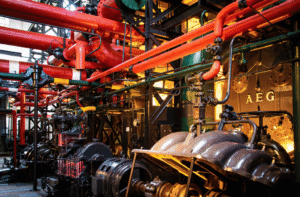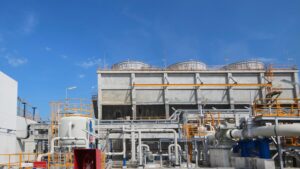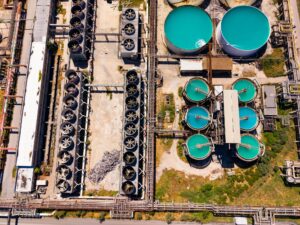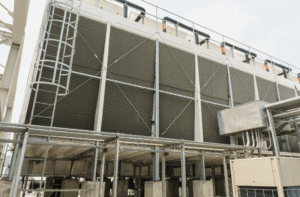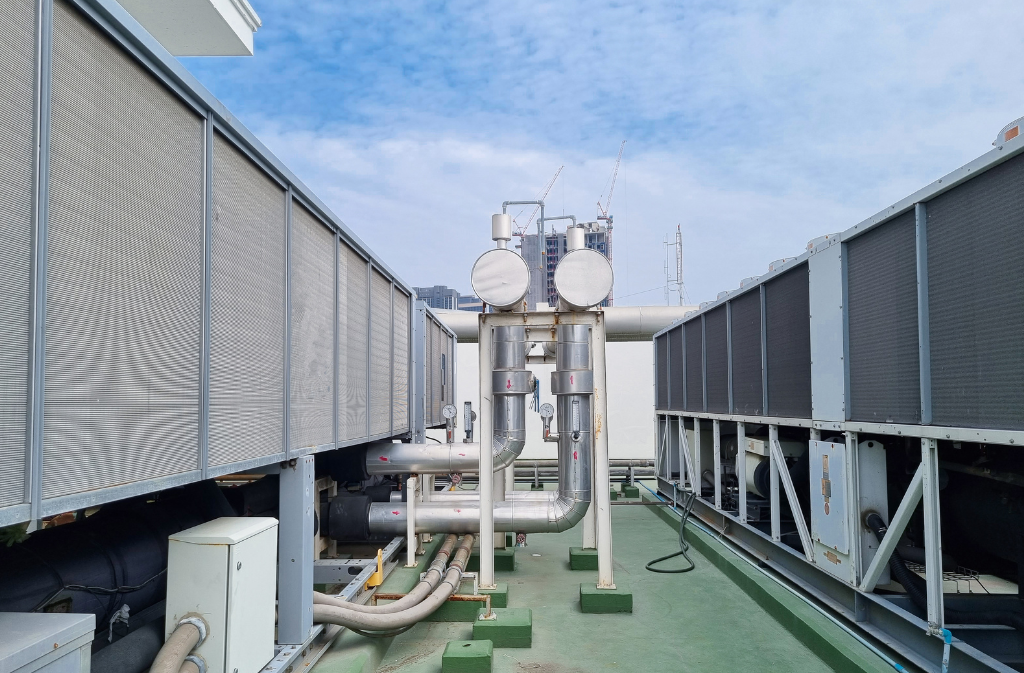
Legionella bacteria can survive in natural freshwater environments, but the greatest public health concern often arises when they enter man-made water systems. Cooling towers, building water systems, hot-water tanks, plumbing systems, and other recirculating equipment can create conditions that support microbial growth, especially when water temperatures, stagnation, sediment, and disinfectant levels are poorly controlled.
A legionella biofilm develops when microorganisms attach to wetted surfaces and become embedded in a protective microbial structure. This environment can shelter Legionella and other waterborne pathogens from treatment chemicals, provide access to nutrients, and allow bacteria to persist even when bulk-water testing appears acceptable. Effective control therefore requires more than routine disinfection. Water treatment professionals must address system cleanliness, operating conditions, biofilm growth, monitoring, and corrective action as part of a coordinated microbial-control program.
What Is Legionella Biofilm?
A biofilm is a structured microbial community that develops when bacteria and other microorganisms attach to a moist surface and produce a protective matrix. In water systems, this matrix can form on pipes, tanks, heat exchangers, tower fill, basin surfaces, valves, and other areas that remain wet or experience repeated contact with water. The result is not a layer made from one organism, but a complex bacterial community containing many microorganisms present under different physical and chemical conditions.
A legionella biofilm may include Legionella bacteria alongside other bacteria, protozoa, fungi, organic matter, corrosion products, and mineral deposits. These organisms become embedded in extracellular polymeric substances, which are sticky materials produced by microbial cells. The matrix helps stabilize the community, trap nutrients, retain moisture, and protect cells from changing environmental conditions.
Common components of biofilm communities include:
- Bacteria and other microorganisms
- Extracellular polymeric substances
- Organic debris and available nutrients
- Scale, sediment, and corrosion products
- Protozoa and other organisms
- Microbial waste products and dead bacteria
Environmental biofilms occur naturally in freshwater environments, but they can become more difficult to manage in engineered systems because flow conditions, temperature, nutrient availability, and disinfectant exposure vary from one location to another. Once established, these communities may create protected zones where Legionella and other waterborne pathogens can persist, multiply, and spread to new areas of the system.
How the Biofilm Formation Process Works
Biofilm formation is a gradual process that begins when free-floating microorganisms encounter a suitable wetted surface. The exact rate of development depends on water chemistry, flow conditions, surface material, temperature, nutrient availability, and the microorganisms present.
1. Surface Conditioning
Before microorganisms attach, a thin layer of organic matter, minerals, corrosion products, and other particles may accumulate on pipes, tower fill, tanks, or heat-transfer surfaces. This conditioning layer can make the surface more favorable for bacterial attachment.
2. Initial Attachment
Microorganisms in the planktonic phase come into contact with the conditioned surface through water flow or natural movement. Early attachment may be weak and reversible, but cells that remain in place can begin producing adhesive extracellular products.
3. Microcolony Development
As attachment becomes more stable, cell-cell adhesion increases and small microbial clusters begin to form. The organisms produce extracellular polymeric substances that help bind cells together and anchor the developing community to the surface.
4. Biofilm Maturation
Continued biofilm growth produces a thicker and more complex structure. Mature biofilms often contain channels that move water, nutrients, oxygen, and waste products through the microbial community. Biofilm morphology can vary widely depending on flow, treatment conditions, and the bacterial species involved.
5. Detachment and Dispersal
As the biofilm matures, individual cells or larger fragments may break away and return to the circulating water. These organisms can enter new environments, attach to other surfaces, and begin further growth elsewhere in the system.
This biofilm formation process helps explain why treatment focused only on free-floating bacteria may not fully address surface-associated contamination. Once biofilms are formed, they can support continued biofilm colonization and repeated release of microorganisms into the water.
How Biofilm Supports Legionella Survival
A mature biofilm can create conditions that help Legionella survive longer than it might in open water. The protective matrix, trapped nutrients, and interactions among different organisms can make microbial control more difficult, especially when deposits are already established on system surfaces.
Physical Protection From Disinfectants
Extracellular polymeric substances can slow the movement of chlorine and other treatment chemicals into deeper layers of the biofilm. Organic matter, corrosion products, and dead bacteria may also consume active chemistry before it reaches all microorganisms present. This does not make Legionella completely resistant, but it can reduce treatment exposure and allow protected cells to persist.
Access to Nutrients
Biofilm communities trap nutrients, minerals, organic debris, and microbial waste products from the surrounding water. This concentrated material can support the growth of other bacteria and create a more favorable environment for Legionella species. Nutrient availability is one reason dirty or fouled systems often present a greater microbial-control challenge.
Association With Protozoan Hosts
Legionella pneumophila and other Legionella species can survive and multiply inside certain free-living protozoa, including amoebae. These hosts may offer additional protection from environmental stress and can contribute to pneumophila survival in multispecies biofilms.
Interactions Within the Microbial Community
Biofilm behavior is influenced by communication and adaptation among microorganisms. Processes such as quorum sensing, cell signaling, and changes in gene expression can affect adhesion, stress response, nutrient use, and dispersal. Research continues to examine how Legionella regulates gene expression within complex environmental biofilms, so these mechanisms should not be treated as a single or universal explanation for persistence.
Release Into Circulating Water
Cells and biofilm fragments can detach from surfaces and enter the bulk water. Once released, Legionella spp. may remain in the planktonic phase, move to other locations, or contribute to renewed biofilm colonization. This repeated cycle helps explain why reducing free-floating bacteria does not always eliminate the underlying source of contamination.
Where Legionella Biofilm Commonly Develops
Biofilm can develop on nearly any surface that remains wet or experiences repeated contact with water. The risk is higher in man-made water systems where warm temperatures, low flow, sediment, scale, and inconsistent disinfectant levels create favorable conditions for microbial growth.
Common locations include:
- Cooling towers and evaporative condensers: Tower basins, fill material, drift eliminators, spray nozzles, and poorly drained sections can accumulate sediment and support biofilm growth. Because these systems generate contaminated aerosols when poorly controlled, they are a major focus of Legionella risk management.
- Building plumbing systems: Biofilm may form inside pipes, valves, fixtures, storage tanks, and recirculation loops. Building plumbing systems with dead legs, oversized piping, low-use outlets, or inconsistent hot-water circulation are especially vulnerable.
- Hot-water tanks and distribution lines: Warm water temperatures, sediment accumulation, and low turnover can support Legionella bacteria and other microorganisms. Scale and corrosion can also create rough surfaces that encourage attachment.
- Cold-water storage and drinking water systems: Drinking water biofilms can develop where disinfectant residuals decline or water remains stagnant. Even treated drinking water may contain low levels of microorganisms that can attach to surfaces under favorable conditions.
- Hot tubs and decorative water features: Warm temperatures, aeration, and organic contamination from users or the surrounding environment can encourage biofilm development. These systems may also produce contaminated water droplets that can be inhaled.
- Process-water equipment and low-flow areas: Heat exchangers, tanks, filters, unused branches, and poorly circulated piping can provide protected locations for biofilm colonization.
The presence of biofilm does not automatically mean Legionella is present. However, these locations can create environmental conditions that support Legionella and other waterborne pathogens when system design, cleaning, circulation, and treatment are inadequate.
Conditions That Encourage Biofilm Growth
Several factors can influence whether Legionella and other microorganisms persist in water systems. Biofilm growth is more likely when physical deposits, favorable water temperatures, stagnant conditions, and inconsistent treatment occur at the same time.
Sediment, Scale, and Corrosion
Sediment, mineral scale, and corrosion products can create rough surfaces where bacteria attach more easily. These deposits may also trap nutrients and protect microorganisms from direct contact with treatment chemicals. In cooling towers and other recirculating systems, poor solids control can contribute to continued fouling and microbial growth.
Favorable Water Temperatures
Legionella bacteria are more likely to grow within certain warm temperature ranges. Actual conditions can vary throughout a system, especially in storage tanks, low-flow branches, heat exchangers, and poorly balanced recirculation loops. Temperature control should therefore consider the entire system rather than relying on a single measurement point.
Stagnation and Water Age
Water that remains in pipes, tanks, dead legs, or infrequently used equipment can lose disinfectant residual over time. Stagnation also allows suspended particles to settle and creates stable conditions that support attachment, nutrient accumulation, and further growth.
Low or Inconsistent Disinfectant Residual
Chlorine and other microbial-control agents must reach the areas where organisms are present. Low residuals, poor distribution, high chemical demand, or unreliable feed equipment can leave parts of the system insufficiently treated. A measurable residual in bulk water may not reflect conditions beneath deposits or within established biofilm.
Nutrient and Organic Loading
Dust, process contamination, oils, organic matter, dead bacteria, and microbial waste products can provide nutrients for a developing bacterial community. Other organisms may use these materials and create conditions that indirectly support Legionella. Controlling contamination and maintaining clean system surfaces can reduce the environmental support available to harmful bacteria.
Effective risk reduction requires attention to all of these conditions. Addressing only one factor may provide temporary improvement, while the remaining conditions continue to support microbial growth.
Why Routine Disinfection May Not Be Enough
Routine disinfection is an important part of microbial control, but it may not fully address established biofilm. Treatment chemicals are usually measured in the bulk water, while the microorganisms of greatest concern may be attached to surfaces, embedded beneath deposits, or protected within deeper layers of the microbial matrix.
A shock treatment may reduce bacteria in the planktonic phase and improve short-term test results. However, if sediment, scale, corrosion products, or mature biofilm remain in place, surviving organisms can contribute to recolonization after the treatment residual declines. Poor circulation, dead legs, and unreliable chemical feed can further limit the effectiveness of a disinfection program.
This is why controlling biofilm requires more than increasing chlorine or applying a single corrective dose. Water treatment professionals may need to combine cleaning, deposit removal, compatible biocides, improved circulation, residual verification, and ongoing monitoring.
What Routine Monitoring Does Not Automatically Prove
- A measurable disinfectant residual does not confirm that Legionella is absent.
- A low general bacteria count does not prove that system surfaces are clean.
- One negative water sample does not represent every part of the system.
- A temporary reduction in planktonic bacteria does not confirm long-term control.
- Higher chemical dosage does not replace cleaning or correction of operating problems.
A reliable program should evaluate both bulk-water conditions and surface-associated activity. This broader approach helps address Legionella and other waterborne pathogens that may persist within protected microbial deposits.
Strategies for Controlling Legionella Biofilm
Effective control requires a layered approach that addresses both microbial activity and the system conditions that allow biofilm to persist. No single treatment method is suitable for every application, so water treatment professionals should evaluate system design, water chemistry, operating conditions, treatment compatibility, and applicable regulatory requirements.
1. Assess the Entire System
Begin with a review of system layout, operating temperatures, water flow, chemical-feed performance, and known areas of stagnation. Cooling towers, storage vessels, heat exchangers, dead legs, and low-use piping should receive particular attention because they can support localized biofilm development.
2. Identify Deposits and Poor Circulation
Inspect for sediment, scale, corrosion products, sludge, and other fouling that may protect microorganisms. Areas with low flow or inconsistent turnover should also be identified because stagnant conditions can reduce disinfectant residual and encourage further growth.
3. Clean Fouled Surfaces
Mechanical cleaning may be necessary when deposits or mature biofilm have accumulated. Removing sediment and surface contamination helps expose wetted materials to treatment and reduces the nutrients available to the bacterial community.
4. Select Compatible Treatment Chemistry
Oxidizing and non-oxidizing biocides may be used as part of a microbial-control program, depending on the system. Selection should consider pH, water temperatures, organic demand, materials of construction, target organisms, discharge limits, and EPA-registered product label directions.
5. Improve Treatment Contact
Compatible dispersants or biopenetrants may help loosen deposits and improve contact between treatment chemistry and fouled surfaces. These products should support, not replace, physical cleaning and proper system operation.
6. Verify Chemical Feed and Residual
Feed equipment, dosage, contact time, and treatment residual should be checked routinely. Chlorine or other active chemistry measured at one location may not represent conditions throughout the entire system, especially where flow is uneven.
7. Monitor Surface and Bulk-Water Conditions
General bacterial testing, biofilm coupons, residual testing, and Legionella-specific methods can provide different types of information. Culture testing on selective media may identify culturable Legionella pneumophila or other Legionella spp., while molecular methods may support faster detection and data analysis.
8. Document and Adjust the Program
Results should be reviewed over time rather than interpreted as isolated measurements. Changes in microbial counts, deposit condition, chemical residual, system operation, and Legionella presence should guide corrective action and program adjustment.
Controlling legionella biofilm is an ongoing process. A coordinated program that combines cleaning, system correction, treatment, monitoring, and documentation can help reduce the risk of Legionella and other waterborne pathogens while supporting safer and more reliable water systems.
Monitoring Biofilm and Legionella Risk
Monitoring should evaluate both the condition of the circulating water and the activity occurring on system surfaces. No single test can fully describe Legionella risk, so water treatment professionals often combine chemical, microbiological, and operational data to identify trends and determine whether corrective action is needed.
| Monitoring Method | What It Helps Evaluate | Key Limitation |
|---|---|---|
| Biocide residual testing | Confirms whether active treatment chemistry is present in the sampled water | Does not prove that Legionella is absent or that biofilm has been removed |
| General bacterial testing | Tracks broad microbial trends in bulk water | May not reflect microorganisms present within surface deposits |
| Biofilm coupons | Provides an indicator of surface-associated microbial activity | May not identify the exact bacterial species present |
| Culture testing | Detects culturable Legionella species using selective media | Results depend on sampling location, handling, and laboratory procedures |
| Molecular testing | Detects Legionella genetic material and may provide faster results | May detect material from organisms that are no longer viable |
Data analysis should focus on patterns rather than isolated results. A rising general bacteria count, declining disinfectant residual, increasing surface activity, or repeated Legionella detection may indicate that system conditions or treatment performance require further investigation.
Legionella pneumophila is the species most commonly associated with Legionnaires’ disease, but other Legionella species may also be present in water systems. Because general microbial monitoring does not identify the causative agent of infection, Legionella-specific testing should be used when required by the facility’s water management program, risk assessment, or applicable guidance.
Monitoring results should always be interpreted alongside water temperatures, flow conditions, deposit levels, chemical-feed records, maintenance history, and recent operational changes. This combined approach provides a more reliable picture of system control than any individual test alone.
Health Risks Associated With Legionella Exposure
Legionella infection most commonly occurs when humans inhale contaminated aerosols or fine water droplets containing the bacteria. Cooling towers, showers, decorative fountains, hot tubs, and other systems that generate mist can release contaminated water droplets into the air when microbial control is inadequate. Drinking contaminated water is not usually the primary route of exposure, although aspiration may create a risk in certain healthcare or high-risk settings.
Legionella pneumophila is the primary causative agent associated with most reported cases of legionellosis. The two main illnesses linked to exposure are Legionnaires’ disease and Pontiac fever.
| Condition | General Description |
|---|---|
| Legionnaires’ disease | A serious form of pneumonia that may require hospitalization, particularly among older adults, smokers, and people with weakened immune systems |
| Pontiac fever | A milder, flu-like illness that does not cause pneumonia and usually resolves without specific treatment |
Not everyone exposed to contaminated aerosols will develop disease. However, poorly controlled water systems can create a preventable public health risk, especially when biofilm, sediment, warm water temperatures, and low disinfectant residuals occur together.
Reducing infections caused by Legionella requires more than responding after a positive result. A preventive approach should combine system maintenance, microbial control, monitoring, documentation, and corrective action to reduce the likelihood that harmful bacteria will multiply and spread through aerosol-generating equipment.
ETI Support for Legionella and Biofilm Control Programs
Eastern Technologies, Inc. supports independent water treatment companies, distributors, and OEMs with the chemistry, monitoring tools, and technical guidance needed to address microbial challenges in cooling and industrial water systems. ETI operates as a chemical manufacturer and technical partner, not a service competitor, allowing water treatment professionals to strengthen their programs while maintaining ownership of their end-user relationships.
Relevant ETI capabilities include:
- Oxidizing and non-oxidizing biocides for cooling towers, process water, wastewater, and other industrial applications
- Chlorine- and bromine-based oxidizers for routine microbial control
- Non-oxidizing chemistries such as isothiazolin, DBNPA, glutaraldehyde, THPS, quaternary ammonium compounds, and blended formulations
- Biodispersants and biopenetrants that can support deposit loosening and improve biocide contact with fouled surfaces
- HMB X biofilm monitoring systems and glutaraldehyde residual test kits for treatment verification
- Custom formulation and private-label options for application-specific microbial-control programs
- EPA and state registration assistance, labeling support, and regulatory documentation
- Field troubleshooting, laboratory analysis, operator training, and application guidance
ETI can also help partners address the wider conditions that contribute to biofilm persistence. Its cooling-water treatment portfolio includes dispersants, corrosion inhibitors, scale-control products, cleaners, and passivators that support cleaner system surfaces and reduce conditions associated with under-deposit corrosion and biofouling. These products can be incorporated into a coordinated program based on water chemistry, operating conditions, system materials, contamination risk, and applicable product-label requirements.
Through custom chemical blending and technical support for water treatment professionals, ETI helps partners develop practical treatment strategies rather than relying on fixed, off-the-shelf recommendations. Its ISO 9001-certified manufacturing processes, regulatory assistance, and broad biocide portfolio give independent water treatment companies access to the product depth and technical resources needed to support demanding customer applications.
Strengthen the microbial-control programs you deliver to your customers. Contact ETI for biocide selection, biofilm monitoring, custom formulations, and responsive technical support tailored to real system conditions.
Frequently Asked Questions (FAQs)
Can chlorine completely remove Legionella biofilm?
Chlorine can help control Legionella bacteria in bulk water, but established biofilm may reduce disinfectant penetration and increase chemical demand. Effective biofilm control often requires cleaning, deposit removal, proper circulation, and a coordinated microbial-control program.
Can Legionella biofilm develop in drinking water systems?
Yes. Drinking water biofilms can develop inside building plumbing systems, storage tanks, fixtures, and low-flow pipes when water temperatures, stagnation, and disinfectant loss create favorable conditions. Their presence does not automatically confirm Legionella, but they can provide a protected environment for microbial growth.
How does Legionella spread from cooling towers?
Cooling towers can release contaminated aerosols when Legionella bacteria are present in the circulating water and microbial control is inadequate. People may become infected by inhaling contaminated water droplets rather than through ordinary skin contact with the water.
Do all biofilms contain Legionella bacteria?
No. Biofilm communities may contain many different microorganisms, including other bacteria, fungi, protozoa, and other organisms. Legionella bacteria may be present in some systems, but species-specific testing is needed to confirm their presence.
What is the difference between biofilm monitoring and Legionella testing?
Biofilm monitoring evaluates surface microbial activity or broader bacterial community trends, while Legionella testing uses methods such as culture on selective media or molecular analysis to detect Legionella spp. Data analysis should combine testing results with system conditions, treatment records, water temperatures, and operational changes.