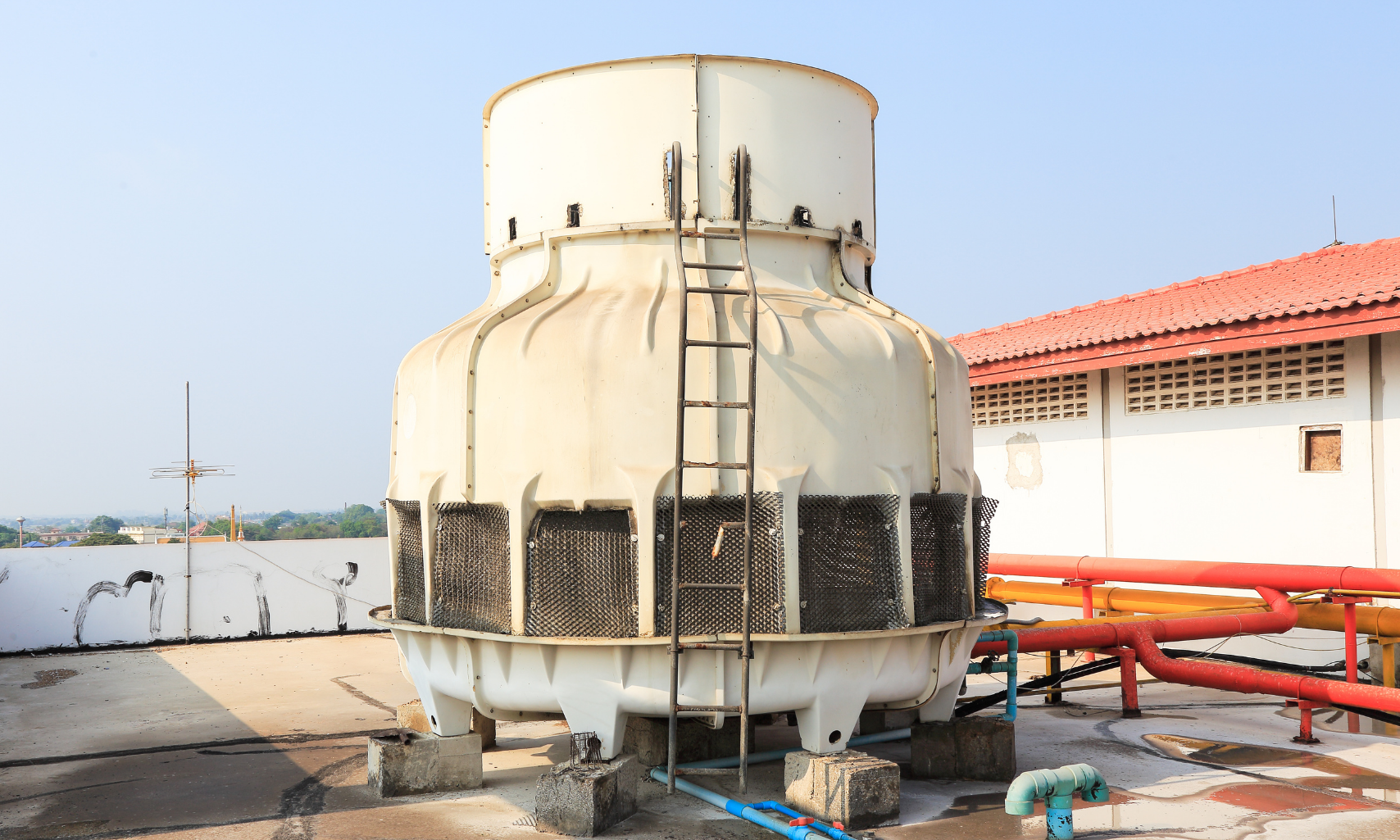
In cooling towers, maintaining proper water balance is essential for reliable performance and cost control. One of the most important concepts in achieving this balance is cycles of concentration, a key indicator of how efficiently a cooling tower system operates. It reflects how much dissolved material builds up in the cooling tower water as the system runs.
As water evaporates during normal operation, it leaves behind dissolved minerals, causing a gradual increase in concentration. Without proper control, this can impact performance, water quality, and equipment life. For water treatment professionals managing cooling towers, understanding cycles of concentration is fundamental to optimizing system efficiency, reducing operating costs, and maintaining long-term system reliability.
Understanding Cycles of Concentration
Understanding cycles of concentration begins with recognizing how water behaves inside a cooling tower system. As recirculating water continuously absorbs heat and circulates through the system, a portion is lost through evaporation. When this happens, only pure water is removed, leaving behind dissolved solids and increasing the overall concentration of total dissolved solids in the remaining system water. This process defines what is commonly referred to as cycles of concentration (CoC).
How Cycles of Concentration Work
- As water evaporates, dissolved minerals remain in the system, causing a steady concentration increase
- Fresh make up water is added to replace lost volume, introducing new dissolved minerals into the system
- Over time, the ratio between dissolved solids in recirculating water and makeup water determines the cycles of concentration
- Conductivity is commonly used to monitor this relationship because it reflects the level of dissolved solids in the water
In simple terms, cycles of concentration compare how concentrated the system water becomes relative to the incoming make up water. This concept is essential for understanding cycles of concentration and managing water quality effectively in cooling towers.
Why Cycles of Concentration Matter
The level of cycles of concentration in a cooling tower system has a direct impact on performance, efficiency, and cost. Maintaining the proper balance ensures that cooling systems operate effectively while minimizing unnecessary resource use.
| Impact Area | Effect of Poor Control | Benefit of Proper Cycles |
|---|---|---|
| Heat transfer efficiency | Scale buildup reduces heat transfer | Clean heat transfer surfaces improve performance |
| Energy consumption | Increased energy needed to compensate for inefficiency | Lower energy demand and improved thermal efficiency |
| Water consumption | Excessive blowdown leads to more water use | Optimized cycles reduce water consumption |
| Operating costs | Higher chemical and utility costs | Lower overall operating costs |
When cycles are too low, excessive blowdown wastes water and treatment chemicals. When cycles are too high, scale formation and fouling can develop on heat transfer surfaces, reducing heat transfer efficiency and increasing energy consumption.
Achieving the right balance of cycles is essential for maintaining thermal efficiency, controlling water usage, and ensuring reliable operation of cooling towers.
The Role of Blowdown in Controlling Cycles
In a cooling tower system, cooling tower blowdown is the primary method used to control the buildup of dissolved solids. As evaporation occurs and concentration increases, a portion of the system water must be intentionally removed as blowdown water to prevent excessive scaling and fouling.
How Blowdown Controls Cycles
- Cooling tower cycles are regulated by removing water with high dissolved solids and replacing it with fresh make up water
- A properly set blowdown valve helps maintain the desired concentration level based on conductivity or other control parameters
- Higher cycles result in less frequent tower blowdown, which improves water savings but requires tighter control
- Evaporative losses continuously drive concentration upward, making blowdown essential for maintaining balance
By adjusting the rate of tower blowdown, operators can directly influence the number of cycles in the system. Effective control ensures that dissolved solids remain within acceptable limits while minimizing unnecessary water discharge.
Factors That Determine Target Cycles
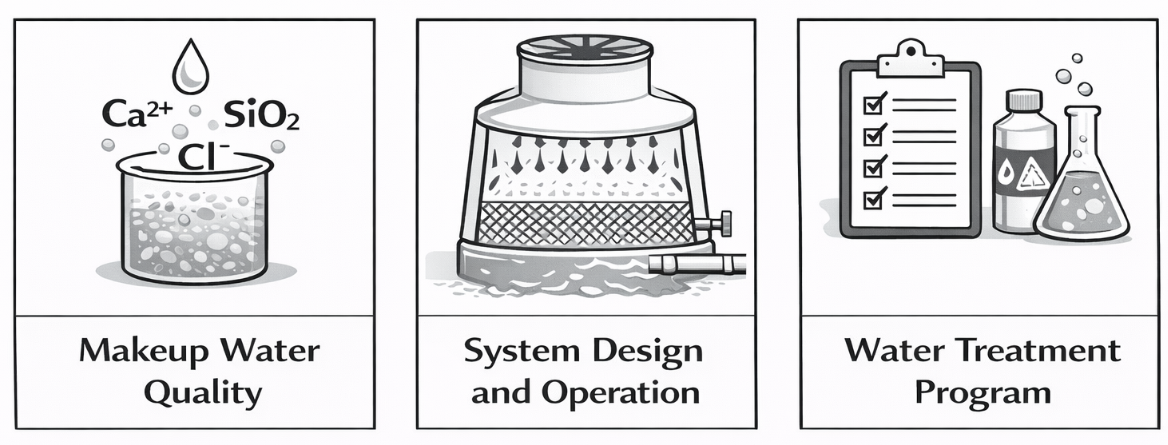
Determining the appropriate or target cycles for a cooling tower system depends on several interrelated factors. Each system operates under unique conditions, and the ability to safely increase cycles is largely influenced by water chemistry, design, and treatment strategy.
Makeup Water Quality
- Makeup water quality is often the primary limiting factor in setting cycles
- High levels of calcium, silica, and chloride increase the risk of scale formation and corrosion
- The concentration of dissolved minerals directly affects how much concentration the system can tolerate
- Poor incoming water quality reduces the ability to safely operate at higher cycles
System Design and Operation
- The design of the cooling tower system influences how water flows and concentrates
- Factors such as flow, system volume, and heat load impact concentration rates
- Variations in tower operation can affect how quickly solids accumulate
- Leaks or uncontrolled losses can disrupt system balance and skew cycle calculations
Water Treatment Program
- Effective treatment programs are essential to control scaling, fouling, and corrosion
- Proper selection of treatment chemicals helps stabilize dissolved solids and prevent deposition
- Monitoring and control ensure the system remains within safe operating limits
- A water treatment specialist plays a key role in helping determine safe and sustainable cycles
Ultimately, the goal is to determine the highest achievable cycles that maintain system reliability while avoiding damage from over-concentration.
Also read: From Resin Fouling to Resin Loss: How to Spot and Solve Demineralizer Problems
Risks of Increasing Cycles Too Far
While increasing cycles can improve water efficiency, pushing cycles beyond safe limits can create significant operational risks. As concentration rises, the likelihood of deposits and system damage increases, especially if conditions are not properly controlled.
- Scale formation can occur when dissolved minerals such as calcium and silica exceed their solubility limits, leading to hard scale deposits
- Corrosion risk increases as aggressive ions like chloride concentrate in the system water, potentially damaging metal surfaces
- Excess buildup can restrict flow and reduce overall system performance
- Undetected issues may lead to leaks and long-term damage to critical equipment
Operating at higher cycles or higher CoC requires careful monitoring and control. Without proper management, the benefits of increasing cycles can quickly be offset by reduced reliability and costly repairs.
Optimizing Cycles Through Water Treatment
Achieving optimal cycles of concentration requires more than adjusting blowdown rates; it depends on a well-designed water treatment strategy that keeps dissolved solids under control while protecting system components. Effective programs help maintain stability in recirculating water and ensure the system operates within safe limits.
Key Elements of an Effective Program
- Selection of the right treatment chemicals to control scale, corrosion, and fouling
- Continuous monitoring of conductivity to track concentration levels in real time
- Maintaining proper control of suspended solids to prevent deposition on surfaces
- Implementing controlled chemical dosing to match system conditions
- Maintaining the right balance between water efficiency and system protection
Well-managed treatment programs allow operators to safely push toward higher efficiency while avoiding the risks associated with over-concentration. When properly applied, these strategies support long-term system performance, improved reliability, and optimized use of water and chemicals.
ETI Support for Cooling Tower Optimization
Optimizing cycles of concentration in a cooling tower system requires more than standard chemistry; it demands a combination of tailored treatment programs, technical expertise, and consistent product performance. ETI supports water treatment specialists, distributors, and OEMs by providing customized cooling water solutions designed to manage scale, corrosion, and fouling while enabling safe, higher-efficiency operation.
ETI’s capabilities include custom-formulated antiscalants, dispersants, corrosion inhibitors, and advanced biocide programs that address varying makeup water quality and system conditions. With a strong focus on flexibility, ETI helps partners adapt their programs to maintain proper balance, protect equipment, and support higher cycles without compromising reliability. Backed by ISO 9001:2015 manufacturing and deep technical support, ETI acts as an extension of your team, helping you deliver consistent results in demanding environments.
Contact ETI Water to strengthen your cooling tower programs and confidently optimize system performance.