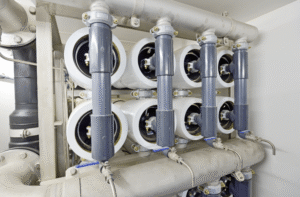
Antiscalant Chemistry for RO and Cooling Systems
At 75% recovery, a reverse osmosis system can produce a concentrate stream containing approximately four times the feedwater’s dissolved salt concentration. This simplified mass balance

At 75% recovery, a reverse osmosis system can produce a concentrate stream containing approximately four times the feedwater’s dissolved salt concentration. This simplified mass balance
Conserving water while controlling scale and corrosion is a recurring concern in industrial cooling systems. The U.S. Department of Energy reports that increasing cooling tower
An EPA-registered biocide does not, by itself, establish compliance across a customer’s operation. Product labeling, wastewater discharge requirements, and workplace chemical safety each address different
Industrial water treatment systems operate under changing conditions. Variations in incoming water, production demands, and equipment condition can affect treatment performance and operating costs. Common
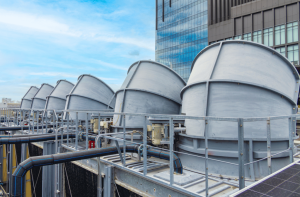
Cooling towers, boilers, and industrial wastewater systems depend on treatment programs that respond to changing water quality and operating demands. When chemistry, monitoring, and maintenance
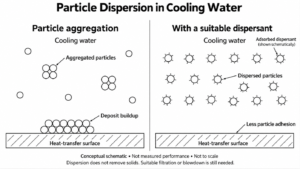
Deposits in cooling water systems can restrict flow, contribute to corrosion, and cause reduced heat transfer efficiency. For independent water treatment professionals, selecting the dispersants