Industrial water treatment systems operate under changing conditions. Variations in incoming water, production demands, and equipment condition can affect treatment performance and operating costs. Common water treatment challenges include scale, corrosion, microbial growth, and inconsistent wastewater results, each requiring investigation before corrective action.
For independent water treatment professionals, distributors, and OEMs, addressing these problems starts with understanding the application. This article examines recurring issues across cooling, boiler, and industrial wastewater systems, explaining how testing, maintenance, and technical support help professionals select appropriate responses and verify results.
Key Takeaways
- Investigate changes in water quality, operating demand, and equipment condition before adjusting treatment.
- Match chemistry, cleaning, and maintenance to the application. Use testing to evaluate deposits, microbial control, and wastewater performance.
- Document corrective actions and verify results. ETI’s technical and laboratory support helps partners make informed treatment decisions.
Responding to Changing Water Quality
Changes in water quality can create water treatment challenges even when chemical feed settings remain unchanged. Professionals should compare current results with historical data and investigate what changed before adjusting the program.
- Source-water changes: A different water supply or seasonal variation can alter raw water hardness, alkalinity, and suspended solids. Check whether pretreatment continues to deliver feed water suitable for the equipment and operating conditions.
- Process contamination: Leaks, cleaning activities, or production changes can introduce contaminants into cooling loops or wastewater streams. Investigate possible entry points and test for relevant substances, including organic matter where appropriate.
- Operating demand: Changes in production, flow, or shutdown schedules can affect water turnover and treatment requirements. Review sampling conditions alongside operating records to determine whether unusual results reflect a temporary event or a persistent shift requiring corrective action.
Managing Scale, Corrosion, and Fouling
Scale, corrosion, and fouling can impair treatment systems, but similar symptoms may have different causes.
Investigate Deposits and Corrosion
Reduced flow or declining heat-transfer efficiency warrants investigation of both water chemistry and equipment condition. Mineral scale, accumulated solids, and corrosion products can each affect a heat-transfer surface and require different corrective actions.
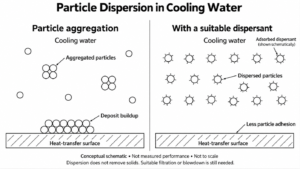
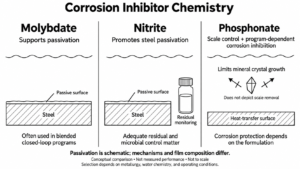
Use water analysis, deposit testing, and inspection findings to guide chemical treatment. Corrosion control chemicals must suit the system’s materials and operating conditions, while scale inhibitors and dispersants address specific deposition risks.
Coordinate Chemistry and Maintenance
Treatment performance also depends on mechanical condition. Inspect feed equipment, strainers, and control valves, particularly where aging infrastructure contributes to leaks or unreliable operation.
Filtration can help remove suspended material, while regular cleaning addresses accumulated deposits. Coordinate these measures with the treatment program to protect equipment, and investigate why deposits formed so the same problem does not return after cleaning.
Controlling Microbial Growth
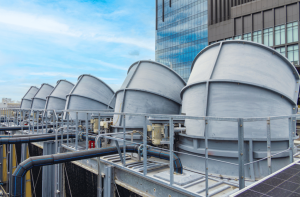
Warm water, stagnant areas, and accumulated deposits can encourage bacterial growth in cooling systems. Organic contaminants may increase microbial activity or disinfectant demand, making control more difficult. These conditions can contribute to fouling and health concerns, including Legionella risks in cooling towers, so visual cleanliness alone does not establish effective control.
Proper treatment combines an application-specific microbial control program with cleaning, monitoring, and maintenance. Review residual measurements, feed equipment, water turnover, and evidence of biofilm when evaluating the treatment process. Follow product label requirements and the site’s water management program when making adjustments. A properly managed system uses documented results to check whether control measures remain effective as conditions change.
Handling Industrial Wastewater Variability
Industrial wastewater can change with production schedules, raw materials, and cleaning operations. Treating wastewater consistently requires understanding those changes before selecting treatment methods. For professionals supporting wastewater treatment plants, unusual results should trigger a review of incoming conditions and process performance.
| Challenge | What to Investigate |
|---|---|
| Inconsistent solids separation | Check suspended solids, pH, mixing, and chemical feed. Use jar testing to compare coagulants and flocculants under representative conditions. |
| Incomplete metals removal | Identify the heavy metals present and review conditions affecting precipitation and separation. Verify results through appropriate analysis of treated water. |
| Changing wastewater composition | Review production changes, contamination sources, and organic loading. Investigate odor issues alongside retention time and treatment conditions. |
Wastewater treatment adjustments should be evaluated against applicable environmental regulations and the receiving system’s requirements. Document chemical consumption, sludge production, and discharge results during trials. This helps professionals assess whether a change improves treatment while accounting for operating demands and environmental impact.
Troubleshooting Recurring Treatment Problems
Recurring water treatment challenges require a structured review of the water treatment process. Before changing chemicals, check whether measurements, equipment, or operating practices explain the problem.
- Verify measurements: Confirm sampling locations, test methods, and instrument calibration. Compare current readings with operating records to distinguish persistent changes from isolated results.
- Inspect equipment: Check chemical feed pumps, sensors, valves, and flow conditions. Review staff training and maintenance practices to identify gaps that prevent the program from working as intended.
- Document and recheck results: Record corrective actions and monitor their effects under comparable conditions. Evaluate operational costs alongside treatment performance to determine whether proposed solutions reduce costs without weakening equipment protection.
Review connected processes when problems persist. Laboratory findings and field observations together provide a stronger basis for corrective action.
How ETI Supports Water Treatment Professionals
Eastern Technologies, Inc. helps independent water treatment companies, distributors, and OEMs address water treatment challenges with application-specific chemicals and expert guidance. Supporting professionals since 1986, ETI works through distributor partners without selling directly to end users. Its cooling and boiler treatments and wastewater portfolio support programs tailored to customer requirements.
ETI’s water treatment technical services provide application guidance and troubleshooting, while water treatment laboratory services include water, deposit, and corrosion coupon analysis. Custom formulations, polymer selection, and jar-testing support help partners investigate problems and evaluate options for improving water quality. These resources supplement field observations, helping professionals make informed adjustments and assess results while maintaining ownership of their customer relationships.
Bring your next treatment challenge to ETI Water for technical support that helps your team identify a practical path forward.
Frequently Asked Questions (FAQs)
When should professionals evaluate advanced water treatment methods?
Consider reverse osmosis or advanced filtration systems when testing shows that existing treatment cannot reliably meet application requirements. Evaluate feedwater quality, equipment compatibility, maintenance needs, and waste streams before selecting an approach.
How does ion exchange support boiler feedwater treatment?
Ion exchange softening removes calcium and magnesium that can contribute to boiler scale. Professionals should monitor softener performance because hardness breakthrough can increase deposition risk and affect the downstream chemical program.
What should professionals investigate when phosphorus removal is inconsistent?
Review incoming phosphorus concentrations, pH, chemical feed, mixing, and solids separation to identify conditions affecting removal. ETI’s jar-testing and application support can help partners evaluate chemical options, with plant trials confirming performance.
Can conserving water create additional water treatment challenges?
Reducing blowdown or introducing reused water can increase contaminant concentrations and change treatment requirements. Conserving water resources requires checking that the revised program maintains appropriate control of scale, corrosion, and microbial growth.
What information helps ETI troubleshoot a recurring problem?
Provide recent water analyses, operating records, chemical feed details, and observations of deposits, corrosion, or inconsistent results. ETI can use this information to guide further testing and help partners evaluate appropriate corrective actions.