Conserving water while controlling scale and corrosion is a recurring concern in industrial cooling systems. The U.S. Department of Energy reports that increasing cooling tower cycles of concentration from three to six can reduce makeup water use by approximately 20%, provided water chemistry and treatment conditions support the change.
For independent treatment professionals and OEMs, achieving such improvements requires coordinated water treatment programs. Chemistry, operating controls, testing, and maintenance must work together. This article explains how to build that coordination into cooling, boiler, and wastewater applications, with clear responsibilities and measurable performance objectives.
Key Takeaways
- Build the treatment plan around water quality, equipment requirements, and measurable objectives. Match chemistry and controls to the application.
- Assign clear responsibilities for testing, maintenance, and corrective action. Verify that adjustments produce the intended results.
- Review performance as conditions change. ETI’s products, laboratory services, and technical guidance support professionals throughout program development and ongoing customer service.
What a Complete Treatment Program Includes
Effective water treatment programs connect chemical selection with the daily practices needed to maintain control. A complete program defines what the treatment process should achieve, how performance will be measured, and who will respond when results fall outside established limits.
| Program Component | Purpose |
|---|---|
| Treatment chemistry | Select products suited to water conditions, equipment materials, and performance objectives. |
| Feed and operating controls | Deliver treatment appropriately and maintain application-specific operating ranges. |
| Testing and monitoring | Track relevant measurements at defined locations and intervals. |
| Equipment maintenance | Keep pumps, sensors, valves, and other supporting equipment functioning correctly. |
| Assigned responsibilities | Identify who performs checks, reviews findings, and authorizes corrective actions. |
| Documentation | Record readings, service findings, adjustments, and follow-up results for ongoing review. |
Coordination is essential because each component affects the others. Reliable management connects testing results to practical action, while clear records help professionals determine whether the program continues to meet the customer’s requirements as conditions change.
Assess the System and Define Objectives
Before professionals develop a treatment plan, they need a picture of the system and its operating history. Combine laboratory results with equipment information and discussions with site personnel to establish a baseline for evaluation.
- Assess incoming water quality: Identify the water source, existing pretreatment, and seasonal changes. Select tests relevant to the application, such as hardness, alkalinity, conductivity, or iron. Compare incoming water with samples from appropriate process locations to understand how conditions change through the system.
- Review equipment and operating conditions: Document materials, temperatures, pressures, flow, and periods of shutdown or low demand. Inspect chemical feed equipment and review maintenance records. Understanding normal operation helps distinguish chemistry problems from mechanical faults or changes in production.
- Define measurable objectives: Establish application-specific goals for equipment protection, water use, or wastewater performance. Identify which measurements will demonstrate progress and how results will be compared under similar operating conditions. Record baseline values so subsequent improvements can be evaluated against evidence.
Use these findings to select treatment and monitoring methods. Objectives should reflect equipment requirements and actual operating constraints, with responsibilities agreed upon before the program begins.
Match Treatment to the Application
Treatment priorities depend on how water moves through equipment, which contaminants are present, and what the system must achieve. Cooling, boiler, and wastewater applications therefore require different chemistry, controls, and performance measures.
Cooling Systems
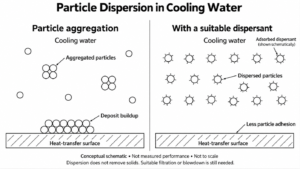
Cooling programs coordinate scale, corrosion, and microbial control with blowdown and makeup water management. Select operating targets based on water chemistry, equipment materials, and heat load, then verify that chemical feed and monitoring support those targets.
Where suspended material contributes to fouling, filtration may complement chemical treatment. Include inspections and cleaning in the plan because deposits and poorly maintained equipment can undermine control even when routine readings appear acceptable.
Boiler Systems
Boiler programs should account for feedwater quality, pressure, condensate return, and equipment requirements. Treatment selection must address relevant deposition and corrosion risks while supporting appropriate blowdown control.
Coordinate chemistry checks with pretreatment monitoring and mechanical inspections. Excessive blowdown discards heated water and chemicals, while insufficient blowdown can contribute to deposits or carryover. Include shutdown and restart requirements where intermittent operation affects equipment protection.
Industrial Wastewater
Wastewater treatment begins with characterizing the incoming stream and defining the required treated water quality. At wastewater treatment facilities, changing production conditions can affect chemical demand, solids separation, and sludge handling.
Use jar testing and plant trials to evaluate options under representative conditions. For each industrial wastewater treatment plant, review discharge requirements and applicable regulations before establishing targets. Treatment facilities should also evaluate sludge and residuals management, since treatment decisions can affect both operating demands and the receiving environment.
Establish Monitoring and Corrective Actions
Water treatment programs need monitoring that connects measurements to decisions. Define acceptable operating ranges, assign responsibility for reviewing results, and establish how operators should respond when conditions move outside those ranges.
- Select relevant measurements: Choose parameters that reflect the application’s risks and objectives, such as conductivity, pH, chemical residuals, corrosion indicators, or wastewater quality. Identify sampling locations and methods so readings remain comparable over time.
- Establish testing responsibilities and frequency: Create a schedule suited to system conditions, variability, and equipment requirements. Identify who collects samples, checks instruments, records findings, and reviews trends. Increase attention when unusual results or operating changes suggest control may be deteriorating.
- Define corrective actions: Document the checks and responses required when results exceed established limits. Confirm questionable measurements, inspect feed equipment, and investigate operating changes before adjusting treatment. Specify when staff should seek technical assistance, and ensure corrective procedures account for product instructions and site safety requirements.
After each adjustment, review follow-up measurements to confirm its effect. Record the action, reason, and outcome so future decisions draw on an accurate history of system performance.
Coordinate Training, Maintenance, and Program Reviews
Training helps personnel connect routine tasks with the conditions they are intended to control. Cooling and boiler teams, along with wastewater operators, need practical knowledge of sampling, chemical feed checks, recordkeeping, and escalation procedures. A treatment plant operator should understand assigned responsibilities and recognize when results require specialist review. Coordinate instruction with maintenance so staff can identify equipment problems that affect treatment delivery.
Review the program when water sources, production schedules, equipment, or treatment requirements change. Share relevant findings among site personnel, maintenance teams, and the water treatment professional so adjustments reach everyone responsible for implementation. Periodic reviews should compare results with established objectives and confirm that procedures still match actual conditions. The benefits of a well-designed program depend on consistent execution, clear communication, and timely updates as the application evolves.
How ETI Supports Program Development and Performance
Eastern Technologies, Inc. supports independent water treatment companies, distributors, and OEMs in developing and maintaining water treatment programs. Founded in 1986 and recognized as AWT’s 2023 Supplier of the Year, ETI supplies products and technical backing through its distribution partners without selling directly to end users. Its cooling and boiler treatments, biocides, and wastewater portfolio give professionals access to chemistry suited to varied customer applications.
ETI’s water treatment technical services include application guidance, troubleshooting, field assistance, and training. Its water treatment laboratory services provide water, deposit, and corrosion coupon analysis, with historical reporting that supports trend evaluation. Custom formulations, polymer selection, and jar-testing assistance help partners assess options when application requirements call for adjustments. These resources supplement the professional’s field knowledge, supporting informed decisions throughout program development, implementation, and review. Partners can draw on that support while maintaining ownership of their customer relationships.
Discuss your next program requirement with ETI Water. Bring your system conditions, analytical results, and performance objectives to a technical partner focused on helping your team deliver reliable customer support.
Frequently Asked Questions (FAQs)
What information should professionals gather before selecting a treatment program?
Gather source-water analyses, equipment specifications, operating schedules, existing chemical usage, and records of recurring problems. Observations from a site visit help connect those records to actual conditions and identify where further testing or inspection would support treatment selection.
How often should water treatment programs be reviewed?
Set a review schedule based on system variability, operating requirements, and treatment results. Reassess the program when water sources, production demands, equipment, or analytical trends change, rather than waiting for the next scheduled review when a problem is developing.
Can ETI support hands-on training for treatment professionals?
ETI offers training and field assistance that help partners connect treatment concepts with practical application. Discuss the system, team responsibilities, and learning needs with ETI to determine suitable support without assuming that training provides operator certification or licensing credit.
Does chemical treatment replace a Legionella water management program?
Chemical treatment can support microbial control, but a Legionella water management program also addresses system assessment, responsibilities, monitoring, corrective actions, and documentation. Managing public health risks requires confirming both that the plan is implemented and that its controls are effective.
When should a standard formulation be reconsidered?
Review formulation suitability when changing water chemistry, equipment requirements, or recurring performance issues suggest the existing approach needs adjustment. ETI’s technical and laboratory support can help evaluate whether application changes, maintenance, or custom chemistry offer an appropriate response.