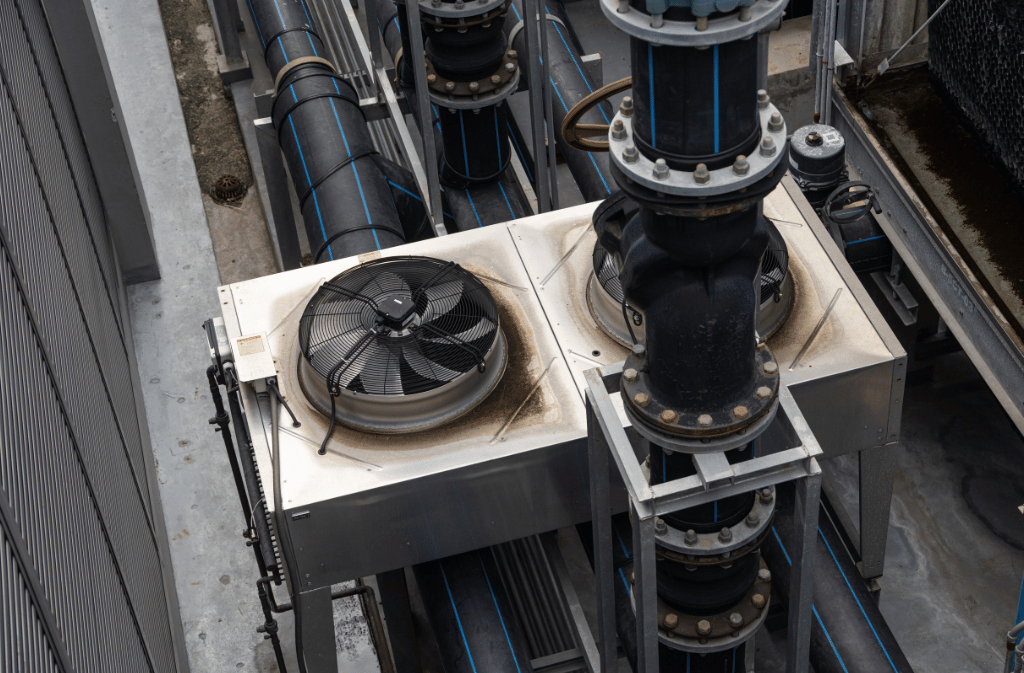
Mineral scale can accumulate on heat-transfer surfaces, piping, and equipment in industrial cooling and boiler water systems. These deposits can reduce heat-transfer efficiency, restrict water flow, and increase maintenance requirements. Effective scale prevention begins with understanding the water chemistry and operating conditions that contribute to mineral buildup.
Within the chelants vs phosphonates comparison discussed here, the main takeaway is how scale control helps water treatment professionals evaluate different chemical treatment approaches. While chelants primarily bind dissolved metal ions, phosphonates inhibit mineral crystal formation and growth. Both serve important roles, but their suitability depends on specific system conditions and treatment objectives.
Key Takeaways
- Chelants bind dissolved metal ions, while phosphonates primarily inhibit mineral crystal formation and growth.
- Treatment selection depends on water chemistry, operating conditions, and system requirements.
- Properly designed formulations and consistent monitoring help maintain effective scale control and equipment performance.
What Are Chelants in Water Treatment?
Chelants are chelating agents that bind dissolved metal ions, such as calcium, magnesium, and iron, into soluble complexes. Their ligands attach to metal ions at multiple sites to form a chelate, reducing their availability to form scale. Ethylenediaminetetraacetic acid (EDTA) is a widely used example, while disodium EDTA is one of its available salt forms.
Chelant performance depends on several factors:
- Metal concentration: Higher hardness and competing metals increase treatment demand.
- Water chemistry: pH affects complex formation and stability.
- Operating conditions: Temperature and system requirements influence chemical suitability.
In selected boiler water treatment programs, carefully controlled chelant dosing helps prevent deposits. However, excessive dosing can increase corrosion risks, making proper monitoring essential.
What Are Phosphonates in Scale Control?
Phosphonates are organic phosphorus compounds widely used in industrial water treatment for scale prevention. Unlike chelants, they primarily act as threshold inhibitors, interfering with mineral crystal formation and growth at relatively low concentrations. Although chemically different from phosphates, phosphonates also require careful application to maintain treatment effectiveness.
Common Phosphonates Used in Water Treatment
- HEDP (1-Hydroxyethylidene-1,1-diphosphonic Acid): Commonly used to inhibit calcium carbonate scale formation.
- ATMP (Aminotris(methylenephosphonic Acid)): Helps control mineral deposits in industrial cooling water systems.
- PBTC (2-Phosphonobutane-1,2,4-tricarboxylic Acid): Offers good calcium tolerance and resistance to oxidative degradation.
Phosphonate performance depends on water chemistry, temperature, and compatibility with other treatment chemicals. Selecting the appropriate compound helps maintain chemical stability and effective scale control.
Chelants vs. Phosphonates: Key Differences
When evaluating chelants vs phosphonates scale control, the primary distinction lies in how each chemistry manages scale-forming minerals. Chelants form soluble complexes with dissolved metal ions, while phosphonates primarily interfere with crystal formation and growth. These differences influence treatment requirements and application suitability.
| Factor | Chelants | Phosphonates |
|---|---|---|
| Mechanism | Bind metal ions into soluble complexes | Inhibit mineral crystal formation and growth |
| Dosage | Generally based on metal-ion concentration | Effective at relatively low, substoichiometric concentrations |
| Applications | Selected boiler and specialty water treatment | Cooling towers and industrial process water |
| Performance | Depends on complex stability and metal loading | Depends on scale saturation and water chemistry |
| Limitations | Excessive dosing may increase corrosion risks | Oxidative degradation and calcium-phosphonate precipitation |
Some phosphonates also possess chelating properties, so their functions can overlap. The appropriate choice depends on system conditions, treatment objectives, and chemical compatibility rather than one chemistry being universally superior.
How to Choose the Right Scale-Control Chemistry
In chelants vs phosphonates scale control decisions, selecting the appropriate treatment requires evaluating water chemistry, system conditions, and operational requirements. Neither chemistry provides a universal solution for every industrial application.
Evaluate Water Chemistry and Operating Conditions
Several factors influence treatment selection:
- Water hardness and alkalinity: Calcium levels and carbonate saturation affect scale formation.
- pH and temperature: These conditions influence mineral precipitation and inhibitor performance.
- Chemical compatibility: Oxidizing biocides and corrosion inhibitors can affect treatment stability.
- System monitoring: Proper dosage control and routine testing help maintain treatment effectiveness.
Consider the Water Treatment Application
In cooling towers, phosphonate-based formulations are commonly used to inhibit mineral deposits. Selected boiler systems may benefit from controlled chelant treatments, depending on pressure and feedwater quality.
For example, cooling systems with high calcium concentrations may require phosphonates with greater calcium tolerance. The final choice should reflect water analysis results and operating conditions.
Can Chelants and Phosphonates Work Together?
Chelants and phosphonates can be incorporated into blended scale-control formulations when system conditions support their combined use. Chelants bind dissolved metal ions, while phosphonates inhibit crystal formation and growth. Polymer dispersants may also be included to help manage suspended particles.
Developing an effective treatment program requires evaluating water chemistry, chemical compatibility, and operating conditions. Proper formulation and dosage control are essential to maintaining performance while minimizing unwanted chemical interactions or deposits.
How ETI Supports Scale-Control Programs
At ETI, we support independent water treatment professionals, distributors, and OEMs with the chemistry and technical expertise needed to manage scale challenges. Our cooling and boiler treatment chemicals include antiscalants and dispersants designed for varying water conditions and system requirements.
Through custom chemical blending, we develop application-specific formulations. Our laboratory services provide water and deposit analysis, while our technical services offer application guidance and troubleshooting. We work behind the scenes to strengthen your treatment programs without competing for your customers.
Contact ETI Water to discuss scale-control solutions backed by reliable chemistry and dedicated technical support.