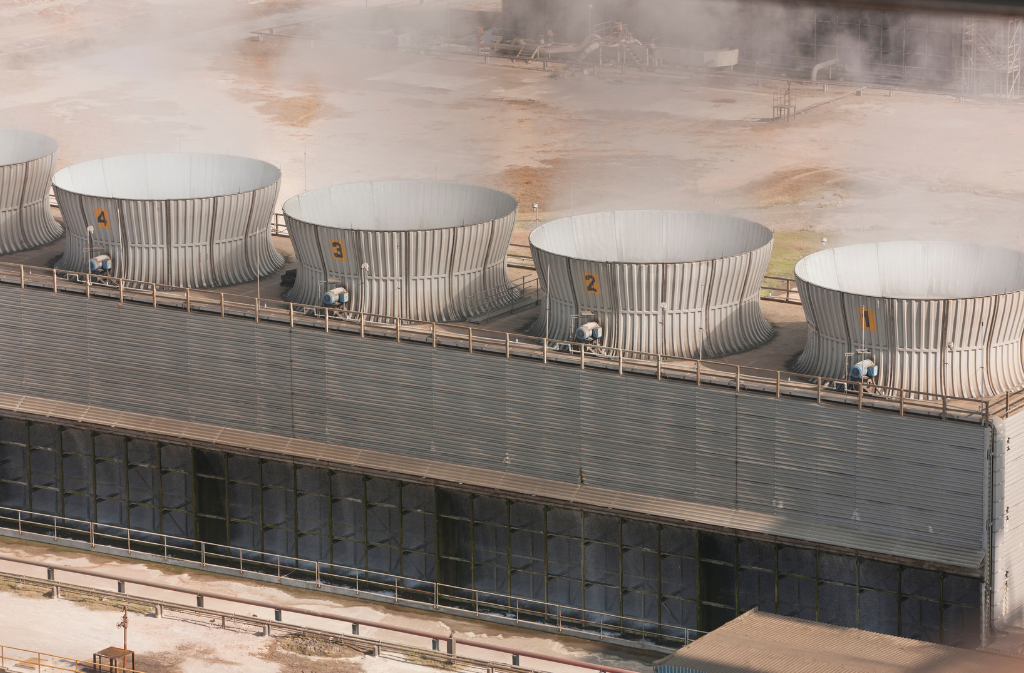
Microbiological growth can create persistent operational problems in industrial water systems. Bacteria, fungi, and algae may reduce heat transfer efficiency, contribute to corrosion, promote fouling, and increase the risk of process contamination. In cooling towers and other cooling water systems, these microorganisms can multiply rapidly when temperature, nutrients, water quality, and operating conditions support their growth.
A non oxidizing biocide is a chemical treatment used to control microorganisms without relying primarily on oxidation. Instead, these products act through targeted mechanisms such as disrupting the cell membrane, interfering with metabolic reactions, or damaging essential cellular proteins. Because different chemistries behave differently, effective biocide treatment depends on many factors, including the type of microorganisms present, water pH, contact time, system conditions, and compatibility with corrosion inhibitors and other chemicals. Proper selection helps water treatment professionals improve microbial control while supporting reliable system performance.
How Non-Oxidizing Biocides Work
A non oxidizing biocide controls microorganisms through targeted chemical interactions rather than through oxidation or an electron transfer reaction. Depending on the active ingredient, the product may interfere with essential structures or processes inside bacterial cells, limiting their ability to survive, reproduce, or maintain normal metabolic activity.
Common mechanisms include:
- Disrupting the cell membrane or weakening cell walls
- Reacting with thiol groups in enzymes and proteins
- Interfering with metabolic reactions
- Stopping respiration and energy production
- Damaging cellular proteins or genetic material
- Causing irreversible changes that lead to cell death
These mechanisms vary among chemistries, which is why one product may be more effective against certain bacteria, fungi, or algae than another. Some formulations act relatively quickly, while others require several hours of contact time to achieve the intended biocidal effect. Performance also depends on concentration, temperature, water chemistry, organic loading, and whether the microorganisms are free-floating or protected within biofilm. Maintaining a high enough concentration for the labeled contact period is therefore essential to kill microorganisms effectively without applying unnecessary chemical.
Oxidizing and Non-Oxidizing Biocides Compared
Oxidizing biocides and non-oxidizing biocides represent two broad categories of chemical products used to control microbiological growth in industrial water systems. Oxidizing products rely on oxidation, typically through a redox reaction or electron transfer reaction, while non-oxidizing products act through more targeted cellular mechanisms.
| Comparison Factor | Oxidizing Biocides | Non-Oxidizing Biocides |
|---|---|---|
| Primary mechanism | Use an oxidizing agent to damage proteins, membranes, and other cellular components | Interfere with specific structures or metabolic reactions inside microorganisms |
| Common examples | Chlorine, bromine, chlorine dioxide, sodium hypochlorite, hydrogen peroxide, peracetic acid, and activated sodium bromide programs | Isothiazolins, DBNPA, glutaraldehyde, THPS, and quaternary ammonium compounds |
| Treatment speed | Often fast acting when adequate residual and oxidizing power are maintained | Varies by chemistry; some act quickly, while others may require several hours |
| pH sensitivity | Many products are pH dependent, and performance may decline in alkaline systems | Response to water pH varies by active ingredient |
| Typical program role | Frequently used for routine or continuous microbial control | Often used for targeted, supplemental, or alternating treatment |
| Compatibility | May increase corrosion risk or interact with corrosion inhibitors and other chemicals | Must be evaluated for compatibility with metals, inhibitors, organic matter, and process chemistry |
| Persistence | May be consumed rapidly by system demand | Can range from short-lived to relatively persistent, depending on the product |
Neither category is automatically superior in every application. The best choice depends on operating conditions, microbial species, system demand, corrosion concerns, contact time, and the objectives of the overall water treatment program.
Common Types of Non-Oxidizing Biocides
Different non-oxidizing chemistries control microorganisms through different cellular mechanisms. Product selection should therefore consider the organisms present, water chemistry, system conditions, compatibility, required contact time, and the broader treatment program.
Isothiazolin-Based Biocides
Isothiazolins provide broad-spectrum activity against many bacteria, fungi, and algae. They act by reacting with thiol groups in essential enzymes and proteins, disrupting metabolic reactions and eventually causing cell death. Their performance can be affected by pH, temperature, organic matter, and exposure to other chemicals.
DBNPA
DBNPA is a fast-acting biocide that reacts with cellular components and quickly interferes with normal microbial function. Because it breaks down relatively rapidly under many water treatment conditions, it may be useful where effective microbial control is needed without long chemical persistence.
Glutaraldehyde
Glutaraldehyde controls microorganisms by reacting with proteins in bacterial cells and creating irreversible cross-links that interfere with cellular function. It is commonly considered for systems requiring broad-spectrum control, although its effectiveness depends on concentration, contact time, temperature, and system demand.
THPS
THPS is used in selected industrial applications to control various bacteria, including sulfate reducing bacteria associated with microbiologically influenced corrosion. It can perform under a range of operating conditions, but its use should still be based on compatibility, microbial testing, and label requirements.
Quaternary Ammonium Compounds
Quaternary ammonium compounds disrupt the cell membrane, causing leakage of essential cellular materials and loss of normal function. Quaternary ammonium chemistry may also interact with fatty acids and negatively charged surfaces, but performance can be reduced by organic matter, certain surfactants, or incompatible chemical products. For this reason, compatibility testing is important before incorporating these products into a biocide treatment program.
Factors That Influence Biocide Selection
Selecting a non oxidizing biocide requires more than identifying a broad microbial problem. The most appropriate chemistry depends on many factors, including water quality, system design, microbial conditions, treatment compatibility, and the operating goals of the facility.
Water and System Conditions
Important operating considerations include:
- Water pH and temperature
- System volume and retention time
- Flow rate and circulation patterns
- Organic loading and process contamination
- Inorganic ions or heavy metals
- Whether the system operates under alkaline conditions
- Available contact time
- Existing corrosion or deposit concerns
Microbial Conditions
The treatment program should also reflect the type and severity of microbiological growth present. Planktonic bacteria are generally easier to reach than microorganisms protected inside established biofilm, while sulfate reducing bacteria may require a different treatment approach than algae or fungi.
Chemical Compatibility
Compatibility with corrosion inhibitors, oxidizing biocides, dispersants, and other chemicals must be reviewed before treatment begins. The selected product should also be appropriate for the system metallurgy, discharge requirements, and any process-sensitive applications.
Cost is an important consideration, but low cost alone should not determine product choice. An effective program balances concentration, contact time, microbial control, compatibility, and overall system performance.
Applications in Cooling and Industrial Water Systems
Non-oxidizing biocides are used across a range of industrial water systems where uncontrolled microbial growth can interfere with heat transfer, water flow, equipment reliability, or product quality. In cooling systems, bacteria, fungi, and algae may accumulate on wetted surfaces, contribute to corrosion, and form deposits that reduce the performance of heat exchangers and other equipment.
Common applications include:
- Cooling towers
- Open recirculating cooling water systems
- Heat exchangers
- Process water systems
- Low-flow or intermittently operated areas
- Systems experiencing recurring bacterial growth
- Programs requiring supplemental biofilm control
Biofilm can be especially difficult to manage because microorganisms are protected by extracellular polymeric substances that limit chemical penetration. For this reason, chemical treatment may need to be combined with effective circulation, deposit removal, mechanical cleaning, and routine monitoring. The treatment approach should also account for system conditions, process contamination, and the potential for microbiological growth to return after the initial biocidal effect has declined.
Best Practices for Effective Biocide Treatment
A non oxidizing biocide performs best when it is used as part of a structured microbial control program rather than as a stand-alone corrective measure. Product selection, application, monitoring, and system maintenance should all support the same treatment objective.
- Identify the microbial problem.
Use bacterial testing, visual inspection, deposit analysis, and operating data to determine whether the issue involves planktonic bacteria, algae, fungi, sulfate reducing bacteria, or established biofilm. - Review system conditions.
Evaluate water pH, temperature, flow, retention time, organic loading, process contamination, and other operating conditions that may affect treatment performance. - Select a compatible chemistry.
Confirm that the biocide is compatible with system metallurgy, corrosion inhibitors, oxidizing products, and other chemicals already present in the program. - Apply the labeled concentration.
The treatment concentration must be high enough to produce the intended biocidal effect without exceeding label directions or creating unnecessary chemical demand. - Maintain sufficient contact time.
Some products act quickly, while others may require several hours to control microorganisms effectively. - Monitor treatment response.
Track microbial counts, biofilm indicators, system cleanliness, and equipment performance to verify that the treatment is working. - Address deposits and poor circulation.
Chemical treatment alone may not fully control organisms protected within deposits or extracellular polymeric substances. - Document and adjust the program.
Record dosage, contact time, system response, and treatment results so future applications can be based on verified performance.
Effective biofilm control depends on consistent monitoring, proper application, and good system housekeeping. Increasing concentration without understanding the underlying cause of microbial growth may raise cost without improving long-term control.
How ETI Supports Water Treatment Professionals
Eastern Technologies, Inc. supports independent water treatment companies, distributors, and OEMs with a broad range of biocide products and technical resources. As a B2B2C manufacturer and distributor, ETI does not compete directly with its partners for end-user accounts. Instead, it helps water treatment professionals select, supply, and implement treatment solutions that fit their customers’ system conditions and operating requirements.
ETI’s support for oxidizing and non-oxidizing biocide programs includes:
- More than 35 biocide chemistries, including isothiazolin blends, DBNPA, glutaraldehyde, THPS, chlorine-based products, and bromine-based products
- Custom chemical formulation for application-specific treatment needs
- Private-label and manufacturer-label options
- Technical consultation and laboratory support
- Product selection and troubleshooting assistance
- Flexible packaging and fulfillment
- EPA supplemental registration assistance
- Compatibility guidance for cooling water treatment programs
Through its industrial biocides and cooling and boiler treatment chemicals, ETI helps partners address bacterial growth, biofilm, fungi, algae, and other microbiological challenges without limiting them to a single chemistry. Its custom chemical blending and private label water treatment chemicals capabilities also allow distributors and OEMs to build treatment programs that reflect their own technical and commercial requirements.
For help selecting a non oxidizing biocide or developing a customized microbial control program, contact ETI to connect with a technical team focused on supporting your business and your customers.