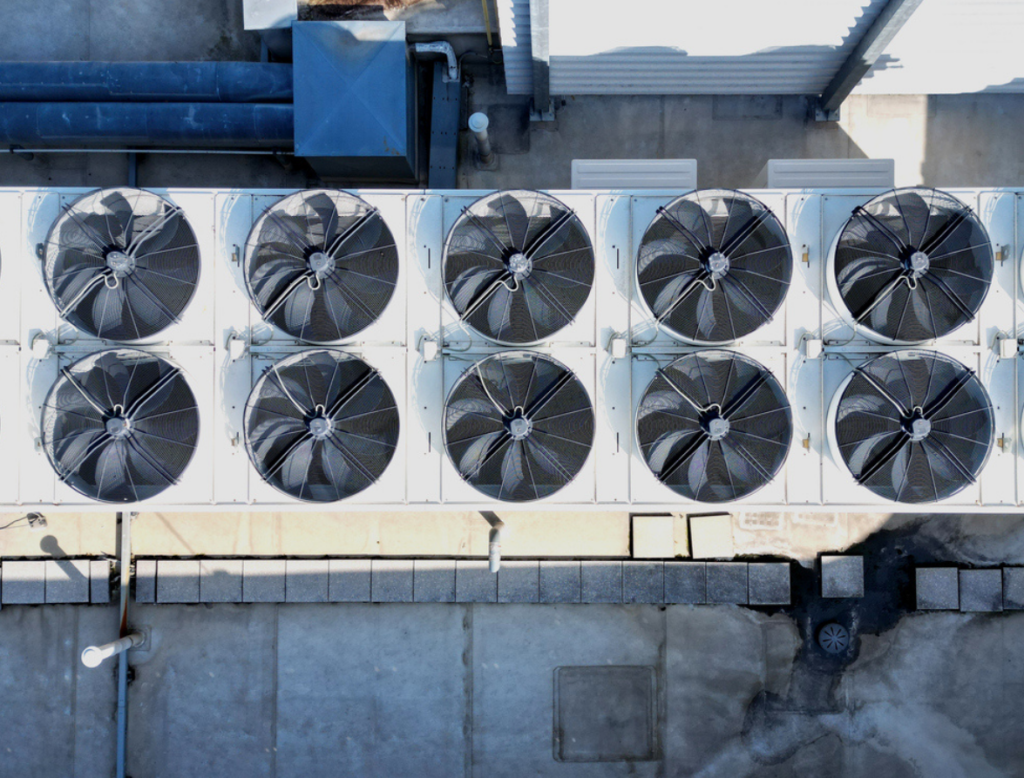
Manufacturing facilities depend on cooling towers to remove heat from production processes and supporting equipment. When water conditions are poorly controlled, deposits, corrosion and microbial growth can affect cooling reliability and create operational risks.
Developing a cooling tower chemical program manufacturers can rely on starts with understanding the water, equipment and operating demands. Effective cooling tower water treatment combines appropriate chemistry with controlled blowdown, monitoring and maintenance. For independent water treatment professionals and OEMs serving industrial facilities, this coordinated approach helps protect cooling equipment while giving facility teams a clearer basis for evaluating treatment performance and responding to changing conditions.
Key Takeaways
- Match cooling tower chemistry to water quality, system materials and manufacturing conditions.
- Coordinate scale, corrosion and microbial control with blowdown, physical cleaning and maintenance.
- Use monitoring and technical support to evaluate results, adjust treatment and pursue water efficiency while protecting equipment and supporting reliable cooling.
Why Manufacturing Cooling Towers Need a Coordinated Program
A cooling system faces several connected challenges. As cooling tower water circulates, evaporation concentrates dissolved substances, while airborne debris and process contamination can add to the treatment demand. Three concerns deserve particular attention:
- Scale and deposits: Mineral scale buildup and accumulated solids insulate heat transfer surfaces. Deposits can also restrict flow, making it harder for equipment to maintain the required cooling duty.
- Corrosion: Water chemistry, oxygen and operating conditions can contribute to deterioration of metal surfaces. Uncontrolled corrosion increases the potential for leaks, equipment failures and costly repairs.
- Biological growth: Bacteria, algae and other organisms can contribute to fouling. Microbial growth within biofilms can complicate treatment and create conditions associated with corrosion and health concerns.
These problems require a coordinated response because controlling one does not automatically resolve the others. Chemistry, cleaning and operating practices should work together to protect the tower and the connected cooling-water circuit.
Core Components of Cooling Tower Chemical Treatment
A cooling tower chemical program manufacturers can evaluate effectively should explain what each treatment component does and how its performance will be checked. Cooling tower chemical treatment typically combines several functions, although the products and feed arrangements depend on the application.
| Component | Primary purpose | Selection considerations |
|---|---|---|
| Scale inhibitors | Help limit mineral precipitation and deposition, including calcium carbonate scale. | Makeup-water composition, temperature, pH and operating concentration influence scale control requirements. |
| Corrosion inhibitors | Help protect metal surfaces from deterioration. | Selection depends on system metallurgy, water chemistry and compatibility with other treatment chemicals. |
| Dispersants | Help keep particles suspended and limit their accumulation on equipment. | Suspended solids, organic material and deposit characteristics influence product selection and removal needs. |
| Biocides | Control susceptible microorganisms and help manage biological fouling. | Product labels, water conditions, contact time and monitoring requirements guide application. |
These functions must work together. A dispersant may support biological control by helping manage deposits, but it does not replace an appropriate biocide. Likewise, scale inhibitors do not remove the need to control dissolved-solids concentration through blowdown.
Effective cooling water treatment also requires compatible products, suitable feed points and verification that chemicals reach the intended treatment locations. Comparing treatment programs solely by chemical price overlooks differences in dosage, monitoring needs and the operational consequences of inadequate chemical treatment.
Matching the Program to Manufacturing Conditions
Selecting a cooling tower chemical program manufacturers can maintain consistently requires more than knowing tower capacity. The treatment provider needs a practical picture of the facility’s water quality, equipment and production schedule.
Review these factors before recommending chemical programs:
- Makeup water: Analyze relevant characteristics such as hardness, alkalinity, conductivity, silica and chlorides to understand how concentration will affect tower water chemistry.
- System materials: Identify metals in heat exchangers, piping and other components so the program can manage scale while providing appropriate corrosion protection.
- Heat load: Consider production peaks, temperature changes and seasonal demand when evaluating treatment and monitoring needs.
- Contamination: Investigate potential process leaks, airborne particles and organic inputs that could change treatment demand.
- Operating schedule: Establish how the facility operates during weekends, shutdowns and intermittent production, including areas vulnerable to low flow or stagnation.
Also distinguish the cooling tower system from any separate closed process loop. These water systems can have different water chemistry and protection requirements, even when connected through a heat exchanger.
Balancing Cycles of Concentration, Blowdown and Water Efficiency
When water evaporates from a cooling tower, most dissolved minerals remain behind. Their concentration rises unless some circulating water is discharged as blowdown and replaced with makeup water. Cycles of concentration describe how concentrated the circulating water has become relative to the incoming supply.
For example, circulating-water conductivity of 1,200 µS/cm compared with makeup-water conductivity of 300 µS/cm suggests approximately four cycles of concentration. This is an illustrative calculation, not a recommended operating target. Chemical additions and changing source-water conditions can affect conductivity, so results need interpretation.
Increasing cycles can improve water efficiency by reducing blowdown and makeup-water consumption. However, excessive concentration can increase scale and corrosion risks. The appropriate balance depends on dissolved solids, system materials and the treatment program’s capabilities.
Conductivity-controlled blowdown and reliable flow measurements help identify unnecessary water usage and water waste. Tracking chemical consumption alongside these readings also supports program evaluation. Maintaining clean cooling water circuits and effective heat transfer supports system efficiency and energy conservation, but water savings should never come at the expense of equipment protection.
Monitoring, Maintenance and Program Adjustments
A cooling tower chemical program manufacturers can assess over time needs measurable operating limits and clear responses when results move outside them. Monitoring should show whether treatment is reaching its targets and whether system performance is changing.
- Check water conditions: Use water testing to track relevant parameters, including pH, conductivity, inhibitor levels and disinfectant residuals, as appropriate to the program.
- Verify equipment operation: Inspect chemical feed equipment, sensors, makeup controls and blowdown valves. Incorrect readings or failed components can undermine otherwise suitable chemistry.
- Evaluate deposits and corrosion: Combine inspections with laboratory analysis or corrosion coupons where appropriate to investigate developing problems.
- Record trends and actions: Document results, chemical adjustments and corrective work so facility teams can recognize recurring issues affecting tower performance.
Testing frequency depends on operating conditions, program requirements and the stability of results. Routine testing should support ongoing maintenance rather than become an isolated maintenance task.
Physical cleaning and microbial control also belong within a site-specific water management plan. Addressing sediment, biofilm and stagnation helps manage health risks alongside the chemical program.
How ETI Supports Cooling Tower Treatment Partners
At ETI, we support independent water treatment companies, distributors and OEMs with chemistry and technical guidance for manufacturing applications. Our cooling and boiler treatment chemicals include formulations combining scale inhibitors, dispersants and corrosion inhibitors, alongside cleaners and passivators for appropriate applications. Our biocides provide options for microbial control. For partners developing a cooling tower chemical program manufacturers can depend on, we help connect product selection with system conditions and treatment objectives.
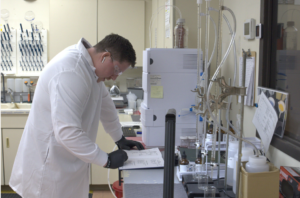
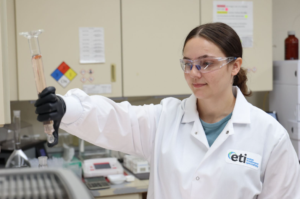
Our laboratory services include water, deposit and corrosion coupon analysis, while our technical support team assists with application questions and troubleshooting. These capabilities help your water treatment company evaluate results, refine its water treatment program and deliver appropriate water treatment solutions. We work through distributor partners and do not sell directly to end users. Contact ETI to discuss your cooling-water application and the product and technical support your team needs.
Frequently Asked Questions (FAQs)
Can the same chemical program serve every manufacturing facility?
No single formulation or feed strategy suits every facility because incoming untreated water, system materials, heat load and contamination can differ substantially, even between nearby plants. Cooling tower water treatment companies should evaluate these conditions and review operating records before selecting chemistry, then reassess the program when production schedules, water sources or equipment change.
How often should cooling tower water be tested?
Testing frequency should follow the site’s treatment requirements and water management plan, considering operating variability, applicable requirements and the parameters being measured rather than relying on one universal schedule. Continuous monitoring may support some controls, while manual checks and laboratory testing provide additional information; unstable results or significant operating changes may warrant more frequent review.
Can chemical treatment replace physical cleaning?
Chemical treatment helps control deposition, corrosion and microbial activity, but it cannot reliably remove every accumulation of sediment, debris or established deposits from tower systems and connected equipment. Physical cleaning remains part of proper water treatment and ongoing maintenance, with methods and scheduling chosen to protect heat exchange surfaces and address the system’s condition.
Can a treatment program reduce water consumption and help extend equipment life?
Potential key benefits include lower blowdown demand when water chemistry permits higher cycles, reduced deposition and better corrosion protection, all of which can support efforts to extend equipment life. Results depend on the starting conditions, operating controls and ongoing maintenance, so water savings and improvements in equipment condition should be measured rather than assumed.
What information should a water treatment company share with ETI?
Useful information includes makeup-water and circulating-water analyses, system metallurgy, operating temperatures, production schedules, current products and feed rates, plus records of deposits, corrosion or recurring control problems. Sharing this information helps our team discuss appropriate tower treatment options and identify where additional testing or troubleshooting could support the partner’s recommendations for its manufacturing customer.