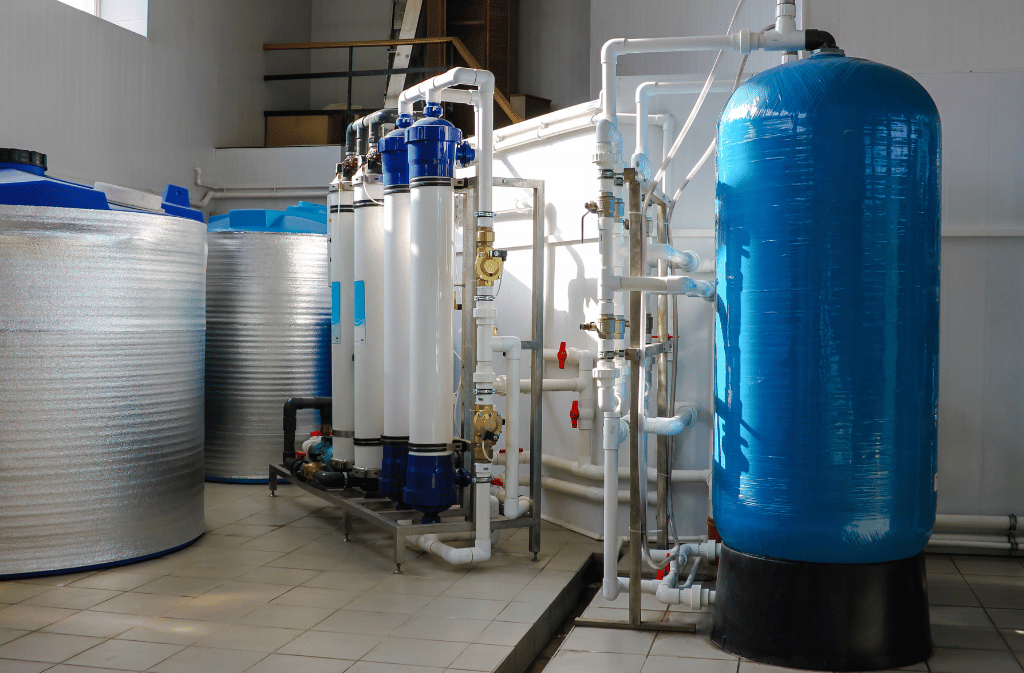
Reverse osmosis (RO) plays an indespensable role in industrial water treatment processes, providing high-quality water for manufacturing, power generation, and other commercial applications. However, the accumulation of dissolved minerals and contaminants can compromise membrane performance, reduce water production, and increase operating costs. Managing these challenges requires an effective approach to both preventive treatment and corrective maintenance.
Reverse osmosis antiscalants and cleaners serve complementary functions in maintaining membrane efficiency. Antiscalants inhibit mineral scale formation, while cleaners remove accumulated deposits that interfere with water filtration and system performance.
Understanding how these chemicals work, their respective applications, and the factors influencing their selection helps water treatment professionals develop reliable treatment programs. This article explores both treatment strategies and their importance in maintaining the long-term performance of industrial reverse osmosis systems.
Key Takeaways
- Reverse osmosis antiscalants inhibit mineral scale formation, helping maintain membrane performance and operational efficiency.
- Membrane cleaners remove accumulated inorganic, organic, and biological deposits to help restore system performance.
- Chemical selection depends on feed water composition, scaling potential, foulant characteristics, and membrane compatibility.
- Regular performance monitoring helps determine appropriate chemical treatment and cleaning requirements.
- ETI supports water treatment professionals with specialized membrane treatment chemicals, technical expertise, and a non-competing partnership model.
Understanding Scaling and Fouling in Reverse Osmosis Membranes
Scaling and fouling are among the most common challenges affecting the performance of reverse osmosis membranes. Although these problems involve different deposition mechanisms, both can restrict water passage, reduce membrane efficiency, and increase maintenance requirements.
How Mineral Scale Forms on Membranes
During reverse osmosis, feed water is forced through a semipermeable membrane under high pressure, separating water molecules from dissolved inorganic salts and other impurities. As water passes through the membrane, the concentration of total dissolved solids increases in the remaining reject stream.
When dissolved minerals exceed their solubility limits, precipitation can occur, resulting in the formation of inorganic scales on the membrane surface. Common deposits include calcium carbonate, calcium sulfate, barium sulfate, and silica. Without appropriate chemical treatment, these deposits can restrict water passage, reduce permeate flow rate, and increase the pressure required to maintain water production.
Common Causes of Membrane Fouling
Membrane fouling encompasses the accumulation of various substances, including mineral deposits, organic matter, colloidal particles, and microorganisms. Organic fouling may result from proteins, oils, and other organic contaminants, while biological fouling occurs when bacteria and other microorganisms develop biofilms. Inorganic fouling can also involve deposits containing iron and other metals.
These contaminants can accumulate on membrane surfaces and within feed channels, potentially blocking flow paths and increasing resistance to water passage. Identifying the underlying cause of fouling is essential for selecting appropriate treatment chemicals and maintaining consistent system performance.
How RO Antiscalants Help Prevent Mineral Scale Formation
RO antiscalants are specialized chemicals introduced into feed water before it reaches the membrane. Also known as scale inhibitors, these chemicals help control mineral precipitation under conditions where dissolved salts would otherwise form deposits. Antiscalants are formulated to address different scaling risks depending on water chemistry and system operating conditions.
How Antiscalant Chemistry Works
Antiscalants typically control mineral scale formation through three primary mechanisms:
- Threshold inhibition: Delays mineral precipitation, allowing scale-forming substances to remain soluble beyond their normal saturation limits.
- Crystal growth modification: Interferes with the development of mineral crystals, altering their structure and reducing their tendency to form deposits on the membrane surface.
- Dispersion: Helps keep small particles suspended in water, reducing their tendency to accumulate and form larger deposits.
The effectiveness of these mechanisms depends on the chemical composition of the antiscalant, its dosage, and the types of minerals present in the feed water. Different formulations may contain polymer-based or phosphonate-based components designed to address specific scaling conditions.
Operational Benefits of RO Antiscalants
Proper antiscalant application helps maintain membrane permeability, consistent water production, and system treatment capacity. By limiting mineral deposits, these chemicals can reduce avoidable cleaning requirements, minimize operational interruptions, and support more efficient water recovery.
Antiscalants can also help extend membrane service life and reduce the additional energy consumption associated with scale-related performance decline. However, their ability to prevent fouling is primarily limited to mineral scaling rather than organic or biological contamination.
To enhance overall treatment effectiveness, water treatment professionals should incorporate antiscalants into a comprehensive pretreatment and maintenance program. Regular water analysis, accurate chemical dosing, and performance monitoring are essential for maintaining reliable RO system operation.
The Role of Cleaners in RO Membrane Maintenance
Despite effective pretreatment and antiscalant application, contaminants can gradually accumulate within reverse osmosis membranes. Membrane cleaning involves using specialized chemical formulations to dissolve, loosen, and remove accumulated deposits. Industrial systems typically use a cleaning-in-place (CIP) method, which circulates cleaning solutions through membrane elements without requiring their removal.
Acidic Cleaning Agents for Inorganic Deposits
An acidic cleaning agent is primarily used to remove inorganic deposits, particularly calcium carbonate scale and certain metal oxides. Acid-based formulations lower the pH of the cleaning solution, helping dissolve susceptible mineral deposits and restore membrane permeability.
Citric acid is one example of a chemical used in industrial membrane cleaning. However, more resistant deposits, such as sulfate scales and silica, may require specialized formulations to achieve effective removal without damaging membrane materials.
Alkaline Cleaning Agents for Organic and Biological Fouling
An alkaline cleaning agent is particularly effective in removing organic fouling, including accumulated oils, proteins, and biological deposits. These formulations increase the pH of the cleaning solution, helping break down or disperse organic contaminants.
Sodium hydroxide is a common component in alkaline cleaning formulations, which may also contain surfactants and chelating agents. Depending on the nature of the deposits, sequential cleaning with compatible acidic and alkaline solutions may be necessary to achieve thorough cleaning.
When Should RO Membranes Be Cleaned?
Periodic cleaning should be based on normalized operating data rather than fixed maintenance intervals alone. According to technical guidance from the U.S. Environmental Protection Agency (EPA), indicators that membrane cleaning may be necessary include:
- A 10–15% reduction in normalized permeate flow rate.
- A 10–15% increase in normalized differential pressure.
- A decline in salt rejection under constant feed water salinity.
These indicators help professionals determine when membrane cleaning may be necessary before deposits become increasingly difficult to remove. Maintaining clean membranes requires timely intervention, appropriate chemical selection, and adherence to manufacturer-specific pH, temperature, and cleaning procedure requirements.
Reverse Osmosis Antiscalants and Cleaners: Key Differences
Although reverse osmosis antiscalants and cleaners contribute to membrane performance, they serve different purposes within a treatment program. Antiscalants provide preventive protection against mineral scale formation, while cleaning agents address deposits that have already accumulated within the RO system.
| Treatment Factor | RO Antiscalants | RO Membrane Cleaners |
|---|---|---|
| Primary function | Inhibit mineral scale formation | Remove accumulated deposits |
| Treatment approach | Preventive | Corrective |
| Application method | Dosed into feed water | Circulated through a cleaning system |
| Application timing | During normal RO operation | When performance indicators justify cleaning |
| Target contaminants | Scale-forming minerals | Mineral scale, organic matter, and biological deposits |
| Chemical selection | Based on water chemistry and scaling potential | Based on foulant composition and membrane compatibility |
| Operational objective | Maintain membrane performance | Recover lost membrane performance |
A combination of preventive scale inhibition and corrective membrane cleaning provides a more comprehensive approach to membrane maintenance. While antiscalants can reduce scale-related cleaning requirements, they cannot eliminate the need for periodic cleaning. Similarly, cleaning chemicals cannot replace effective pretreatment or continuous scale control during normal operation.
Selecting the Right Antiscalants and Cleaners for RO Systems
Selecting appropriate reverse osmosis antiscalants and cleaners requires an understanding of water chemistry, membrane characteristics, and operating conditions. Since industrial applications vary considerably, treatment chemicals should be selected according to the specific requirements of each system.
Evaluating Water Chemistry and Operating Conditions
Water treatment professionals should consider several factors when developing an effective chemical treatment program:
- Feed water composition: Evaluate total dissolved solids, hardness, alkalinity, and the presence of scale-forming minerals.
- pH and temperature: Assess conditions that influence mineral solubility, precipitation, and chemical effectiveness.
- Water recovery rate: Determine how operating recovery affects the concentration of dissolved salts in the reject stream.
- Foulant characteristics: Identify the composition of existing deposits to determine the appropriate cleaning chemistry.
- Product water requirements: Consider the required water quality and applicable chemical certification requirements.
These factors help determine suitable antiscalant formulations, dosing requirements, and membrane cleaning methods.
Ensuring Chemical Compatibility and Treatment Effectiveness
Chemical compatibility is essential when selecting products for an RO membrane. Antiscalants must be compatible with existing pretreatment chemicals, while cleaning solutions must remain within the membrane manufacturer’s specified pH and temperature range.
Routine monitoring of permeate production, salt rejection, and differential pressure helps professionals evaluate treatment effectiveness and identify emerging performance issues. Changes in feed water conditions may also require adjustments to chemical dosing or cleaning procedures.
Working with an experienced water treatment chemical supplier can provide access to technical expertise and application guidance. This support helps professionals select suitable treatment components, address complex operating challenges, and maintain consistent system performance.
How ETI Supports Industrial RO Membrane Treatment Programs
At Eastern Technologies, Inc. (ETI), we provide reverse osmosis antiscalants and cleaners to help independent water treatment professionals, distributors, and original equipment manufacturers (OEMs) develop effective membrane treatment programs. Our membrane treatment chemicals include NSF-certified antiscalant options, membrane cleaners, biocides for applicable non-potable systems, and chemicals for various stages of membrane treatment.
Beyond chemical supply, our technical support services include laboratory analysis, water chemistry studies, application guidance, and troubleshooting. We help our partners evaluate scaling potential, identify fouling challenges, and select appropriate treatment chemistry based on system requirements. Our private-label capabilities and flexible product supply also allow partners to tailor their offerings to customer needs.
Established in 1986, ETI is an ISO 9001:2015-certified company and the recipient of the 2023 AWT Supplier of the Year award. We operate exclusively through a partner-focused business model, providing the products, resources, and technical expertise our customers need without competing for their end-user accounts.
Whether you are developing a preventive treatment program or addressing complex membrane fouling challenges, we are here to support your business. Contact ETI today for membrane treatment chemistry and technical expertise that help you deliver dependable results to your customers.
Frequently Asked Questions (FAQs)
Can a Water Softener Replace an RO Antiscalant?
A water softener removes calcium and magnesium ions, reducing hardness-related scaling potential. However, antiscalants may still be necessary to address other scale-forming substances, such as silica and certain sulfate salts.
Do All RO Antiscalants Contain Phosphorus or Phosphates?
No, antiscalants vary in chemical composition and may include phosphorus-containing compounds or phosphorus-free polymers. Product selection should consider scaling potential, system requirements, and applicable discharge restrictions.
Are Reverse Osmosis Cleaning Chemicals Biodegradable?
The biodegradability of membrane cleaning chemicals depends on their individual ingredients and formulation. Water treatment professionals should consult product documentation to determine environmental characteristics and appropriate disposal requirements.
Can RO Membrane Cleaners Remove Existing Mineral Scale?
Appropriately formulated cleaners can dissolve or loosen certain inorganic scales and facilitate their removal. Cleaning effectiveness depends on deposit composition, chemical compatibility, and the severity of accumulation.
How Often Should Industrial RO Membranes Be Cleaned?
Cleaning frequency depends on feed water quality, pretreatment effectiveness, and operating conditions. Professionals should monitor normalized flow rate, salt rejection, and differential pressure to determine when cleaning is necessary.