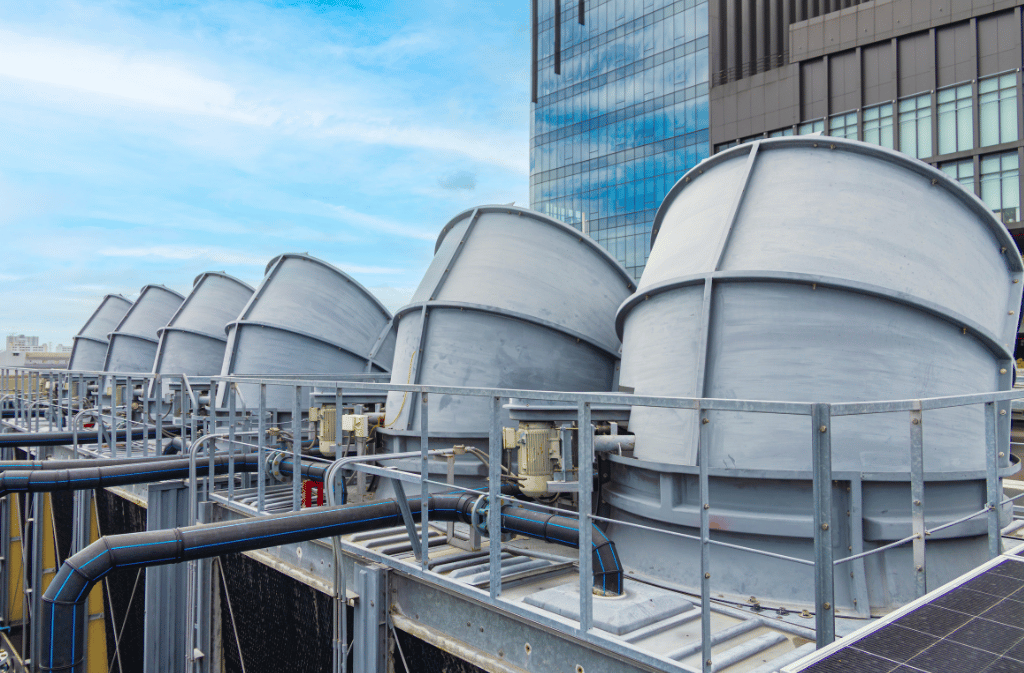
Cooling towers, boilers, and industrial wastewater systems depend on treatment programs that respond to changing water quality and operating demands. When chemistry, monitoring, and maintenance work together, professionals can limit unnecessary water losses, protect equipment, and manage operating costs. Water treatment efficiency means achieving the required system performance while using water, energy, and chemicals effectively. Improvements must preserve corrosion control, deposit prevention, and reliable operation.
For independent water treatment professionals, distributors, and OEMs, this starts with understanding each customer’s system. Source-water conditions, production schedules, equipment condition, and treatment results help determine where adjustments can deliver value. A practical approach combines baseline measurements, appropriate treatment selection, and ongoing verification. This article examines how professionals can apply that approach to cooling, boiler, and wastewater applications, helping customers conserve water resources while maintaining the dependable operation their businesses require.
Key Takeaways
- Establish representative baselines for water quality, consumption, and operating load before adjusting treatment. Compare results under equivalent conditions.
- Match cooling, boiler, and wastewater programs to actual system requirements. Coordinate chemistry, controls, and maintenance to protect equipment and manage resource use.
- Verify improvements through field measurements and laboratory analysis. Evaluate water, energy, chemical, and maintenance costs together while confirming reliable treatment performance.
Establish a Baseline Before Making Changes
Improving water treatment efficiency begins with documenting how a system performs under representative conditions. A baseline helps professionals distinguish treatment improvements from changes caused by production schedules, weather, or equipment operation. Start by assessing water quality alongside water consumption, chemical feed, and the system’s individual baseline energy use.
The following measurements help identify opportunities and establish a reliable basis for comparison:
| What to measure | What it reveals | Comparison considerations |
|---|---|---|
| Water quality parameters | Raw water characteristics and treatment conditions that influence scaling, corrosion, and fouling | Use consistent sampling locations and methods. Select key parameters appropriate to the application. |
| Makeup and blowdown volumes | How much replacement water enters and how much water is intentionally discharged | Compare readings over matching periods and account for leaks or unmeasured losses. |
| Operating load | Cooling demand, steam production, or wastewater throughput | Relate consumption to useful output rather than comparing totals alone. |
| Energy consumption | Power or fuel required to support operation | Assess energy alongside load, equipment condition, and seasonal variations. |
| Chemical consumption | Product usage relative to water volume and treatment demand | Record product concentration, feed settings, and changes in operating conditions. |
Reliable sample collection is equally important. Collect water samples from locations that represent the incoming supply and relevant treatment stages. Follow the laboratory’s instructions for containers, preservation, and holding times so results provide a dependable basis for decisions.
Build the baseline across a period that captures normal operating variability. A single reading can reveal a problem, but repeated measurements help establish whether it is persistent. Review unusual results before changing treatment, and document adjustments so later comparisons can connect performance changes to specific actions.
Optimize Cooling Water Use While Protecting Equipment
Cooling towers reject heat through evaporation, leaving dissolved minerals behind in the recirculating water. Managing that concentration is essential to conserving water while maintaining reliable heat transfer. Effective programs coordinate chemistry, filtration where appropriate, and operating controls to protect treatment systems as conditions change.
Set Appropriate Cycles of Concentration
Cycles of concentration describe how concentrated dissolved constituents become in circulating water relative to the makeup supply. Conductivity provides a practical indicator of total dissolved solids, although treatment decisions also require attention to specific constituents and operating conditions.
Increasing cycles can reduce blowdown and makeup requirements. The U.S. Department of Energy reports that increasing cycles from three to six can reduce cooling tower makeup water by approximately 20%. This is an illustrative opportunity, subject to the system’s water chemistry and operating constraints.
The appropriate target depends on makeup water quality, equipment materials, temperatures, and the treatment program. Higher concentrations of dissolved solids can increase scaling or corrosion risks, so cycle targets require application-specific evaluation.
Control Deposits and Microbial Growth
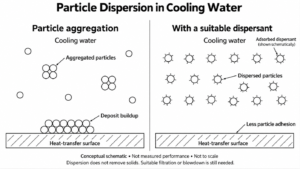
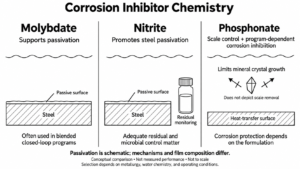
Scale, suspended solids, and biological fouling can interfere with heat transfer and undermine energy efficiency. Proper treatment combines suitable scale and corrosion control with a microbial control program matched to system conditions.
Where warranted, side-stream filtration helps remove suspended material and complements chemical treatment. Cleaner heat-transfer surfaces can support lower energy consumption, but savings depend on the equipment and its starting condition.
Verify Blowdown and Makeup Water Use
Conductivity controllers help maintain the selected operating range, while makeup and blowdown meters reveal actual water use. Check sensor calibration, valve operation, basin levels, and unexpected losses before attributing excessive consumption to chemistry.
Review chemical usage as operating conditions change. Reducing avoidable water losses can lower demand on local supplies and reduce wastewater discharge, supporting a lower environmental impact. Verify those gains alongside corrosion, deposit, and microbial monitoring results.
Improve Boiler and Steam System Reliability
Boiler water treatment processes support reliable steam production by controlling deposits, corrosion, and contaminant accumulation. Energy efficiency improvements depend on coordinating chemistry with mechanical operation. Reviewing blowdown, condensate recovery, and heat-transfer surfaces helps professionals identify practical ways to reduce energy waste while protecting equipment.
Control Blowdown
Blowdown removes concentrated impurities from boiler water. Excessive blowdown discards heated water and treatment chemicals, while insufficient blowdown can contribute to deposits or carryover into the steam system.
Set operating targets according to boiler pressure, feedwater quality, equipment requirements, and the treatment program. Automatic controls can help maintain those targets, but their readings and operation require verification. Routine testing should confirm that adjustments preserve acceptable boiler water conditions.
Evaluate Condensate Return
Suitable condensate retains heat and can reduce the need for fresh makeup water. Recovering it can improve energy efficiency because warmer feedwater requires less heating to produce steam. The potential energy savings depend on return temperature, recovery volume, and existing system conditions.
Check condensate quality before reuse, particularly where process contamination is possible. Inspect steam traps, return pumps, and the condensate distribution system for problems that prevent recovery. Treatment decisions should account for corrosion and the materials throughout the return network.
Protect Heat-Transfer Surfaces
Deposits interfere with heat transfer and can increase fuel requirements. Appropriate maintenance includes inspecting boiler surfaces, investigating deposit composition, and correcting the conditions responsible for buildup.
Combine inspection findings with feedwater and boiler water results to guide corrective action. Track overall efficiency against steam output and comparable operating conditions so improvements reflect verified performance.
Match Wastewater Treatment to Actual Conditions
Industrial wastewater composition can change with production schedules, raw materials, and cleaning activities. Effective wastewater treatment starts with understanding these changes and selecting treatment processes that address the actual contaminants present. For professionals supporting wastewater treatment facilities, consistent results require testing and adjustment as conditions evolve.
- Characterize the wastewater.Review flow, pH, suspended solids, and relevant pollutant loads. Depending on the application, testing may also address metals, oils, or organic pollutants. Representative samples help distinguish normal variability from unusual discharges. In wastewater systems with intermittent production, sampling should capture the operating events most likely to affect treatment.
- Test treatment options.Use jar testing to compare suitable coagulants, flocculants, and dosage ranges under controlled conditions. Evaluate clarification, settling behavior, and sludge characteristics alongside the target contaminant. The lowest chemical dose may not provide acceptable treatment performance, while additional chemical does not necessarily improve removal efficiency. Record test conditions so promising results can be evaluated meaningfully during a plant trial.
- Verify operating results.Confirm that the selected program performs under actual mixing, retention time, and solids-handling conditions. Monitor treated water against application-specific requirements and review chemical consumption and sludge production. Wastewater treatment plants should reassess the program when incoming conditions or operating demands change.
Laboratory screening provides a starting point, but full-scale results determine whether the program meets operational needs. Documenting influent conditions, treatment adjustments, and measured outcomes helps professionals troubleshoot recurring problems and establish practical operating ranges for their customers.
Monitor Results and Maintain Consistent Performance
Water treatment efficiency requires ongoing verification as operating conditions change. A program that performs well during one production period may need adjustment when loads, source water, or temperatures shift. Consistent treatment efficiency depends on reviewing consumption data alongside equipment condition and treatment results.
Use the following checks to evaluate operational effectiveness:
- Compare equivalent operating periods. Account for production output, cooling demand, steam generation, and seasonal conditions. Lower total energy usage during a quieter month does not necessarily indicate better energy performance.
- Review water and energy trends together. Track makeup, blowdown, and energy use against relevant operating loads. Investigate unexpected changes before assuming the treatment program needs adjustment.
- Confirm treatment and equipment condition. Combine laboratory results with inspections, corrosion monitoring, and deposit observations. Equipment analysis should include sensors, chemical feed pumps, and control valves whose condition can affect treatment delivery.
- Evaluate total program cost. Review water, fuel, electricity, chemicals, maintenance, and waste handling together. A reduction in one expense can conceal increases elsewhere, so operational efficiency should reflect the complete program.
These records provide valuable insights for process optimization when interpreted in context. Establish acceptable operating ranges and a clear response when results fall outside them. Document each adjustment, its purpose, and the subsequent measurements. Recheck unusual results before making changes, then verify that improvements remain stable without compromising equipment protection or required treatment outcomes.
How ETI Supports Water Treatment Professionals
Eastern Technologies, Inc. supports independent water treatment companies, distributors, and OEMs with chemical formulations and technical support for improving water treatment efficiency. Founded in 1986 and recognized as AWT’s 2023 Supplier of the Year, ETI works through distributor partners without selling directly to end users. Its cooling, boiler, biocide, and wastewater portfolios help professionals match treatment programs to customer requirements while retaining their customer relationships.
ETI’s water treatment technical services include application guidance, troubleshooting, and support for challenging operating conditions. Custom formulations address specific system needs, while water treatment laboratory services provide water, deposit, and corrosion coupon analysis to supplement field observations. For wastewater applications, polymer selection and jar-testing support help professionals evaluate treatment options. Field support services connect those findings with practical application decisions. Together, these resources help partners investigate recurring problems, make informed adjustments, and document results for their customers.
Bring your next cooling, boiler, or wastewater challenge to ETI Water. Discuss your system conditions with a technical partner focused on equipping your team and supporting your customer’s success.
Frequently Asked Questions (FAQs)
Which water quality tests help professionals evaluate a treatment program?
Relevant physicochemical parameters may include pH, conductivity, hardness, alkalinity, and application-specific contaminants. ETI’s laboratory support can help professionals interpret physicochemical analysis alongside operating conditions, while deposit and corrosion coupon analysis provide additional evidence when investigating equipment problems.
How do microbial measurements inform treatment decisions?
Bacteriological parameters, including colony forming unit counts, help professionals evaluate culturable microorganisms under the selected test conditions. These results should be interpreted alongside system observations and biofilm monitoring because bulk-water counts alone do not establish the condition of equipment surfaces.
Can a utility bill demonstrate better water treatment efficiency?
A utility bill can reveal changes in purchased water or energy, but charges also reflect rates and operating demand. Compare local utility consumption records with system-level measurements and production data before attributing savings to a treatment adjustment.
Can reducing chemical dosage save money without affecting performance?
A lower dose may save money when testing confirms that the existing program exceeds application requirements. Professionals should verify treatment efficiency, corrosion protection, deposit control, and relevant discharge results before adopting a change, since underfeeding can increase other operating expenses.
When should a water treatment professional request additional laboratory support?
Additional testing is useful when water quality changes unexpectedly or deposits, corrosion, and inconsistent treatment results persist. ETI can supplement field findings with water, deposit, and corrosion coupon analysis to help professionals investigate causes and select appropriate corrective actions.