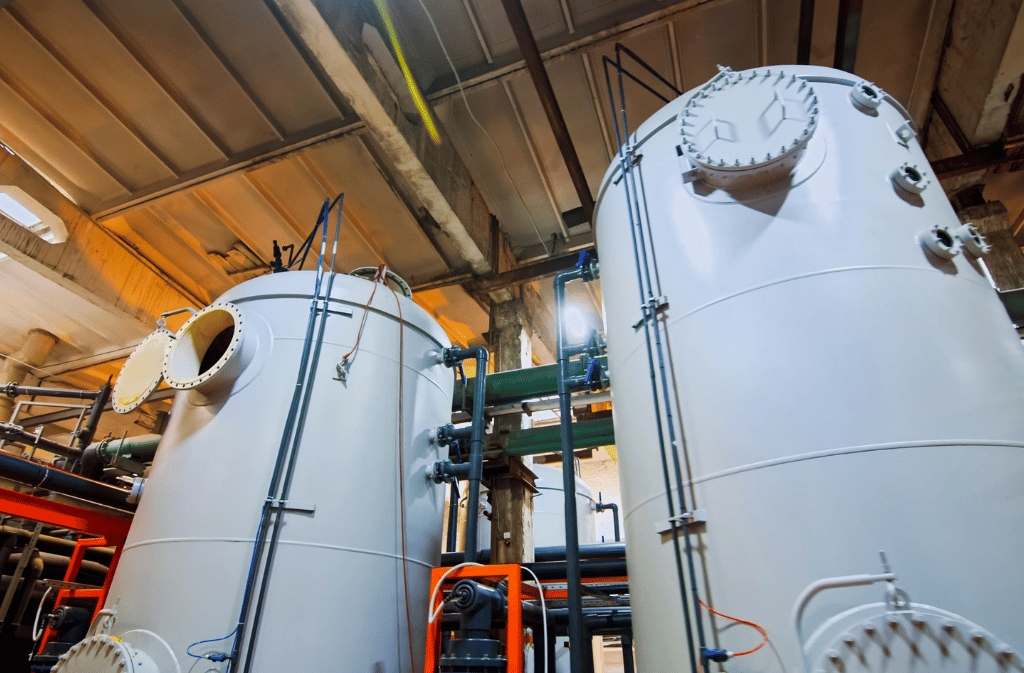
Boiler alkalinity plays a central role in maintaining stable water chemistry, protecting equipment, and supporting efficient steam production. When alkalinity is properly controlled, it helps reduce acidic corrosion, supports internal chemical treatment, limits boiler scale formation, and maintains the conditions needed for effective heat transfer. However, alkalinity that is too low or too high can create serious operating concerns, including corrosion, foaming, carryover, deposit formation, and damage to boiler components.
Effective alkalinity control requires more than maintaining a high boiler water pH. Water treatment professionals must evaluate boiler pressure, feedwater quality, condensate return, treatment residuals, total dissolved solids, and blowdown performance together. Because every boiler system operates under different conditions, control limits should be based on the treatment program, operating data, and the boiler manufacturer’s specifications rather than a single universal range.
Key Takeaways
- Boiler alkalinity and boiler water pH are related, but they measure different aspects of water chemistry.
- Both low alkalinity and excess alkalinity can increase the risk of corrosion, scale, carryover, and operational instability.
- Boiler pressure, feedwater quality, condensate return, and treatment design influence the appropriate control range.
- Pretreatment, chemical feed, blowdown, and routine monitoring must work together to maintain stable boiler water.
- Control limits should follow the treatment program and the boiler manufacturer’s specifications.
What Is Boiler Alkalinity?
Boiler alkalinity refers to the capacity of boiler water to neutralize acids and resist sudden changes in pH. It is created by dissolved alkaline compounds that enter through the feed water or are added as part of a chemical treatment program. Maintaining the correct alkalinity helps stabilize boiler water chemistry and supports the conditions needed to protect boiler metal, manage hardness, and reduce corrosion risks.
Although alkalinity is closely related to boiler water pH, the two measurements are not the same. pH shows how acidic or basic the water is at the time of testing, while total alkalinity indicates the amount of acid-neutralizing reserve available. Water may therefore have an acceptable pH but insufficient buffering capacity, or high alkalinity that requires closer evaluation.
The main alkalinity species found in boiler water are:
- Bicarbonate, often present in makeup water as sodium bicarbonate or calcium bicarbonate
- Carbonate, which may form as bicarbonate compounds react under higher temperature conditions
- Hydroxide, which provides strong alkalinity and may be introduced through treatment products
As water is heated and concentrated inside the boiler system, the balance among these species can change. Routine testing is therefore necessary to determine whether boiler water alkalinity remains within the limits established for the specific pressure, design, and treatment program.
Boiler Alkalinity vs. Boiler Water pH
Boiler alkalinity and boiler water pH are closely connected, but they describe different parts of the water chemistry. pH measures the immediate acidic or basic condition of the water, while alkalinity measures its ability to neutralize acids and resist rapid changes in pH.
| Measurement | What It Shows | Why It Matters |
|---|---|---|
| Boiler water pH | The current acidic or alkaline condition of the water | Helps identify conditions that may contribute to acidic attack, caustic corrosion, or unstable treatment chemistry |
| Total alkalinity | The water’s acid-neutralizing capacity | Indicates the available buffering reserve and the presence of alkaline compounds |
| Alkalinity species | The relative contribution of bicarbonate, carbonate, and hydroxide | Helps water treatment professionals interpret how alkalinity is being produced and maintained |
A boiler system can have an acceptable pH reading while still having low alkalinity and limited buffering capacity. Likewise, a high pH does not automatically confirm that the treatment program is properly balanced, especially when high alkalinity, concentrated dissolved solids, or excess chemical feed are also present.
For this reason, pH control should never be evaluated in isolation. Boiler water pH, total alkalinity, conductivity, hardness, treatment residuals, and operating conditions should be reviewed together to determine whether the system remains within its intended control range.
Understanding P Alkalinity and M Alkalinity
Water treatment professionals often use P alkalinity and M alkalinity to better understand which alkalinity species are present in boiler water. These tests measure alkalinity to different endpoints, so the results provide more useful information together than either value does alone.
P Alkalinity
P alkalinity is measured to the phenolphthalein endpoint. It generally represents all hydroxide alkalinity and part of the carbonate alkalinity present in the sample.
A measurable P alkalinity result indicates that carbonate, hydroxide, or both are contributing to the boiler water chemistry. The value can help determine whether alkalinity is being maintained primarily through carbonate compounds, stronger hydroxide alkalinity, or a combination of the two.
M Alkalinity
M alkalinity is commonly used to represent total alkalinity. It is measured to a lower pH endpoint and includes the contributions of bicarbonate, carbonate, and hydroxide alkalinity.
In boiler water, the M alkalinity result provides a broader view of the total acid-neutralizing capacity. Comparing it with P alkalinity helps identify the likely balance among the alkalinity species.
Why Both Results Matter
P alkalinity and M alkalinity should be interpreted with boiler water pH, conductivity, chemical feed, and boiler pressure. Sample temperature, endpoint interpretation, contaminated glassware, and degraded reagents can affect results, so consistent sampling and routine monitoring are essential for reliable trend analysis.
What Happens When Boiler Alkalinity Is Too Low?
Low alkalinity reduces the boiler water’s ability to neutralize acids and resist sudden changes in pH. As buffering capacity declines, the system may become more vulnerable to acidic attack, unstable treatment chemistry, and corrosion problems affecting boiler metal and other components.
Common Causes of Low Alkalinity
- Insufficient chemical feed
- Malfunctioning feed pumps or blocked injection points
- Excessive blowdown
- Low-alkalinity makeup water
- Changes in boiler feedwater quality
- Increased condensate return with unexpected chemistry
- Contamination entering the feedwater system
Potential Effects
- Low boiler water pH
- Acidic corrosion on metal surfaces
- Localized corrosion beneath deposits
- Increased transport of iron and other corrosion products
- Damage to boiler tubes and pressure-containing components
- Greater risk of tube failure if the condition continues
Low alkalinity should not be treated as the only possible cause of corrosion. Dissolved oxygen, temperature, deposits, flow conditions, metallurgy, and chemical treatment residuals can also contribute to damage.
When test results fall below the established control range, boiler water treatment professionals should first verify the sample, reagents, chemical-feed equipment, blowdown rate, and recent feed water changes. Correcting the underlying cause is more reliable than simply increasing product dosage without reviewing the complete boiler system.
Risks of High or Excess Alkalinity
High alkalinity can be just as problematic as low alkalinity when it pushes boiler water outside the intended control range. Excess alkalinity may result from chemical overfeed, insufficient blowdown, changing makeup-water chemistry, or an incorrect treatment target for the boiler pressure and operating conditions.
| Condition | Potential Risk | Common Contributing Factors |
|---|---|---|
| High alkalinity with elevated dissolved solids | Foaming, priming, and carryover | Excess chemical feed, insufficient blowdown, or excessive cycles of concentration |
| Localized caustic concentration | Caustic corrosion beneath deposits or at leakage sites | Poor circulation, deposits, concentrated hydroxide, or improper treatment distribution |
| High alkalinity combined with stressed metal | Caustic embrittlement or stress corrosion cracking | Tensile stress, susceptible metallurgy, and prolonged exposure to concentrated alkaline conditions |
| Boiler water carried into steam | Reduced steam purity and contamination of downstream equipment | High total dissolved solids, unstable water level, contamination, or rapid changes in boiler loading |
Excess alkalinity does not automatically cause every form of damage listed above. Caustic embrittlement and stress corrosion cracking generally develop only when concentrated alkalinity occurs together with susceptible boiler metal, mechanical stress, deposits, leakage points, or other unfavorable operating conditions.
High alkalinity may also increase the risk of foaming when dissolved solids, suspended solids, oil, or organic contamination are present. Carryover can then transport boiler water into steam lines, heat exchangers, process equipment, or turbine blades in systems where high-purity steam is required.
Water treatment professionals should respond to a high result by reviewing chemical feed, conductivity, blowdown, cycles of concentration, boiler loading, and sampling accuracy. Reducing alkalinity without identifying the source may correct the reading temporarily while leaving the underlying control problem unresolved.
Factors That Affect Boiler Alkalinity Targets
There is no single alkalinity range that is appropriate for every boiler system. The correct control limits depend on how the boiler is designed, the quality of the incoming water, the treatment chemicals being used, and the operating demands placed on the equipment.
The main factors include:
- Boiler pressure and design
Low pressure boilers, medium pressure boilers, and high pressure boilers operate under different temperature and steam-purity requirements. As boiler pressure increases, control limits generally become tighter because deposits, carryover, and contaminants can create more serious consequences. - Makeup-water chemistry
Hardness, bicarbonate, silica, chlorides, and dissolved solids in the incoming water affect chemical demand and cycles of concentration. - Feedwater pretreatment
Softening, dealkalization, reverse osmosis, and demineralization can change the quantity and form of alkalinity entering the feedwater system. - Condensate return
The percentage and quality of returned condensate influence boiler feedwater chemistry, treatment demand, and the potential for carbon dioxide-related corrosion. - Internal chemical treatment
Alkalinity targets must remain compatible with phosphate, polymer, oxygen-scavenger, and condensate-treatment programs. - Steam-purity requirements
Systems supplying turbines, food processes, humidification equipment, or sensitive manufacturing applications may require stricter control. - Boiler loading and blowdown
Changes in steam demand and cycles of concentration can quickly alter boiler water alkalinity and total dissolved solids. - Boiler manufacturer’s specifications
Operating limits should always reflect equipment requirements and the treatment provider’s system-specific recommendations.
Corrosion inhibitor requirements vary depending on boiler pressure, metallurgy, feedwater quality, and operating conditions. For this reason, water treatment professionals should establish control limits from actual system data rather than applying one generic range to all pressure boilers.
Feedwater Quality, Pretreatment, and Alkalinity
Boiler alkalinity begins with the quality of the water entering the system. Changes in makeup water, condensate return, or pretreatment performance can alter boiler feedwater chemistry and affect the amount of chemical treatment required to maintain stable operating conditions.
Makeup Water and Boiler Feedwater
Raw makeup water may contain hardness, bicarbonate, silica, chlorides, and other dissolved solids. As water is converted to steam, these contaminants remain in the boiler and become increasingly concentrated.
Bicarbonate alkalinity may also break down under boiler conditions, producing carbonate alkalinity and carbon dioxide. For this reason, feed water should be tested regularly rather than treated as a constant source with predictable chemistry.
Reverse Osmosis and Other Pretreatment Methods
Pretreatment reduces the concentration of problem constituents before water enters the boiler feedwater system. Depending on the application, a treatment program may include softening, dealkalization, reverse osmosis, or demineralization.
Water softeners reduce calcium and magnesium hardness, which helps limit calcium carbonate scale and other deposits. Reverse osmosis can reduce hardness, alkalinity, silica, and total dissolved solids, but the resulting permeate may require pH adjustment and careful corrosion control because of its lower buffering capacity.
Pretreatment performance should be verified through routine hardness, conductivity, and alkalinity testing. A malfunctioning softener, exhausted resin bed, or damaged reverse osmosis membrane can quickly change the chemistry reaching the boiler.
Condensate Return and Carbon Dioxide
Returned condensate is typically valuable because it is hot and contains fewer dissolved solids than raw makeup water. However, carbon dioxide carried with steam can dissolve into condensate and form carbonic acid, lowering pH and contributing to corrosion in condensate lines, steam lines, and heat exchangers.
Where appropriate, neutralizing amines may be used to support condensate-system pH control. The product, dosage, and point of application should reflect system design, steam use, regulatory requirements, and the complete water treatment program.
Chemical Treatment for Alkalinity Control
Chemical treatment helps maintain the alkaline conditions needed to support corrosion control, deposit management, and stable boiler operation. The correct program depends on boiler pressure, feedwater quality, system metallurgy, steam use, and the treatment products already in service.
Alkalinity Builders
Alkalinity builders are used when the incoming boiler feedwater does not provide enough buffering capacity or when the treatment program requires a specific alkaline reserve. Depending on the application, formulations may contain sodium carbonate, sodium hydroxide, phosphate compounds, or a combination of compatible ingredients.
Sodium bicarbonate may occur naturally in makeup water, but it is not automatically suitable as a direct boiler-treatment product. Its behavior under heat can contribute to carbon dioxide formation, so product selection must account for both boiler water chemistry and condensate-system protection.
Oxygen and Corrosion Control
Alkalinity control does not replace dissolved-oxygen control. Oxygen entering through makeup water, air leaks, or inadequate deaeration can contribute to pitting and localized corrosion even when boiler water pH and total alkalinity are within range.
Mechanical deaeration, proper feedwater heating, and oxygen scavengers may therefore be required as part of the complete corrosion-control program. Sodium sulfite is commonly used in appropriate low pressure boilers and medium pressure boilers, although its suitability and dosage depend on temperature, pressure, residence time, and dissolved-oxygen loading.
Coordinating the Complete Treatment Program
Alkalinity builders must remain compatible with phosphate, polymer, dispersant, oxygen-scavenger, and condensate-treatment products. Overfeeding one component can disrupt the balance of the program, increase dissolved solids, or create conditions that promote carryover and deposits.
Water treatment professionals should control alkalinity by reviewing chemical residuals, feed rates, blowdown, pretreatment performance, and operating trends together. Adjustments should be based on representative test results and the boiler manufacturer’s specifications rather than a single isolated reading.
Best Practices for Boiler Alkalinity Control
Consistent boiler alkalinity control depends on coordinated testing, chemical feed, pretreatment, and operational oversight. The following practices help water treatment professionals maintain stable chemistry and respond to developing problems before they affect equipment performance.
- Establish system-specific control limits
Set alkalinity, pH, conductivity, and treatment-residual targets according to boiler pressure, feedwater quality, steam use, and the complete chemical treatment program. Avoid applying one generic control range to every boiler system. - Follow the boiler manufacturer’s specifications
Compare treatment targets with the equipment manufacturer’s water-quality requirements. These limits may become more restrictive as operating pressure and steam-purity demands increase. - Test water throughout the system
Monitor makeup water, boiler feedwater, boiler water, and returned condensate. Testing multiple points helps identify whether a chemistry change begins in the source water, pretreatment equipment, chemical-feed system, or condensate network. - Evaluate pH and alkalinity together
Boiler water pH shows the immediate acidic or alkaline condition, while P alkalinity, M alkalinity, and total alkalinity provide information about buffering capacity and alkalinity species. Reviewing these measurements together gives a clearer picture than relying on pH alone. - Track related water-quality indicators
Alkalinity results should be reviewed with conductivity, hardness, total dissolved solids, phosphate or polymer residuals, dissolved oxygen, and oxygen-scavenger residuals where applicable. A change in one parameter may explain an unexpected shift in another. - Use consistent sampling and testing procedures
Collect samples from established locations, cool hot boiler water properly, use clean glassware, and confirm that reagents remain within their usable life. Inconsistent sampling can create false trends and lead to unnecessary treatment adjustments. - Inspect chemical-feed equipment regularly
Verify pump output, calibration, tank levels, injection points, and controller operation. A partially blocked line or poorly calibrated pump can cause low alkalinity, chemical overfeed, or unstable residuals. - Adjust blowdown using operating trends
Blowdown should reflect conductivity, cycles of concentration, boiler loading, and feedwater quality. Fixed settings may become inefficient or ineffective when steam demand and condensate return change. - Review pretreatment performance
Check softeners, reverse osmosis systems, dealkalizers, and other pretreatment equipment for hardness leakage or declining removal efficiency. A pretreatment problem can increase chemical demand and accelerate scale formation. - Investigate sudden changes before altering dosage
Confirm sampling accuracy, feedwater chemistry, blowdown, equipment operation, and recent process changes before increasing or decreasing chemical feed. Routine monitoring and documented trends help distinguish a temporary reading from a genuine control problem.
Troubleshooting Common Boiler Alkalinity Problems
Boiler chemistry problems are rarely caused by one factor alone. When alkalinity readings move outside the established range, the most reliable approach is to compare current results with historical trends and review the entire boiler system before changing treatment dosage.
| Observation | Possible Causes | What to Review |
|---|---|---|
| Low alkalinity and low pH | Chemical underfeed, excessive blowdown, low-alkalinity feed water, or a feed-pump problem | Pump output, chemical tank level, injection point, blowdown rate, and makeup-water analysis |
| High alkalinity and high conductivity | Chemical overfeed, insufficient blowdown, or excessive cycles of concentration | Feed rate, controller settings, conductivity trend, and blowdown operation |
| High alkalinity with foaming or carryover | Elevated total dissolved solids, suspended solids, oil contamination, unstable loading, or poor water-level control | Boiler loading, water level, conductivity, contamination sources, and steam purity |
| Low condensate pH | Carbon dioxide entering the steam and forming carbonic acid | Makeup-water alkalinity, condensate return, neutralizing amine feed, and condensate sampling locations |
| Scale despite acceptable alkalinity | Hardness leakage, inadequate polymer or phosphate residual, poor circulation, or insufficient blowdown | Softener or reverse osmosis performance, treatment residuals, and deposit analysis |
| Unstable or inconsistent test results | Improper sample cooling, degraded reagents, contaminated glassware, or inconsistent test endpoints | Sampling method, sample temperature, reagent condition, and analyst procedure |
A single out-of-range result should be confirmed before major program changes are made. Repeated deviations, rising corrosion products, declining heat transfer, or visible deposits may indicate a broader problem involving pretreatment, chemical feed, blowdown, contamination, or operating conditions.
If tube failure, severe acid attack, caustic corrosion, or heavy scale is suspected, the affected boiler should be evaluated promptly. Deposit analysis, metal inspection, and a review of operating records can help identify the root cause and determine whether treatment correction, mechanical repair, or chemical cleaning operations are necessary.
Boiler Treatment Support for Water Treatment Professionals
Maintaining stable boiler chemistry often requires more than a standard alkalinity product. Feedwater quality, boiler pressure, condensate return, scale potential, corrosion risk, and treatment residuals must all be considered when selecting and applying a boiler treatment program.
Eastern Technologies, Inc. supports water treatment companies, distributors, and OEMs with boiler water treatment chemicals designed for a wide range of operating conditions. Relevant solutions include alkalinity boosters, internal boiler treatments, oxygen scavengers, polymer-based dispersants, cleaners, system passivators, and vapor-phase corrosion inhibitors for boiler layup. ETI can also develop custom chemical formulations for systems with high scale potential, corrosive water conditions, or variable boiler water quality.
ETI’s technical team provides application guidance, water and deposit analysis, troubleshooting, field support, and program-development assistance. As a chemical manufacturer and technical partner, ETI helps water treatment professionals strengthen their capabilities without competing for their end-user relationships.
Need a boiler program tailored to your customer’s water chemistry and operating conditions? Contact ETI Water to discuss formulation, private-label, testing, and technical-support requirements.