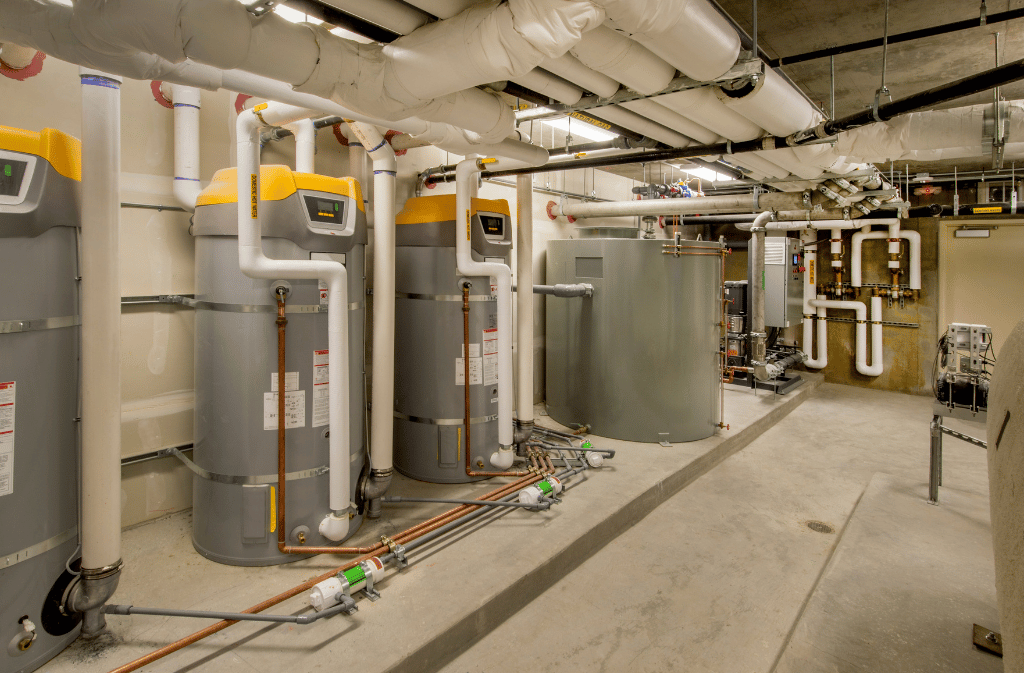
Boiler carryover occurs when boiler water, dissolved solids, treatment chemicals, or contaminants leave the boiler with the steam. This condition can reduce steam quality, create wet steam, and contribute to deposits, corrosion, and operational problems throughout the steam system.
Effective prevention requires more than controlling one water-quality parameter. Water treatment professionals must consider boiler water chemistry, steam flow, water level, load changes, blowdown, and separation equipment together. When these factors are properly managed, facilities can improve steam purity, protect downstream equipment, and support more consistent boiler operation.
Key Takeaways
- Boiler carryover may involve entrained liquid water or substances transferred in vapor form.
- High dissolved solids, foaming, unstable water levels, and sudden load changes are common causes.
- Carryover can reduce steam purity and damage steam piping, heat exchangers, control valves, and turbines.
- Prevention requires balanced water chemistry, controlled boiler operation, and effective separation equipment.
- Monitoring conductivity, blowdown, load conditions, and condensate quality supports early detection.
What Is Boiler Carryover?
Boiler carryover is the unintended transfer of water or dissolved substances from the boiler into the steam system. It may occur through physical entrainment of liquid water or through the transfer of certain compounds in vapor form.
Mechanical Carryover
Mechanical carryover occurs when boiler water droplets become entrained in the steam flow. High water levels, foaming, sudden increases in load, excessive steam velocity, or ineffective separation equipment can all allow liquid water to escape from the steam drum.
Vaporous Carryover
Vaporous carryover occurs when certain substances leave the boiler in vapor form rather than as liquid droplets. Selective vaporous carryover becomes more important in high-pressure systems and applications that require high-purity steam, because even small amounts of volatile contaminants can affect steam purity and downstream equipment.
Main Causes of Boiler Carryover
Several operating, mechanical, and chemical conditions can contribute to boiler carryover. In many cases, more than one factor is present, so water chemistry and boiler operation should be reviewed together.
| Cause | How It Promotes Carryover | Conditions to Review |
|---|---|---|
| High dissolved solids | Encourages foaming and interferes with effective steam-water separation | Conductivity, blowdown rate, and boiler water concentrations |
| Suspended solids | Stabilizes foam and may become entrained with boiler water droplets | Sludge, contamination, and treatment residuals |
| Excessive alkalinity | Can increase foaming under certain conditions | pH, alkalinity, and chemical feed |
| Organic contaminants | Lower surface tension and help form stable foam bubbles | Oil leaks, process contamination, and condensate return |
| High boiler water level | Reduces the space available for gravity separation in the steam drum | Level controls, feedwater response, and operator settings |
| Sudden increases in load | Raise steam flow and may pull entrained boiler water into the outlet | Steam demand, steam pressure, and load characteristics |
| Inadequate separation equipment | Allows droplets to remain in the steam instead of returning to the boiler | Primary separators, dryers, demisters, and boiler design |
Mechanical factors such as steam drum size, steam velocity, and separator condition can be just as important as water chemistry. Excessive boiler water concentrations, poor blowdown control, and unstable loading often combine to create the conditions in which carryover occurs.
Why Boiler Carryover Matters
Carryover reduces steam purity by introducing liquid water, boiler water solids, and treatment chemicals into the steam system. The resulting wet steam may transfer heat less effectively and create reliability problems in equipment designed to receive dry steam.
Common boiler carryover risks include:
- Chemical carryover into steam piping and the steam line
- Deposits on control valves, heat exchangers, and other downstream equipment
- Reduced heat transfer and inconsistent process performance
- Contamination of turbine blades and lower turbine efficiency
- Product-quality concerns in clean steam applications
- Water hammer caused by liquid water collecting in the steam system
- Increased corrosion and maintenance requirements
In industrial operations that require high-purity steam, even small amounts of contamination can affect production quality or sensitive process equipment. Protecting downstream equipment therefore requires early detection and correction of the conditions causing carryover.
Boiler Carryover Prevention Best Practices
Effective carryover prevention requires coordinated control of boiler water chemistry, operating conditions, and steam-separation equipment. The following practices help water treatment professionals reduce contamination and maintain more consistent steam quality.
- Control dissolved and suspended solids
Monitor conductivity, boiler water solids, and treatment residuals, then adjust blowdown as needed. High dissolved solids and suspended solids can promote foaming and increase the amount of entrained boiler water leaving with the steam. - Maintain a stable boiler water level
Excessive water level reduces the space available for simple gravity separation in the steam drum. Level controls, feedwater valves, and operator settings should be checked whenever unstable level readings or wet steam are observed. - Manage sudden load changes
Sudden increases in load raise steam flow and can pull boiler water droplets into the outlet before they separate. Gradual load changes and properly tuned controls help limit this risk. - Control foaming conditions
Review excessive alkalinity, organic contaminants, oil intrusion, and chemical overfeed when stable foam bubbles appear. Correcting the source of foaming is more effective than relying on one chemical adjustment. - Inspect separation equipment
Primary separators, dryers, demisters, and other mechanical separating equipment should be inspected for damage, fouling, or improper operation. Effective separation equipment helps remove liquid water before steam enters the piping system. - Operate within boiler design limits
Steam flow, steam pressure, and load characteristics should remain within boiler manufacturer guidelines. Proper boiler design and adequate steam drum capacity are essential for achieving the desired steam purity. - Monitor steam and condensate quality
Condensate conductivity can help indicate whether dissolved substances are reaching the steam system. Rising conductivity, deposits, or unstable process performance may signal developing carryover. - Combine mechanical and chemical controls
Water treatment alone cannot correct poor boiler operation or damaged separation equipment. Mechanical and chemical means should work together to control carryover, improve steam quality, and economically reduce carryover without excessive blowdown.
ETI Support for Boiler Treatment Professionals
Reducing carryover requires balanced boiler water chemistry, reliable testing, and treatment products selected for the system’s actual operating conditions. Eastern Technologies, Inc. supports water treatment companies, distributors, and OEMs with boiler treatment chemicals, including internal treatments, boiler dispersants, alkalinity boosters, oxygen scavengers, cleaners, passivators, and vapor-phase layup programs.
ETI can also develop custom chemical formulations for systems with high solids, variable feedwater quality, corrosion concerns, or demanding steam-purity requirements. Its technical team provides water and deposit analysis, application guidance, troubleshooting, and private-label manufacturing while supporting treatment professionals without competing for their end-user accounts.
Strengthen your next boiler program with chemistry and technical support tailored to the application. Contact ETI Water to discuss formulation, testing, private-label, or troubleshooting needs.
Frequently Asked Questions (FAQs)
What is the difference between mechanical and chemical carryover?
Mechanical carryover involves entrained boiler water droplets physically leaving the boiler with the steam. Chemical carryover refers to dissolved treatment chemicals or contaminants entering the steam through droplet entrainment or vaporous transfer.
Why do sudden increases in boiler load cause carryover?
Sudden increases in load raise steam flow and can reduce the time available for boiler water droplets to separate inside the steam drum. Rapid changes in steam pressure may also disturb the water level and overwhelm gravity separation or primary separators.
Can high boiler water solids contaminate steam?
Yes. Excessive boiler water concentrations can promote foaming and increase the amount of dissolved or suspended material carried into the steam. This can reduce steam quality, increase condensate conductivity, and contribute to deposits in downstream equipment.
How does steam drum design affect carryover?
Steam drum size affects steam velocity and the space available for simple gravity separation before steam exits the boiler. Properly designed primary separators and other mechanical separating equipment help remove liquid water and improve steam purity.
Is vaporous carryover more important in high-pressure boilers?
Selective vaporous carryover occurs more readily in high-pressure boilers because certain compounds become increasingly volatile as pressure rises. It is especially important in high-purity steam applications, where even low contaminant levels may affect turbine blades or sensitive industrial operations.