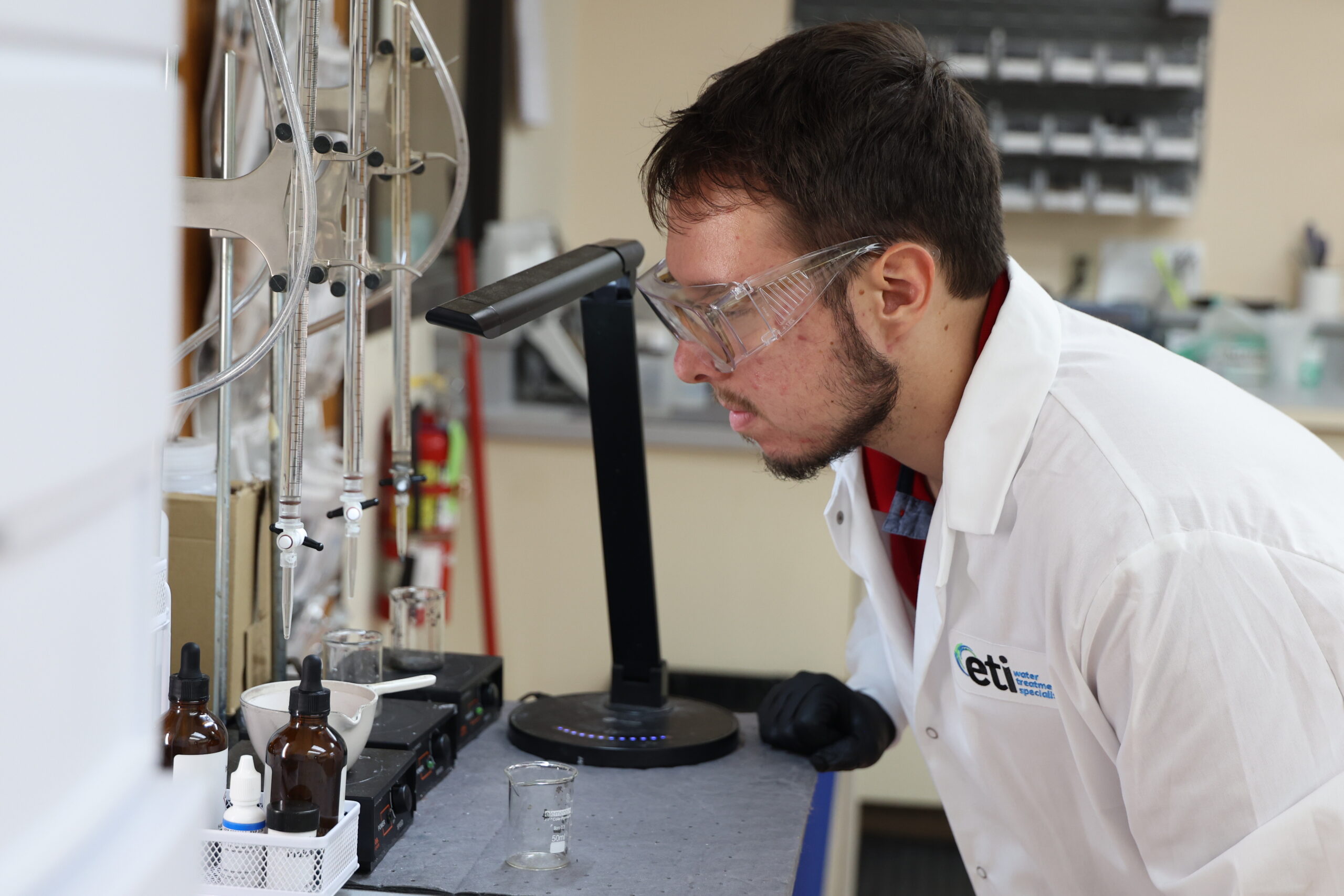
Water hardness testing is one of the most fundamental steps in evaluating water quality, yet it is often misunderstood or oversimplified. Whether the source is municipal tap water, well water, or process water from industrial systems, understanding hardness helps determine how that water will behave inside pipes, equipment, and fixtures. Without accurate measurement, decisions about treatment,scale prevention, and system protection are based on guesswork rather than data.
Water hardness refers to the concentration of dissolved minerals, primarily calcium and magnesium. These minerals occur naturally in many water sources and are responsible for what we call hard water. When present at elevated levels, hardness can lead to scale buildup in boilers, cooling systems, home faucets, and appliances. In residential settings, it affects laundry efficiency and leaves deposits on glasses and fixtures. In industrial systems, even moderate hardness levels can reduce heat transfer efficiency and increase maintenance costs.
Hardness is typically reported in ppm or grains per gallon, and understanding these units is essential to determine whether water is considered soft, moderately hard, or very hard. However, simply knowing a number is not enough. Effective water hardness testing provides the data needed to interpret scale risk, evaluate treatment performance, and protect equipment over time.
Understanding Water Hardness
Before selecting a hardness test method, it is important to understand what water hardness actually represents and what it does not necessarily reflect about overall water quality.
What Causes Water Hardness?
Water hardness is primarily caused by dissolved calcium and magnesium ions. As water moves through soil and rock formations, it dissolves minerals that contain calcium carbonate and other compounds. These dissolved minerals remain in solution and contribute to the total hardness value measured during testing.
In some water sources, especially well water, iron may also be present. While iron is not classified as hardness in the technical definition, it can interfere with certain test methods and affect overall water quality. That is why understanding the full mineral profile of a sample is important when interpreting results.
Hardness is generally described as either:
- Hard water, which contains elevated calcium and magnesium levels
- Soft water, which contains low mineral content
Soft water is often produced intentionally using a water softener, which removes calcium and magnesium through ion exchange.
How Hardness Is Measured
Hardness is typically reported in two common units:
- Parts per million, ppm, expressed as calcium carbonate
- Grains per gallon, grains per gallon, commonly abbreviated as gpg
One grain per gallon equals approximately 17.1 ppm as calcium carbonate. These units provide a standardized value that allows professionals to compare water sources and determine treatment requirements.
Below is a general classification range:
| Hardness Level (ppm as calcium carbonate) | Classification |
|---|---|
| 0–60 ppm | Soft |
| 61–120 ppm | Moderately hard |
| 121–180 ppm | Hard |
| Above 180 ppm | Very hard |
While these categories are helpful, hardness alone does not fully define water performance. For example, alkalinity and the water’s pH influence how readily calcium carbonate will form scale. Two water samples with the same hardness value may behave differently depending on these additional factors.
For this reason, water hardness testing should be viewed as one component of a broader evaluation. The number measured must be interpreted in context, including alkalinity, mineral balance, and system conditions.
Primary Water Hardness Testing Methods
Selecting the appropriate method for water hardness testing depends on the level of accuracy required, the application, and whether testing is being performed in the field or in a laboratory. The most common approaches include titration-based kits, water hardness test strips, and advanced digital or laboratory methods.
Titration-Based Hardness Test Kits
A titration-based water hardness test kit is widely considered the standard method for measuring hardness. These kits typically use an EDTA solution that reacts with calcium and magnesium ions in a measured sample.
A typical hardness test kit includes:
- A test bottle or vial for the sample
- A reagent solution
- An indicator
- A dropper or calibrated dispenser
- Instructions for performing the test
The basic process is straightforward:
- Collect a measured water sample in the bottle.
- Add the indicator solution and shake gently.
- Add the titrant drop by drop, counting each drop.
- Observe the color change endpoint.
- Multiply the number of drops by a conversion factor to determine ppm or grains per gallon.
Because each drop represents a specific value, this method can provide accurate results when instructions are followed carefully. Accuracy depends on proper technique, fresh reagents, and correct sample volume. A common mistake is failing to shake the bottle consistently or miscounting drops, which can introduce error.
These kits are available in various ranges and are generally inexpensive compared to laboratory instrumentation. They are commonly used to verify water softener performance, monitor treated water quality, and confirm expected hardness levels before treatment adjustments begin.
Water Hardness Test Strips
Water hardness test strips provide a quick and convenient way to screen water for hardness. A water hardness test strip contains reactive pads that change color when dipped into water.
The process typically involves:
- Dip the strip into the water sample for the time specified in the instructions.
- Remove the strip and allow it to develop.
- Compare the color change to the color chart printed on the package.
Because the user must visually compare colors, results are reported within a range rather than as a precise value. A water hardness test strip is ideal for quick checks of tap water, home faucets, hot tubs, or aquariums. Many kits are sold online or in hardware stores and are marketed as convenient and inexpensive options for homeowners.
However, test strips do not offer the same level of accuracy as titration-based methods. Lighting conditions, user interpretation, and storage conditions can affect results. While a water test strip can quickly determine whether water is generally soft or hard, it may not provide the accurate measurement required for industrial applications.
Digital and Laboratory Methods
For applications where higher precision is expected, digital titrators and laboratory instrumentation are used. Digital systems automate the titration process and reduce subjective interpretation. They improve accuracy and provide consistent units of measurement.
Advanced laboratory methods such as atomic absorption or ICP analysis directly measure calcium and magnesium concentrations. These approaches are used when detailed water quality analysis is required or when troubleshooting scaling issues in complex systems.
Professional water hardness testing in industrial settings often combines titration with broader analytical testing to determine how hardness interacts with alkalinity, pH, and other dissolved minerals. The method selected should align with the level of control needed and the importance of obtaining accurate results for decision-making.
Interpreting Results in Real Applications
Measuring hardness is only the first step. The real value of water hardness testing lies in how the results are interpreted and applied. A hardness number must be evaluated in context, including system design, operating conditions, and treatment objectives.
Two samples with the same ppm value may behave very differently depending on alkalinity, water’s pH, temperature, and concentration cycles. Understanding what the number means helps protect equipment and maintain performance efficiently.
Water Softeners and Softened Water
For systems using a water softener, the goal is typically to produce soft water with minimal residual hardness. After regeneration, treated water is expected to measure near zero hardness, often below 1 ppm.
Routine testing helps:
- Verify softener performance
- Confirm regeneration effectiveness
- Determine when resin may be exhausted
- Protect downstream equipment
Even a small hardness value in softened water can indicate breakthrough. If untreated hard water enters the system, scale can begin forming in pipes and equipment. Testing treated water on a regular basis helps maintain security and reliability in both residential and commercial systems.
Cooling Systems and Scale Risk
In cooling systems, hardness concentration increases as water evaporates. A moderate incoming hardness level can become problematic as cycles increase. When combined with alkalinity and elevated temperature, calcium carbonate may precipitate and form scale.
Key interpretation factors include:
- Hardness level
- Alkalinity
- Water’s pH
- Temperature
- Cycles of concentration
Hardness numbers must be evaluated alongside these variables to determine scale potential. Monitoring allows operators to begin adjustments before deposits reduce heat transfer efficiency.
Boilers and Low-Tolerance Environments
Boilers operate under tighter tolerance than most systems. Even low ppm levels of calcium or magnesium can contribute to scale formation. In these environments, hardness control is critical to protect tubes and maintain efficient heat transfer.
Accurate testing ensures that feedwater meets specifications before it enters the boiler. When a hardness increase is detected, corrective action can be taken immediately to prevent long-term damage.
Home Use, Laundry, and Fixtures
In residential settings, hardness affects everyday performance. Hard water can reduce soap efficiency, increase detergent load requirements, and leave mineral deposits on glasses and home faucets. Over time, buildup may restrict flow and affect appearance.
Testing tap water helps determine whether treatment is needed. While hardness does not necessarily reflect safety, it does influence cleaning efficiency and appliance longevity.
Hot Tubs and Aquariums
Hardness also impacts hot tubs and aquariums. Mineral balance affects comfort, scaling, and equipment performance. Maintaining hardness within the recommended range protects heaters, pumps, and filtration systems while supporting stable water conditions.
In each of these applications, interpretation goes beyond simply labeling water as hard or soft. The goal is to measure accurately, understand the value in context, and take action that protects equipment and maintains water quality.
Common Testing Mistakes and How to Avoid Them
Even reliable methods can produce misleading results if proper procedures are not followed. Many issues in water hardness testing stem from small but preventable errors.
Common Mistakes
- Collecting a poor sample, such as water that has been sitting in plumbing instead of running the tap first
- Failing to follow kit instructions carefully
- Miscounting each drop during titration
- Not shaking the bottle consistently after adding reagent
- Comparing a water hardness test strip to the color chart under poor lighting
- Using expired reagents or improperly stored test strips
- Assuming hardness test strips provide laboratory-level accuracy
- Ignoring potential interference from iron or other dissolved metals
Each of these can reduce accuracy and lead to incorrect conclusions about treatment performance.
How to Improve Accuracy
- Allow tap water to run before collecting the sample
- Use clean containers and avoid contamination
- Follow the instructions exactly as written
- Store reagents and strips in a sealed bag or original container to protect from moisture
- Verify the expected range of the kit before testing
- Repeat the test if results seem inconsistent
Clear procedures and attention to detail help ensure that hardness measurements are reliable. Accurate data supports better decision-making and prevents unnecessary treatment adjustments.
How ETI Supports Water Treatment Professionals
Accurate water hardness testing is only one part of an effective treatment program. Interpreting results correctly and aligning them with system chemistry requires technical experience and dependable support. That is where Eastern Technologies, Inc. plays a distinct role.
Founded in 1986 and originally formed by three independent water treatment service companies, ETI was built to serve as a shared supply and technical resource. Today, ETI supports more than 150 businesses through a non-competing, partner-first B2B2C model. ETI does not sell direct to end users. Instead, the company equips its customers with products, expertise, and operational reliability that help them succeed.
ETI provides:
- Technical guidance on water hardness testing methods and interpretation
- Support in selecting the appropriate test kit or hardness test kit for the application
- Assistance troubleshooting softener performance, scale concerns, and mineral imbalance
- Custom formulation capabilities aligned with cooling, boiler, and wastewater programs
- Reliable fulfillment through “The Right Seven” QA promise, delivering the right product, package, quantity, location, paperwork, quality, and timing
Hardness values must be interpreted in context to protect equipment and maintain treatment performance. ETI’s experienced technical team helps customers evaluate test data, confirm accuracy, and align chemistry programs accordingly.
To learn more about ETI’s technical support services and product solutions, visit our website page or contact our team directly to discuss your application.
Frequently Asked Questions (FAQs)
How do you test water for hardness?
Water hardness can be tested using a water hardness test kit, a titration-based hardness test kit, or a water hardness test strip. Most kits require collecting a sample, adding a solution drop by drop or dipping a strip, and comparing the result to a color chart to measure hardness in ppm or grains per gallon. Following the instructions carefully helps ensure accurate results.
How much does a hard water test cost?
The cost depends on the method selected. Test strips and basic hardness test kits are generally inexpensive and may cost under $20, while more advanced digital kits or laboratory analysis can cost significantly more. The level of accuracy expected typically determines which option is appropriate.
Does Home Depot still do free water tests?
Some retail locations, including Home Depot stores, periodically offer free water test promotions, but availability varies by location and time. These tests are often screening-level evaluations and may not necessarily reflect detailed laboratory accuracy. It is best to check directly with your local store for current offerings.
What should my water hardness level be?
For most residential applications, water below 60 ppm or under about 3.5 grains per gallon is considered soft. Many homeowners install a water softener when hardness exceeds 7 grains per gallon, especially if scale, laundry issues, or fixture buildup are present. The ideal level depends on your water source, appliances, and treatment goals.