Water plays a critical role in the daily operation of healthcare facilities, directly influencing patient care, safety, and overall outcomes. From clinical use to sanitation, the quality of healthcare water must meet strict standards to protect both patients and staff. Poor water quality can introduce waterborne pathogens that increase the risk of infections, making proper management essential across the healthcare industry.
Healthcare water treatment is a foundational part of maintaining safe and reliable water systems. It involves more than basic treatment, it requires a structured approach that considers system complexity, regulatory expectations, and the need for consistent performance. As healthcare environments continue to evolve, the demand for effective, compliant water treatment strategies continues to grow.
Why Water Quality is Critical in Healthcare Environments
Healthcare environments depend on complex water systems that serve a wide range of functions, from patient hygiene to equipment operation. In hospitals and long term care facilities, water is used in ways that directly or indirectly impact patient health, making consistent water quality a top priority.
Without proper control, these systems can become breeding grounds for contaminants and bacteria that increase the risk of infections. This is especially important in sensitive areas where patients are more vulnerable.
Key risk areas include:
- Operating rooms and clinical spaces, where water supports sterilization, cleaning, and critical procedures
- Patient care environments, where exposure to unsafe water can affect recovery and health outcomes
- Equipment and devices, where contaminated healthcare water can impact performance and safety
- Storage and distribution systems, where stagnation can promote bacteria growth
Maintaining safe water is essential to avoiding common potable water treatment problems, protecting patients and supporting the overall integrity of healthcare operations.
Core Components of an Effective Water Treatment Program
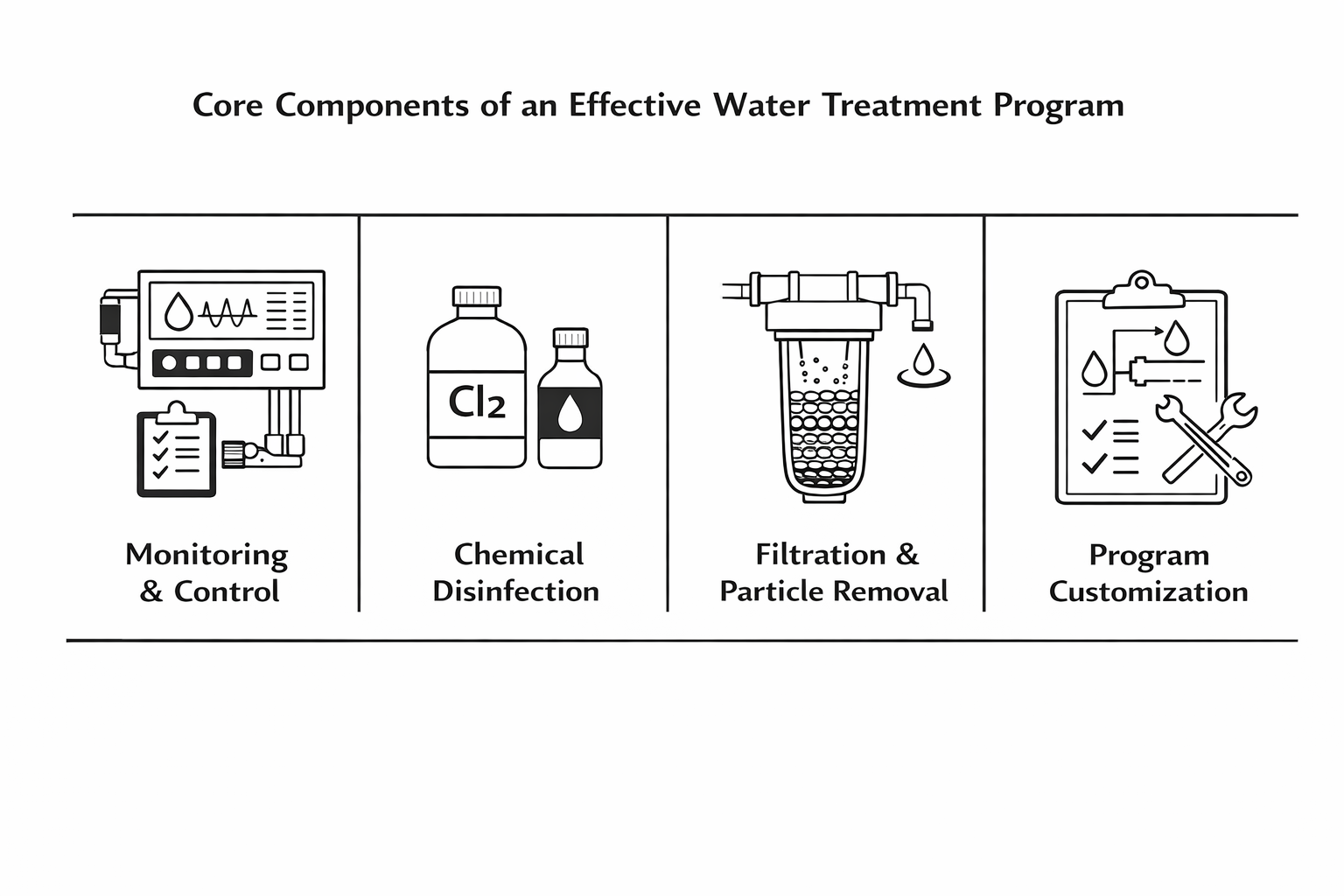
An effective water treatment program in healthcare settings must be structured, proactive, and tailored to system conditions. Healthcare water treatment requires more than routine treatment, it depends on consistent monitoring, proper chemical use, and system-specific adjustments to maintain safety and performance.
Monitoring and Control
Ongoing monitoring is essential to maintain control over water systems. Regular testing helps identify changes in water quality, detect contamination early, and ensure that systems remain within acceptable limits. This allows teams to respond quickly and maintain stable conditions.
Chemical Disinfection
Chemical disinfectants play a key role in controlling bacteria and other microorganisms. Common approaches include the use of chlorine and other treatment chemistries to reduce microbial growth. Proper dosing and control are critical to ensure effective disinfection without negatively impacting system materials or performance.
Filtration and Particle Removal
Filtration systems and filters help remove fine particles, contaminants, and debris that can contribute to system fouling or microbial growth. Water filtration improves clarity and supports downstream treatment processes by reducing the load on disinfection methods.
Program Customization
No two healthcare facilities have identical water treatment needs. Treatment program design must consider system layout, water usage, and risk factors. A customized approach ensures effective water treatment while addressing the unique conditions of each facility.
Regulatory Compliance and Industry Standards
Maintaining regulatory compliance in the healthcare industry requires a disciplined and well-documented approach to water treatment. Facilities are expected to develop and follow structured processes that ensure water systems are managed safely and consistently. Healthcare water treatment programs must align with established guidance while adapting to the specific risks present within each facility.
To meet compliance expectations and uphold the highest standards, healthcare facilities should focus on:
- Documented processes, clearly outlining treatment procedures and responsibilities
- Routine monitoring, ensuring water quality remains within acceptable limits
- Risk management strategies, identifying and addressing potential contamination points
- Ongoing program development, refining treatment approaches based on performance and data
Strong compliance practices not only reduce risk but also provide confidence that water systems are being managed responsibly. With proper guidance and consistent execution, facilities can maintain safe operations while meeting regulatory expectations.
Balancing Safety, Efficiency, and Operational Costs
Healthcare facilities must balance strict safety requirements with the need to manage operational costs and maintain system performance. A well-designed water treatment program supports both objectives by improving operational efficiency while controlling maintenance costs over time.
When systems run efficiently, facilities can reduce unnecessary water usage, minimize downtime, and maintain consistent treatment performance. This not only supports compliance but also contributes to long-term cost control and reliable operation.
| Focus Area | Impact on Healthcare Facilities |
|---|---|
| Operational efficiency | Systems run smoothly with fewer disruptions |
| Maintenance costs | Reduced need for emergency repairs and cleaning |
| Water usage | Optimized consumption without compromising safety |
| Performance | Consistent and effective treatment results |
| Overall costs | Better long-term cost management |
By aligning treatment strategies with both safety and efficiency goals, healthcare facilities can maintain reliable systems while managing costs effectively. This balance is essential for sustaining high-quality operations in demanding environments.
Specialized Applications in Healthcare Water Systems
Healthcare water systems support a range of specialized applications that require precise treatment and consistent performance. These systems are critical to daily operations and must be carefully managed to prevent contamination and maintain safety.
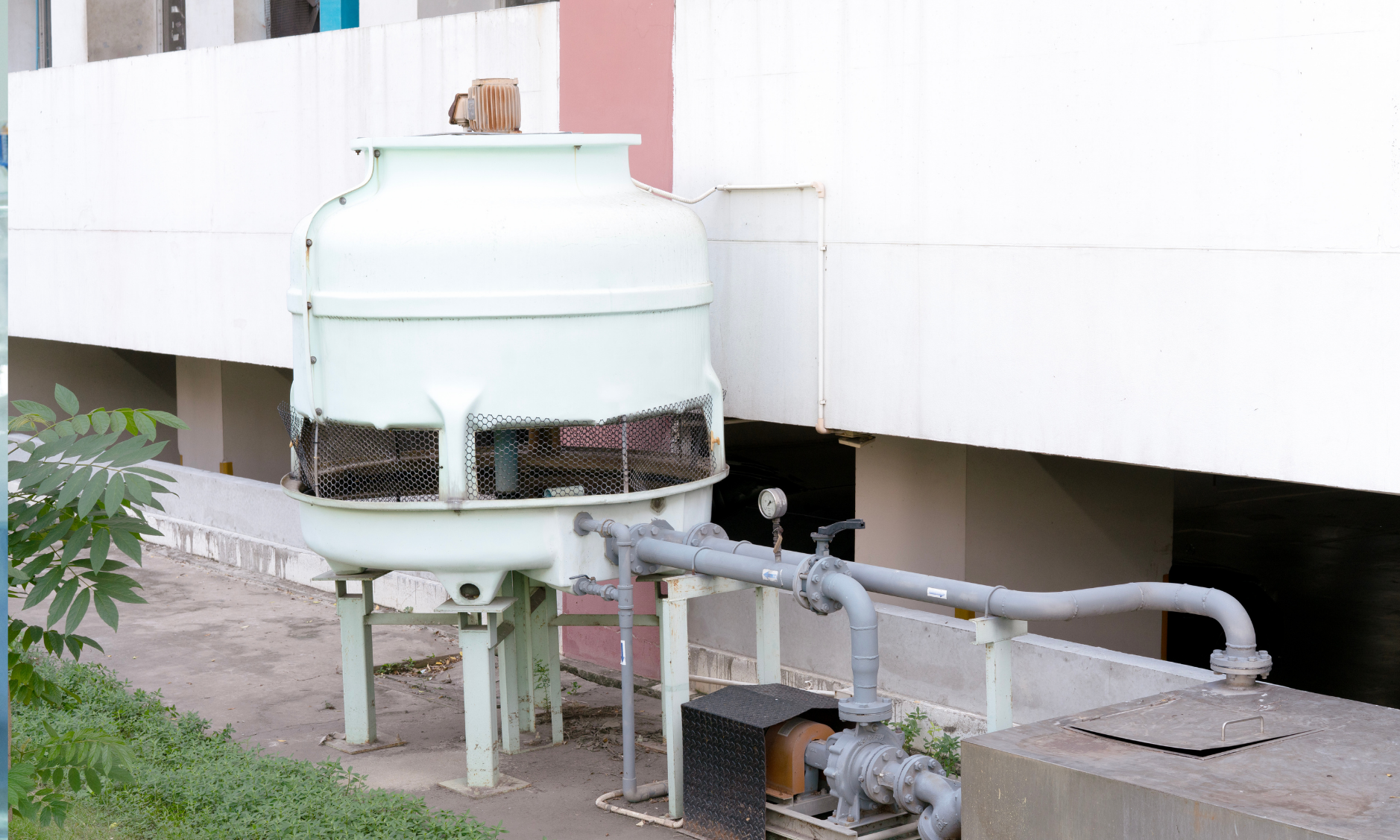
- Cooling towers: These systems are essential for temperature control but can present a risk if not properly maintained. Effective water treatment helps control bacteria and reduce the spread of waterborne pathogens.
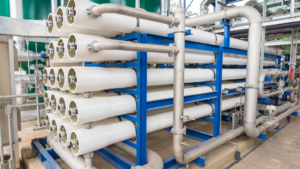
- Reverse osmosis systems: Commonly used in applications involving a medical device and high-purity water, reverse osmosis supports critical processes by removing dissolved contaminants and ensuring high water quality.
- Laboratory services: Laboratories rely on treated water for accurate testing and analysis. Consistent water quality is necessary to support reliable results and protect sensitive equipment.
- Critical equipment and processes: Many healthcare systems rely on treated water for cleaning, sterilization, and operation. Proper treatment ensures equipment performs as expected and supports safe, efficient processes.
Managing these specialized systems requires targeted treatment solutions that address the unique needs of each application while maintaining overall system integrity.
How ETI Supports Healthcare Water Treatment Professionals
Healthcare water treatment requires more than standard products. It requires technical expertise, reliable supply, and the ability to adapt to complex system conditions. Eastern Technologies, Inc. (ETI) supports water treatment professionals as a true partner, helping them manage healthcare facilities without competing for end users.
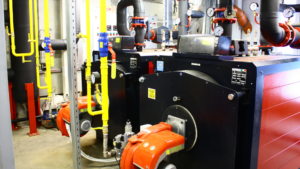
At the core of ETI’s capabilities are its cooling and boiler treatment programs, developed over 38 years of continuous improvement. These programs support open recirculating systems, closed loops, and process water applications commonly found in healthcare environments. This foundation helps professionals maintain performance, control bacteria, and protect critical equipment.
ETI also provides custom formulation development. Instead of relying only on off-the-shelf chemicals, ETI designs treatment solutions based on specific water chemistry and system conditions. This allows professionals to address unique needs, improve efficiency, and reduce unnecessary chemical use.
To support ongoing performance, ETI offers laboratory services and technical guidance. Water analysis, deposit analysis, and corrosion testing provide insight into system behavior. This helps teams refine their treatment program, improve monitoring, and maintain control over water quality.
Key areas of support include:
- Cooling and boiler expertise, supporting a wide range of healthcare water systems
- Custom formulations, tailored to specific treatment challenges
- Laboratory services, providing data-driven insights
- Technical guidance, helping optimize treatment programs
By combining technical support, manufacturing flexibility, and proven treatment experience, ETI helps partners deliver effective water treatment programs that meet high standards for safety, efficiency, and compliance.
To learn more about how ETI supports your water treatment needs, contact us today.