In water treatment applications, chemical compatibility is a practical requirement that protects people, equipment, and process reliability. In simple terms, chemical compatibility refers to how a given product, material, or surface responds when it is in contact with a specific chemical under real operating conditions. When compatibility is overlooked, unexpected chemical reactions can occur, materials can degrade, and safety risks increase, especially when incompatible chemicals are mixed or stored too closely.
For water treatment professionals, the goal is to make informed decisions that support consistent performance while maintaining strong safety precautions at every step. This article explains what compatibility means in practice, what influences it in the field, and how to evaluate it using charts and testing.
What Chemical Compatibility Means in Practice
While compatibility is often discussed in technical documentation, appropriate chemical compatibility goes beyond a simple yes-or-no answer. Water treatment programs involve many variables, including formulation, feed method, and operating environment. The chemical behavior of a product can change depending on the specified chemical concentration, the materials it contacts, and whether it is used alone or as part of broader chemical combinations.
In practice, compatibility means understanding how a specific chemical will interact with system components over time. For example, two products may be stable individually, but when introduced together, unexpected chemical reactions may occur. This is why professionals must be cautious about mixing treatment chemistries without guidance, especially when dealing with incompatible chemicals such as strong oxidizers combined with certain organics.
Because water treatment systems often involve multiple feed points and diverse formulations, evaluating compatibility is essential for safe handling, consistent performance, and long-term equipment protection.
Why Chemical Compatibility Matters for Equipment and Materials
In water treatment systems, chemical compatibility directly impacts the durability and reliability of equipment. Treatment products must maintain proper chemical resistance when exposed to metals, plastics, elastomers, and other materials used in pumps, piping, storage tanks, and feed assemblies. If the wrong chemistry is introduced, the mechanical properties of these components can weaken over time.
One serious concern is environmental stress cracking, which can occur when certain chemicals attack plastic materials under load or pressure. Even when the visible impact seems minor at first, long-term exposure can lead to failures that disrupt system function and increase maintenance costs.
Compatibility issues can also affect corrosion control. For example, some formulations may cause accelerated attack on carbon steel, leading to premature equipment degradation. Selecting compatible chemistries helps protect system components, reduce unexpected downtime, and ensure long term performance across operating conditions.
Ultimately, compatibility is not just a safety consideration, it is essential for achieving reliable water treatment results over the life of the system.
Common Compatibility Risks in Water Treatment Chemicals
Water treatment programs often involve a wide range of chemistries, and certain combinations require special attention. Understanding how different classes of chemicals interact is essential for preventing dangerous reactions and protecting system materials.
Mineral Acids and Corrosion Concerns
Strong mineral acids such as hydrochloric acid, sulfuric acid, nitric acid, and perchloric acid are highly effective for cleaning and pH control, but they can be aggressive toward metals and surfaces. Improper use may lead to rapid corrosion, especially in carbon steel systems.
Organic Acids and Specialty Applications
Organic acids such as acetic acid are sometimes used in specific cleaning or process environments. While they may appear less aggressive, they can still impact compatibility depending on concentration and exposure time.
Oxidizers and Reactive Chemical Behavior
Oxidizing agents like hydrogen peroxide must be handled carefully. When combined with incompatible organics, oxidizers can trigger hazardous chemical reactions.
Solvents and Chlorinated Hydrocarbons
Certain industrial solvents, including methylene chloride, carbon tetrachloride, and other chlorinated hydrocarbons, may degrade plastics and elastomers. These chemicals require strict compatibility review before use or storage near treatment products.
Storage, Handling, and System Conditions
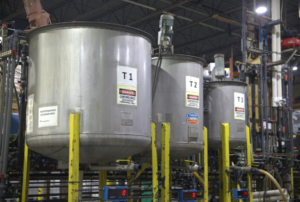
Even when a product is chemically suitable in theory, real-world conditions often determine whether compatibility issues occur. Proper chemical storage and safe practices for handling chemicals are critical in water treatment operations. Many failures result not from the chemistry itself, but from improper storage, poor segregation, or exposure to extreme conditions.
Key factors that influence compatibility include:
- Ambient temperature and system temperature, which can accelerate reactions
- Chemical concentration, since stronger solutions are often more aggressive
- System pressure, especially in closed feed or injection assemblies
- Length of time materials are exposed to certain liquids or vapors
- The proximity of incompatible substances stored in the same area
When chemicals are improperly stored or allowed to come into unintended contact, the risk of corrosion, degradation, or unsafe reactions increases significantly. Following established safety protocols helps protect personnel, maintain equipment integrity, and ensure treatment products perform as intended throughout their lifecycle.
Using Compatibility Charts and Testing to Reduce Risk
A chemical compatibility chart is one of the most common tools used to evaluate whether a material is suitable for a given application. A typical compatibility chart lists chemicals in the left column, while materials or conditions appear across the top row, allowing professionals to compare expected performance.
These charts often summarize chemical behavior listed in published data and provide a helpful general guide for selecting compatible materials. However, compatibility ratings are not absolute. Real-world factors such as temperature, concentration, and exposure time can change outcomes.
For that reason, professionals should treat charts as a starting point and perform an initial test when possible. Testing helps determine true suitability for a specific system, especially when working with complex chemical programs or sensitive materials. Using charts alongside practical testing is one of the best ways to reduce risk and ensure safe, long-term compatibility in the field.
How ETI Supports Compatibility Confidence
In water treatment applications, chemical compatibility decisions are stronger when they are backed by technical guidance and reliable supply execution. ETI supports independent water treatment professionals and OEMs with partner-first services that help reduce compatibility risk across products, materials, and feed systems.
ETI’s related support includes:
- Technical support and troubleshooting, including field problem-solving and laboratory assistance to evaluate compatibility concerns and program changes
- Specialized testing tools and services, such as jar testing support and polymer selection assistance, plus tools used to verify treatment performance
- Custom formulation and flexible packaging, which can help match a chemistry to a particular system requirement and reduce issues tied to materials exposure
- Quality and fulfillment controls, supported by ISO 9001:2015 certification and “The Right Seven” promise to deliver the right product, documentation, and quality consistently
To discuss compatibility questions or program needs, contact ETI and connect with their technical team.
Frequently Asked Questions (FAQs)
What is the meaning of chemical compatibility?
Chemical compatibility refers to how a chemical will react when it comes into contact with other substances, organic materials, metals, or system components. It helps determine whether exposure will cause a minor effect, slight corrosion, environmental stress cracking, or reduced long term performance, especially when different chemicals are stored or applied under varying temperature and concentration conditions.
What chemicals not to mix together?
Certain chemicals should never be mixed because incompatible chemicals can trigger hazardous chemical reactions. For example, mineral acids such as hydrochloric acid, sulfuric acid, or nitric acid should not be combined with oxidizers like hydrogen peroxide, and solvents such as methylene chloride or chlorinated hydrocarbons may also create unsafe chemical behavior. Improper storage or accidental contact between these substances can result in serious injury or equipment damage.
What are the 4 laws of chemical combination?
The four laws of chemical combination explain how chemical combinations occur in fixed and predictable ratios: the law of conservation of mass, the law of definite proportions, the law of multiple proportions, and the law of reciprocal proportions. These foundational principles help professionals understand chemical behavior listed in technical references and why compatibility between certain chemicals must be evaluated carefully for a particular purpose.
What is the compatibility between two chemicals?
Compatibility between two chemicals means whether they can be safely stored, handled, or used together without harmful interaction. A chemical compatibility chart is often used as a general guide, with chemicals found in the left column and materials across the top row, but real-world suitability depends on factors such as ambient temperature, concentration, pressure, and whether an initial test confirms safe performance.