Bromine water treatment is widely used across industrial and commercial applications as a reliable method to disinfect water and maintain consistent water quality. As an effective disinfectant, bromine plays a critical role in controlling microorganisms such as bacteria and algae in a variety of water systems. Its performance under challenging conditions makes it a valuable option for professionals managing complex treatment programs.
In modern water treatment, maintaining clean water is essential not only for system efficiency but also for public health and operational reliability. Bromine functions as a powerful oxidizing agent, enabling it to disinfect water even in environments where other chemistries may struggle. Whether applied in industrial systems or recreational settings, bromine-based programs are designed to support consistent water quality while minimizing biological risks.
Learn why bromine is the most versatile biocide for water treatment.
Bromine Chemistry and How It Works
Bromine is a highly effective oxidizing agent used in water treatment to control biological growth and maintain system cleanliness. Its performance is driven by how it behaves once introduced into water, particularly its ability to form active disinfecting compounds that remain effective under a wide range of conditions.
When applied to a system, bromine reacts with water to form hypobromous acid, the primary disinfectant responsible for killing microorganisms. This process can occur through the addition of sodium bromide, which is then activated by an oxidizer such as bleach or chlorine. In this reaction, the bromide ion is converted into free bromine, which delivers the antimicrobial effect.
Key Chemical Characteristics
- Bromine forms hypobromous acid (HOBr), a fast-acting disinfectant that is highly effective against bacteria, algae, and other microorganisms
- Compared to chlorine, which forms hypochlorous acid, bromine remains effective across a wider pH range, especially in high pH environments
- Bromine reacts with ammonia to form bromamines, which retain disinfecting capability, unlike chloramines formed in chlorinated water
- These bromine containing substances continue to provide disinfection even in systems with organic contamination or other substances present
Bromine vs. Chlorine Performance
| Property | Bromine | Chlorine |
|---|---|---|
| Active disinfectant | Hypobromous acid | Hypochlorous acid |
| Effectiveness at high pH | High | Reduced |
| Reaction with ammonia | Forms bromamines (still active) | Forms chloramines (less effective) |
| Stability in warm water | Strong | Moderate |
This chemistry explains why bromine remains stable and effective in demanding environments, particularly in systems where pH, temperature, and contamination levels fluctuate. Its ability to maintain performance under these conditions makes it a dependable choice for a wide range of water systems.
Key Applications of Bromine Water Treatment
Bromine water treatment is widely applied across multiple industries due to its ability to control biological growth under challenging conditions. Its stability, rapid reaction rate, and effectiveness in variable environments make it a suitable choice for both industrial and recreational water systems.
Cooling Towers and Industrial Systems
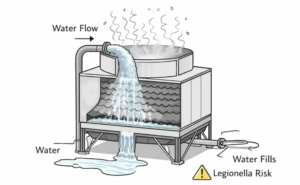
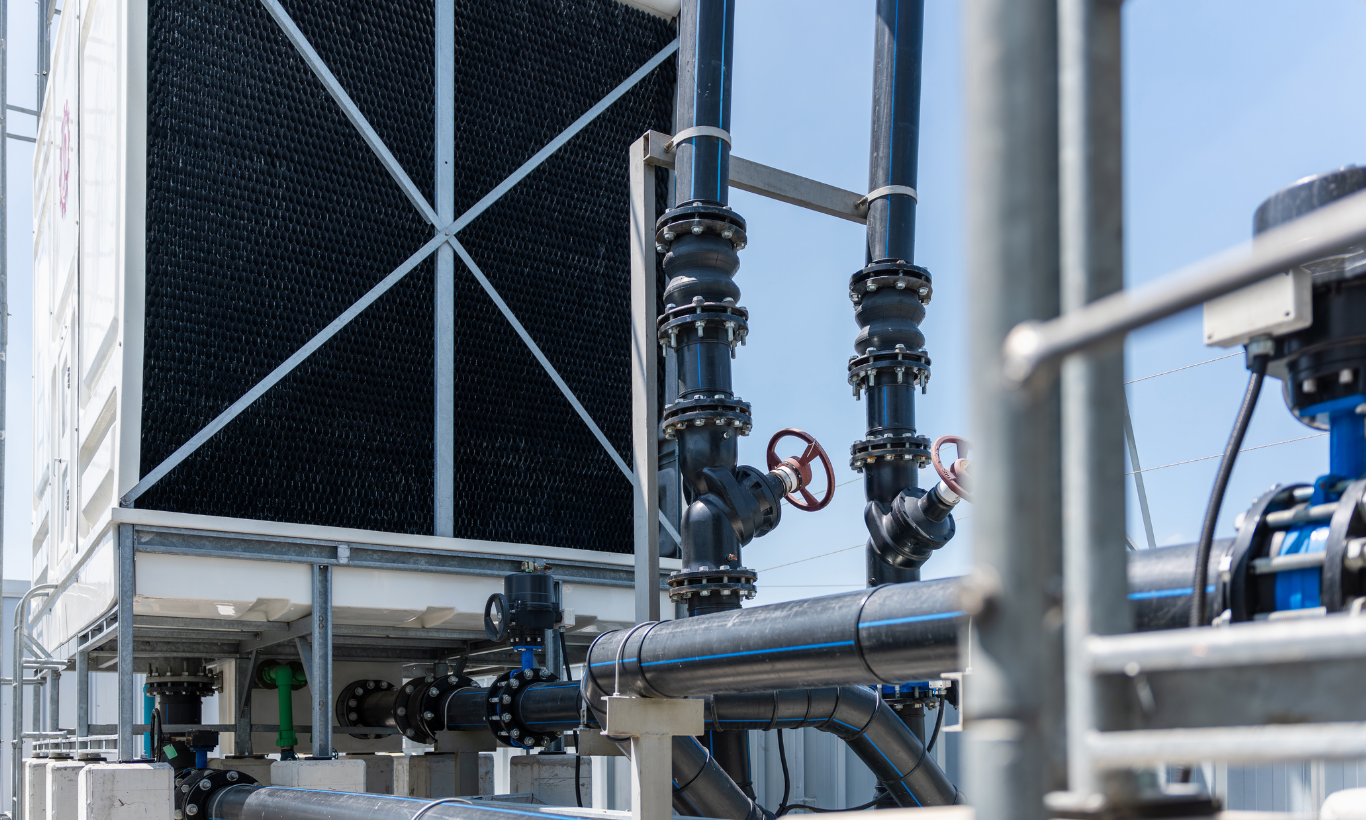
In industrial settings, particularly in cooling towers and cooling water systems, bromine is commonly used to manage microbial contamination and maintain efficient operation. These systems often operate under conditions that promote biological growth, including heat, nutrient presence, and continuous water circulation.
Bromine performs well in cooling tower water because it remains effective at higher pH levels and in the presence of contaminants.
Common benefits in industrial applications include:
- Effective control of algae, bacteria, and other microorganisms
- Reliable performance in high-temperature and high-load environments
- Reduced fouling and improved heat transfer efficiency
- Compatibility with complex cooling tower water chemistry
Bromine is especially valuable in tower water systems where maintaining consistent treatment is critical to operational reliability.
Cooling Tower Biocides: Selection & Best Practices
Swimming Pools and Spas
Bromine is also widely used in swimming pools and spas, particularly in warm water environments where maintaining stable disinfection can be more difficult. Its gentle characteristics make it more comfortable for users while still providing effective sanitation.
Advantages in recreational systems:
- Maintains disinfectant performance in warm water conditions
- Less irritating to skin and mucous membranes compared to some chlorinated water systems
- Provides consistent bromine level control for improved water quality
These properties make bromine a preferred option for indoor pools and spas where user comfort and consistent disinfection are priorities.
Wastewater and Process Water Systems
In wastewater and process water applications, bromine is used to support disinfection and control biological activity in systems with varying water quality and composition. These systems often contain dissolved solids, organic material, and other substances that can interfere with traditional treatment methods.
Bromine water treatment is suitable in these environments because it remains effective even when other chemicals are impacted by contamination or fluctuating conditions.
Typical uses include:
- Disinfection of industrial water systems
- Control of biological growth in recycled or reused water
- Treatment of seawater or high-salinity streams
Its ability to function reliably in the presence of dissolved contaminants makes bromine a strong option for complex water systems where consistent performance is required.
Also read our guide on: Wastewater Purification System
Benefits of Bromine Water Treatment
Bromine water treatment offers several advantages that make it a preferred option in systems where consistent performance and reliability are required. Its chemical behavior allows it to maintain strong disinfecting power even under conditions that typically reduce the effectiveness of other treatment methods.
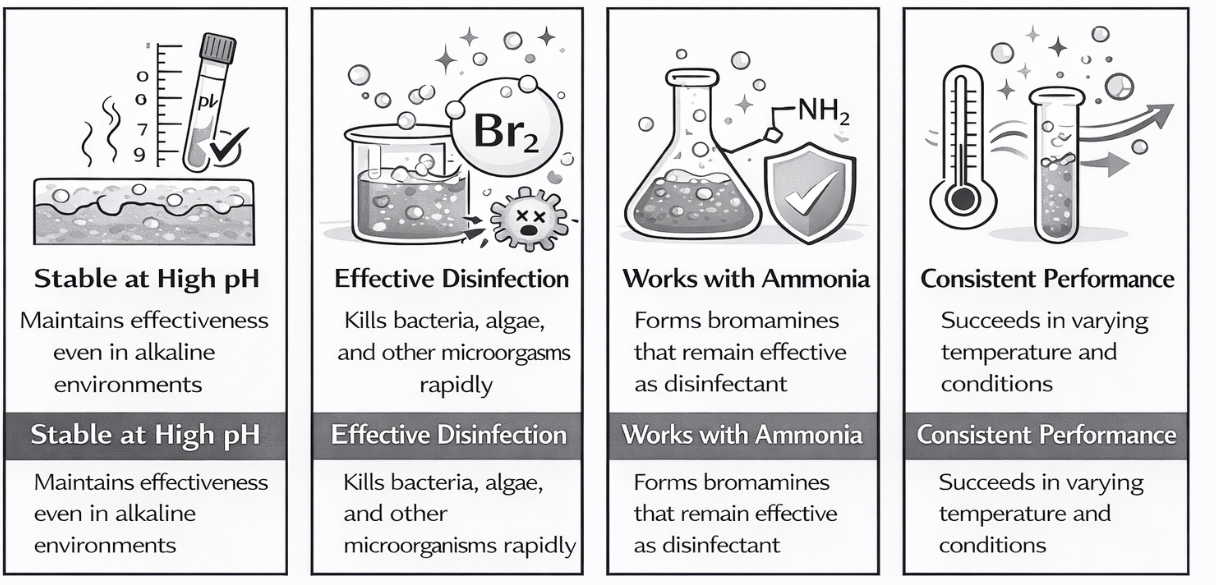
These advantages make bromine a suitable choice for professionals seeking dependable treatment solutions, particularly in systems where maintaining consistent disinfectant performance is critical.
System Design and Operational Considerations
Effective bromine water treatment requires proper system design, consistent monitoring, and controlled dosing to maintain optimal performance. While bromine is highly reliable, maintaining the correct bromine concentration is essential to ensure efficient disinfection and system stability.
A well-managed program focuses on maintaining the appropriate bromine level based on system conditions, including temperature, load, and contamination levels.
Key operational considerations include:
- Maintaining proper bromine concentrations
Regular testing is required to measure bromine level and ensure the concentration remains within the target range for effective disinfection. - Monitoring and control
Operators should routinely test and measure system conditions such as pH and disinfectant residuals to maintain consistent treatment performance. - Feed methods and equipment
Bromine can be applied using a bromine feeder, tablets, or liquid form solutions depending on the system design and operational needs. - Chemical forms and storage
Bromine products may be stored as stabilized tablets, liquid solutions, or generated from sodium bromide systems. Proper storage and handling are important due to the reactive nature of the chemistry. - System operation and dosing strategy
Continuous or intermittent dosing methods can be used depending on system demand. Adjustments should be made based on changes in load, temperature, and contamination levels.
By focusing on proper operation and control, water treatment professionals can ensure bromine delivers consistent performance while maintaining overall system efficiency.
Environmental and Safety Considerations
Bromine water treatment must be applied with attention to safety, regulatory guidelines, and environmental impact. When handled and managed properly, bromine-based programs can support effective water disinfection while protecting human health and surrounding ecosystems.
Bromine compounds used in water systems are regulated in part by agencies such as the Environmental Protection Agency, particularly when applied in industrial or large-scale water treatment operations. Compliance with labeling, dosing limits, and discharge requirements is essential.
Key considerations include:
- Human health and exposure
Direct contact with concentrated bromine or improperly treated water can cause irritation to skin and mucous membranes. Proper handling procedures and system control help minimize risk. - Corrosive and reactive nature
Bromine is a reactive and potentially corrosive substance, especially in higher concentrations or when combined with other chemicals. Material compatibility and proper dosing are important for safe operation. - Interaction with other chemicals and compounds
Bromine can react with other substances in water, including organic matter and metals, forming different compounds. Understanding system chemistry helps ensure stable and predictable treatment. - Environmental discharge considerations
Residual bromine and related compounds should be monitored to avoid negative impacts on receiving water bodies, including drinking water sources or sensitive ecosystems. - Responsible chemical management
Safe storage, handling, and application practices are critical, particularly when bromine is used alongside other chemicals such as pesticides or oxidizers.
With proper oversight and adherence to regulatory standards, bromine can be used effectively while maintaining safety and environmental responsibility.
Supporting Water Treatment Professionals
Effective bromine water treatment programs require more than just selecting the right chemistry. Success depends on proper system evaluation, accurate dosing, and ongoing technical support to adapt treatment strategies as conditions change. For water treatment professionals, having access to the right resources can make a significant difference in program performance.
Eastern Technologies, Inc. (ETI) supports independent water treatment companies and OEMs by providing the tools and expertise needed to implement reliable treatment programs across a wide range of applications. Rather than competing in the market, ETI operates as a partner, helping professionals deliver effective solutions to their customers.
Support typically includes:
- Access to a broad range of biocide options and treatment chemistries
- Technical guidance for system-specific solution design
- Assistance with monitoring, testing, and program optimization
- Flexible product formats to match operational needs
This partner-focused approach allows water treatment professionals to confidently manage complex systems while maintaining consistent performance and service quality.
If you are evaluating bromine programs or looking to improve microbial control in your water systems, ETI is ready to support you. Contact our team to discuss your application and discover how we can help you deliver more effective, reliable treatment solutions.