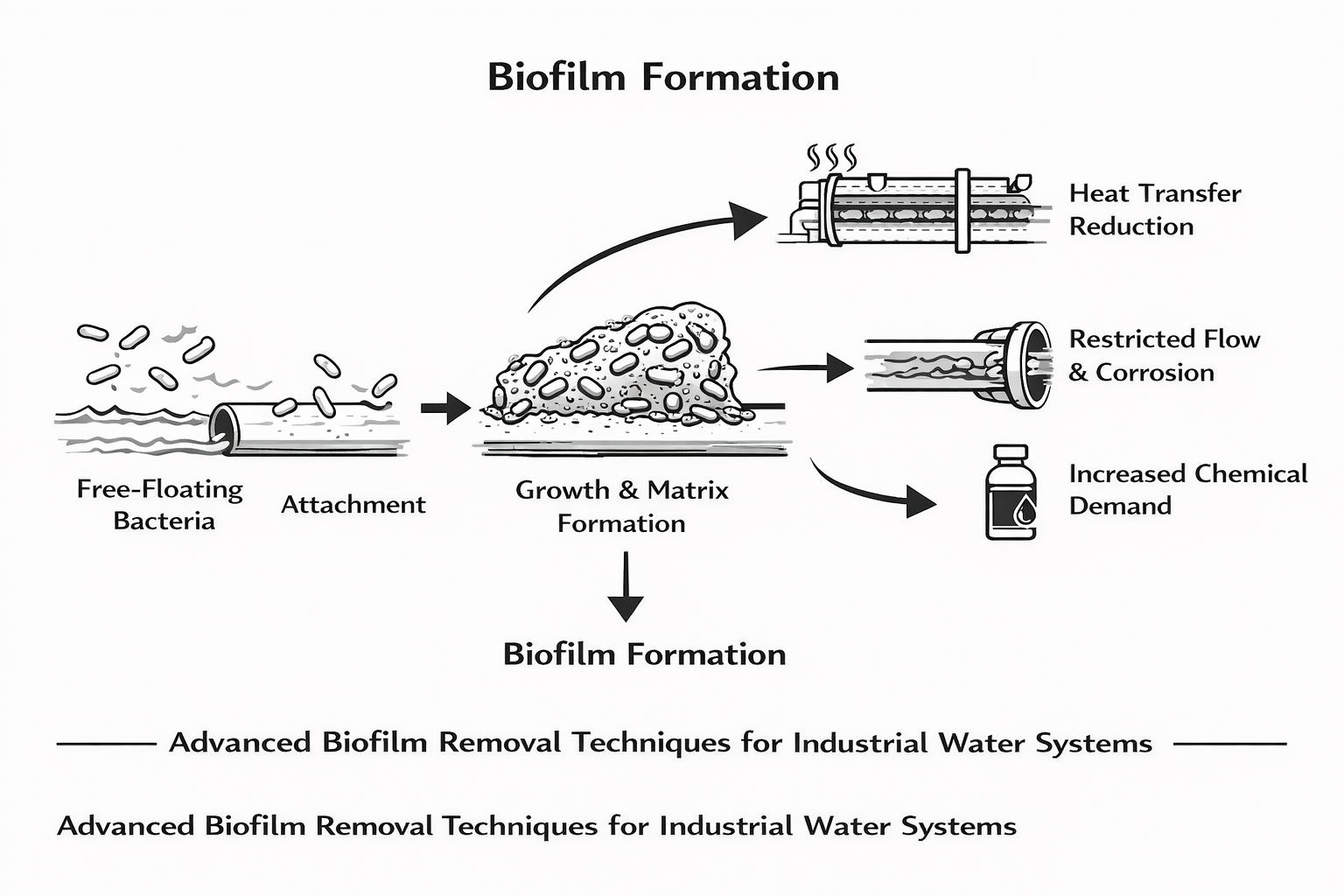
Biofilm removal is a critical maintenance priority in any water system that recirculates, stores, or distributes water through pipes, tanks, and heat exchange surfaces. When bacteria and other microorganisms attach to a surface and begin biofilm formation, they do not stay as free-floating cells. They build structured communities that can reduce heat transfer, restrict flow, accelerate corrosion, and increase chemical demand. In systems where stagnant water can occur, the risk rises further because low flow and uneven disinfectant distribution support rapid biofilm growth.
Beyond operational efficiency, biofilm also matters for public health. Bacterial biofilms can shelter microbes that contribute to odor issues, fouling, and in some cases organism persistence that elevates exposure risk. Once established, the biofilm matrix creates increased resistance to many control measures, which is why a proactive approach is essential. Effective programs focus on both removal and prevention so facilities can protect assets, reduce risk, and support overall health outcomes tied to safe, well-managed water environments.
Understanding Biofilm Formation and Structure
From Planktonic Cells to Attached Communities
In water environments, many microorganisms exist in a free-floating, or planktonic, state. These individual bacterial cells move through the system until they encounter a suitable surface. When conditions such as nutrient availability, temperature, and flow patterns align, the cells attach and begin to form a colony. This early formation stage is reversible, but once the organisms anchor more firmly and begin producing protective compounds, the biofilm becomes more stable.
As additional bacteria join and multiply, the structure develops into complex bacterial biofilms composed of layered communities. Different organisms can occupy different zones within the same biofilm, allowing microbes to survive under varying oxygen levels and environmental conditions. This adaptability is one reason biofilms can develop quickly and persist in challenging system environments.
What the Biofilm Matrix Is Made Of
The defining feature of biofilm is the biofilm matrix, a protective scaffold made primarily of extracellular polymeric substances. These extracellular polymeric substances are secreted by the bacterial cells and create a cohesive, three-dimensional structure.
The matrix commonly contains:
- Polysaccharides that provide structural stability
- Proteins that support adhesion and cohesion
- Enzymes that facilitate nutrient acquisition and internal communication
- Extracellular DNA that strengthens the matrix
- Water and trapped nutrients that sustain the colony
This matrix acts as a physical and chemical barrier. It enables microorganisms to survive stress, shields them from disinfectants, and supports the mechanisms that allow biofilm communities to develop increased resistance over time. Understanding this microbiology is essential before selecting the most effective strategy to disrupt and remove biofilm from a water system.
Why Biofilm Is Difficult to Eliminate
Once established, biofilm becomes significantly harder to control than free-floating microorganisms. While planktonic bacteria are generally more susceptible to a disinfectant, organisms embedded within a mature biofilm matrix exhibit increased resistance to chemical disinfectants and other antimicrobial strategies. The structure acts as a diffusion barrier, slowing penetration and reducing the concentration of active chemistry that reaches deeply embedded cells.
This behavior mirrors what is seen in certain bacterial infections in the human body, where protective structures can reduce the effectiveness of antibiotics. Just as the immune system may struggle to access bacteria hidden within tissue layers, standard system disinfectant applications may not be sufficient to eliminate biofilms without a targeted strategy.
Common reasons biofilm persists include:
- The matrix limits contact between chemicals and bacterial cells
- Enzymes within the structure can neutralize or degrade treatment agents
- Layers of organisms create gradients that allow microbes to survive
- Contributing factors such as stagnant water and nutrient load accelerate regrowth
- Inconsistent control programs reduce overall efficacy
Because multiple factors influence biofilm control, a structured and well-documented approach is crucial. Effective removal depends on understanding the system, selecting appropriate treatment methods, and verifying performance rather than relying on a single chemical application.
Core Biofilm Removal Techniques
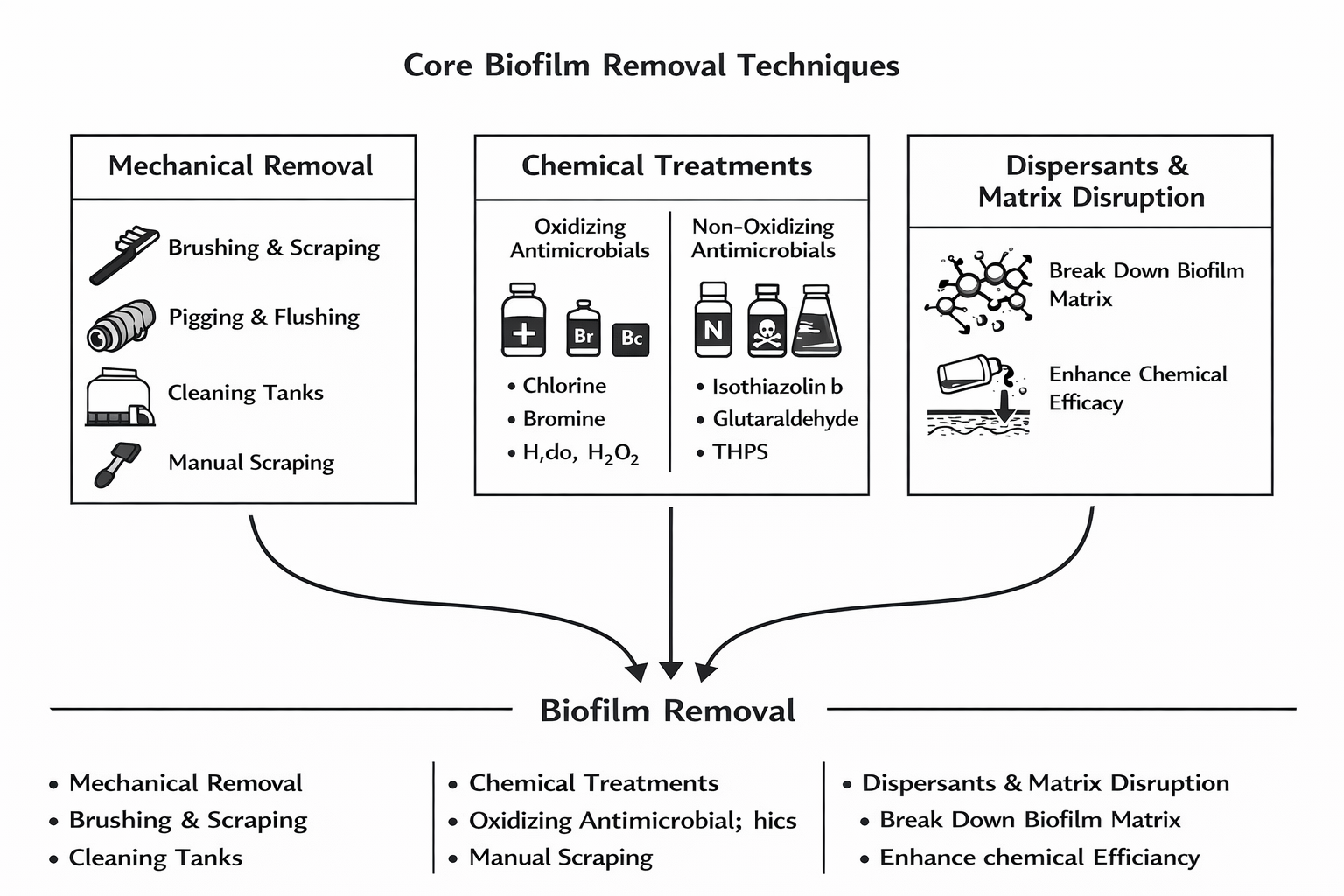
Effective biofilm removal requires more than a single product or application. Because biofilm is a structured and protected community of microorganisms, successful removal strategies typically combine mechanical action with carefully selected chemical treatments. The goal is not only to eliminate surface contamination, but to disrupt the internal matrix and reduce the likelihood of rapid regrowth.
Mechanical Removal Methods
Mechanical methods are often the first step in reducing heavy deposits. These approaches physically remove bulk buildup from system surfaces before chemical treatment is applied.
Common mechanical techniques include:
- Brushing heat exchanger tubes and accessible surfaces
- Pigging or high-velocity flushing of pipes
- Cleaning and draining tanks
- Manual scraping during scheduled shutdowns
Mechanical removal is often preferable when thick deposits are present. By reducing the amount of biomass on the surface, chemical treatments can more effectively penetrate and complete the removal process. However, mechanical methods alone rarely remove biofilm completely because microscopic layers of the biofilm matrix may remain attached.
Chemical Treatments and Disinfectants
Chemical treatments play a central role in biofilm removal. Properly selected chemicals can disrupt the matrix, target bacterial cells, and help eliminate biofilms embedded within system components.
Common chemical approaches include:
Oxidizing antimicrobials
- Chlorine-based products
- Bromine systems
- Hydrogen peroxide, which acts as a strong oxidizer under appropriate temperatures and contact times
Non-oxidizing antimicrobials
- Isothiazolin blends
- Glutaraldehyde
- THPS and related chemistries
Oxidizers are effective at rapidly reducing microbial populations, while non-oxidizers can penetrate deeper layers of the biofilm matrix depending on system conditions. The efficacy of any disinfectant depends on dosage, contact time, system temperature, pH, and overall water chemistry.
Dispersants and Matrix Disruption
A critical but sometimes overlooked part of biofilm removal is targeting the structure itself. Dispersants and specialty additives are designed to disrupt the biofilm matrix and improve penetration of antimicrobials.
These products may:
- Break apart protective polymers
- Reduce surface tension to improve wetting
- Support detachment from system surfaces
- Enhance overall treatment efficacy
When mechanical cleaning, chemical treatments, and dispersant strategies are integrated, the likelihood of successfully removing biofilm increases significantly.
Biofilm Removal Methods, Strengths, and Limitations
| Method Type | Best Use Case | Strengths | Limitations |
|---|---|---|---|
| Mechanical removal | Heavy deposits in pipes and tanks | Immediate bulk removal | May leave microscopic matrix behind |
| Oxidizing disinfectant | Routine control or shock treatment | Rapid microbial kill | Limited penetration in thick biofilm |
| Non-oxidizing treatment | Targeted or rotational programs | Can reach deeper layers | Requires careful dosing and monitoring |
| Dispersant additives | Mature biofilm structures | Disrupt matrix and improve chemical access | Must be combined with other treatment steps |
A comprehensive biofilm removal program evaluates the specific system environment, selects appropriate methods, and verifies performance through testing and inspection. This proactive approach is crucial to reduce risk, maintain performance, and support long-term system reliability.
Long-Term Prevention and Control Strategies
While effective biofilm removal restores performance, long-term success depends on prevention. Once microorganisms attach and begin biofilm formation, regrowth can occur quickly if contributing factors are not addressed. A control program should focus not only on removing existing deposits, but also on preventing biofilm formation in the first place.
Several practical steps help prevent biofilm and limit biofilm growth in a water system:
- Maintain consistent flow to reduce stagnant water conditions
- Monitor temperatures that may accelerate microbial activity
- Control nutrient sources that contribute to microbial development
- Apply rotational antimicrobial strategies when appropriate
- Verify disinfectant residuals and overall system balance
- Conduct routine inspections of pipes, tanks, and heat transfer surfaces
Monitoring is essential for prevention. Operators should assess trends using microbiological testing, deposit inspections, and performance indicators such as pressure drop or heat transfer efficiency. The presence of recurring deposits may indicate that current control measures are not sufficient.
A proactive approach to prevention supports overall health and system protection. By addressing environmental conditions and maintaining consistent treatment programs, facilities can reduce risk, extend equipment life, and minimize operational disruptions tied to uncontrolled biofilm.
How Eastern Technologies, Inc. Supports Water Treatment Professionals
Effective biofilm removal and prevention require more than selecting the right chemistry. They require technical evaluation, program design, and consistent follow-through. Eastern Technologies, Inc., a 2023 AWT Supplier of the Year and ISO 9001:2015 certified manufacturer, has supported independent water treatment professionals since 1986. Through its non-compete, partner-first model, ETI exists to equip distributors and service providers with the tools, chemistry, and expertise needed to protect every water system they manage.
ETI offers a broad portfolio of oxidizing and non-oxidizing chemicals, specialty antimicrobial formulations, and dispersant technologies designed to support biofilm control across cooling, boiler, and process applications. Just as important, partners gain access to experienced technical support to assess system conditions, evaluate treatment efficacy, and design prevention strategies tailored to specific operating environments.
Also read: Why Bromine Is the Most Versatile Biocide for Water Treatment
Where ETI supports water treatment professionals:
- Guidance in selecting appropriate chemical treatments and antimicrobial rotations
- Technical troubleshooting to strengthen biofilm removal and long-term control
- Regulatory and compliance support to help protect both system performance and public health
Learn more about ETI’s water treatment solutions and how we support Water Treatment Professionals.