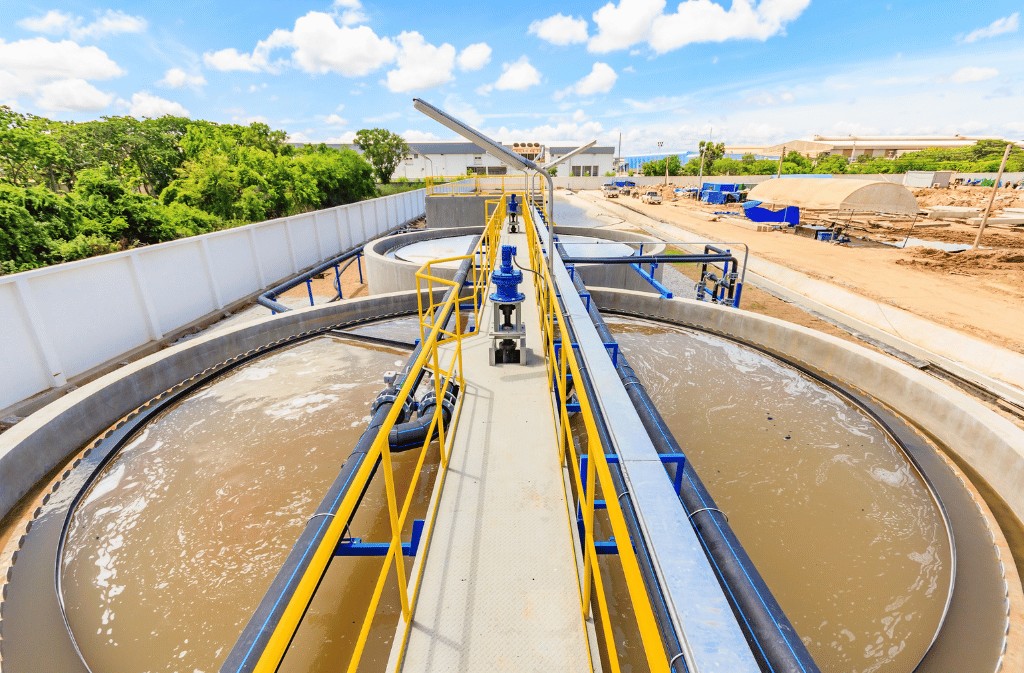
Industrial facilities generate oily wastewater through manufacturing, equipment cleaning, metalworking, and other operations. While free-floating oil can often be removed through conventional separation methods, emulsified oils present a greater challenge. Fine oil droplets can remain suspended in water, making oil water separation difficult and potentially affecting downstream treatment processes and water quality.
For water treatment professionals, selecting an effective emulsion breaker oily wastewater treatment program requires understanding how these stable mixtures form and how to destabilize them. Emulsion breakers help separate oil and water by allowing dispersed droplets to combine into larger droplets that can be removed through appropriate separation methods.
Successful treatment depends on several factors, including wastewater composition, chemical selection, and operating conditions. Understanding these considerations helps water treatment professionals develop more reliable treatment strategies for industrial applications while improving overall treatment efficiency.
Key Takeaways
- Emulsion breakers destabilize emulsified oil droplets, allowing more effective removal through appropriate separation methods.
- Successful oily wastewater treatment depends on proper chemical selection, wastewater characteristics, and operating conditions.
- Combining chemical treatment with suitable separation technologies and application-specific testing helps water treatment professionals achieve consistent performance and maintain reliable wastewater treatment operations.
Understanding Oil-in-Water Emulsions
An emulsion forms when one liquid is dispersed as small droplets throughout another. In an oil-in-water emulsion, water acts as the continuous phase, while oil droplets remain distributed within it. This condition commonly occurs in oily wastewater generated by metalworking, equipment cleaning, and industrial processes involving lubricants or hydrocarbon oils.
Unlike free oil, which can often be removed through gravity separation, emulsified oils contain fine droplets that resist separating naturally. Understanding the characteristics of these emulsions is essential for selecting appropriate wastewater treatment methods.
What Makes Oil and Water Form a Stable Emulsion?
Although oil and water are two immiscible liquids, mechanical agitation can disperse one into the other. Surfactants, wetting agents, and suspended solids can further increase emulsion stability by forming protective interfacial films around droplets, preventing them from combining into larger droplets.
The two primary emulsion types differ in their continuous and dispersed phases:
| Emulsion Type | Continuous Phase | Dispersed Phase |
|---|---|---|
| Oil-in-water | Water | Oil droplets |
| Water-in-oil | Oil | Water droplets |
Oil-in-water emulsions are particularly relevant to industrial wastewater treatment because dispersed oil must be removed from the water phase. Water-in-oil emulsions are more common in certain petroleum processing and oil production applications.
Identifying the emulsion type and its stabilizing factors helps water treatment professionals determine which emulsion breaking approaches are appropriate for effective oil water separation.
How Emulsion Breakers Work
Emulsion breakers help release fine oil droplets from stable wastewater emulsions so the oil can be separated through physical treatment methods. In a stable oil-in-water mixture, surfactants and other emulsifying agents can accumulate at the oil-water interface. These substances create a protective interfacial film, while electrical repulsion between droplets may prevent them from combining.
How Emulsion Breakers Destabilize Oil Droplets
Chemical emulsion breaking targets the mechanisms that maintain emulsion stability. Depending on the wastewater and chemical formulation, an emulsion breaker may disrupt the interfacial film, alter interfacial activity, or reduce repulsive forces between oil droplets. As these barriers weaken, smaller droplets can collide and coalesce into larger ones, making separation easier.
This is the principle behind emulsion breaker oily wastewater treatment: overcoming the forces that keep oil dispersed rather than relying on gravity alone. However, destabilizing an emulsion does not automatically remove the oil. Additional separation methods, such as gravity separation or dissolved air flotation, are typically needed to remove the released oil.
Emulsion breakers also differ from coagulants and flocculants. Coagulants help destabilize dispersed materials, while flocculants promote the formation of larger aggregates that can be removed more easily. These chemicals may complement emulsion breakers depending on the treatment requirements.
Because oily wastewater characteristics vary, selecting appropriate treatment chemistry is essential for achieving consistent separation performance.
The Emulsion Breaking Process in Wastewater Treatment
An effective emulsion breaking process begins with understanding the wastewater characteristics and selecting suitable treatment chemistry. Oil composition, surfactants, suspended solids, and operating conditions can influence separation performance. Although treatment requirements vary across industrial applications, the process generally involves five key steps.
- Characterize the wastewater: Collect representative samples and evaluate oil concentration, pH, temperature, and suspended solids. Determine whether the oil is free-floating, dispersed, or emulsified, as each condition may require a different treatment approach.
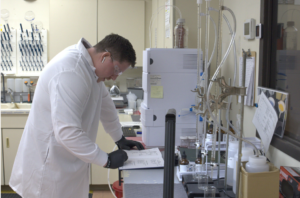
- Select and test treatment chemistry: Conduct jar testing to compare potential emulsion breakers and determine appropriate chemical dosages. Observe oil separation, water clarity, and the formation of residual solids to assess treatment effectiveness.
- Apply the chemical under controlled conditions: Introduce the selected emulsion breaker at the tested dosage while maintaining suitable mixing conditions. Proper chemical distribution is essential, but excessive agitation may interfere with droplet coalescence and separation.
- Separate the destabilized oil: Allow sufficient contact and retention time for smaller oil droplets to combine into larger droplets. Depending on the wastewater characteristics and treatment equipment, gravity separation or dissolved air flotation can remove the released oil phase.
- Evaluate treatment performance: Assess the separated water using relevant indicators, such as residual oil and grease, turbidity, and chemical oxygen demand. Adjust chemical dosage or operating parameters as necessary to maintain consistent treatment results.
Successful emulsion breaking requires more than chemical addition alone. Combining appropriate treatment chemistry with effective physical separation and ongoing performance monitoring helps water treatment professionals improve oil removal and maintain reliable wastewater treatment operations.
Key Factors That Affect Emulsion Breaker Performance
Even when appropriate treatment chemistry has been selected, emulsion breaker performance depends on wastewater characteristics and operating conditions. Changes in feed composition or operating parameters can influence emulsion stability, separation efficiency, and final water clarity.
Several factors affect treatment effectiveness:
- pH and wastewater chemistry: pH adjustment can influence droplet charge and the behavior of emulsifiers, coagulants, and polymers. The optimal pH range depends on the specific emulsion and treatment chemicals used.
- Temperature: Higher temperatures can reduce oil viscosity and promote droplet coalescence. However, adding heat is not always necessary or economical, making application-specific testing important.
- Oil composition and surfactants: Different hydrocarbon oils, detergents, and suspended solids can create complex emulsions with varying stability. Changes in wastewater composition may require adjustments to treatment chemistry.
- Chemical dosage and mixing: Insufficient dosage may leave emulsions stable, while excessive chemical addition can reduce effectiveness or cause downstream treatment problems. Proper mixing distributes the chemical without unnecessarily redispersing separated oil.
- Retention time and separation conditions: Adequate residence time allows destabilized oil droplets to combine and separate. Flow fluctuations or insufficient separation capacity may limit treatment performance.
Evaluating these factors through controlled testing helps water treatment professionals optimize chemical usage, maintain consistent separation, and improve wastewater treatment reliability.
Integrating Emulsion Breakers With Other Treatment Methods
Chemical emulsion breaking is often one stage in a broader oily wastewater treatment process. Once emulsified oil droplets have been destabilized, additional separation methods are needed to remove the released oil and associated solids. The most suitable combination depends on wastewater characteristics, treatment objectives, and existing equipment.
Different treatment technologies serve complementary roles in oil water separation:
| Treatment Method | Primary Role in Oily Wastewater Treatment |
|---|---|
| Gravity separation | Removes free oil and sufficiently coalesced oil droplets through density differences, allowing oil to rise for skimming. |
| Dissolved air flotation (DAF) | Uses fine air bubbles to lift oil droplets and suspended matter to the surface for removal. |
| Coagulation and flocculation | Destabilize dispersed materials and promote aggregation into larger flocs that can be separated more easily. |
Gravity separation alone is generally ineffective for stable emulsions. Chemical pretreatment can improve separation by allowing smaller droplets to combine before removal. Similarly, dissolved air flotation may be combined with emulsion breakers, coagulants, or flocculants to improve the removal of dispersed oil and suspended solids.
Integrating these methods can also reduce oil loading on downstream biological systems. However, other contaminants, including dissolved heavy metals, may require additional treatment. Evaluating the complete treatment process helps water treatment professionals achieve more consistent effluent quality and reliable system performance.
Choosing the Right Emulsion Breaker for Oily Wastewater
Selecting the right emulsion breaker requires evaluating the wastewater characteristics, treatment objectives, and existing separation equipment. Because industrial wastewater can contain different types of oils, surfactants, and suspended solids, a chemical that performs well in one application may not provide the same results in another.
Water treatment professionals should consider the following factors when selecting treatment chemistry:
- Wastewater composition: Identify the types and concentrations of emulsified oils, detergents, and other contaminants that may influence emulsion stability.
- Emulsion characteristics: Determine whether the wastewater contains stable oil-in-water emulsions and evaluate how easily the dispersed droplets can be destabilized.
- Operating conditions: Assess pH, temperature, flow variations, and available retention time to ensure the treatment chemistry is suitable for actual system conditions.
- Treatment compatibility: Consider how the selected chemical interacts with downstream processes, including dissolved air flotation, coagulation, flocculation, and biological treatment.
- Testing and cost-effectiveness: Conduct jar testing to compare chemical dosages, oil removal performance, water clarity, and potential treatment costs.
A reliable emulsion breaker oily wastewater treatment strategy should prioritize consistent performance rather than chemical dosage alone. Bench testing, followed by evaluation under actual operating conditions, helps water treatment professionals identify suitable formulations and make informed decisions for long-term wastewater treatment efficiency.
How ETI Supports Water Treatment Professionals
At Eastern Technologies, Inc. (ETI), we support independent water treatment companies, distributors, and OEMs with the chemical solutions and technical expertise needed to address challenging wastewater applications. As the 2023 AWT Supplier of the Year and an ISO 9001:2015-certified company, we provide oil treatment solutions, including emulsion breakers and oil-water separation agents, alongside wastewater treatment chemicals such as coagulants and flocculants.
Our approach to emulsion breaker oily wastewater treatment extends beyond chemical supply. We offer custom formulations, jar testing assistance, laboratory evaluations, and technical support to help our partners select appropriate treatment chemistry and address application-specific challenges. We work behind the scenes to strengthen your capabilities, without selling directly to or competing for your end-user customers.
Need dependable chemistry and technical support for your next oily wastewater application? Contact ETI Water to discuss your treatment challenges and discover how we can support your business.
Frequently Asked Questions (FAQs)
Can gravity separation remove stable oil-in-water emulsions?
Gravity separation removes free oil and larger droplets, but stable emulsions often resist separation. Chemical emulsion breaking can help destabilize these mixtures before physical removal.
What is the difference between oil-in-water and water-in-oil emulsions?
Oil-in-water emulsions contain oil droplets dispersed in a continuous water phase. Water-in-oil emulsions contain water droplets dispersed throughout an oil phase.
How do pH adjustment and temperature affect emulsion breaking?
pH adjustment can influence droplet charge and chemical effectiveness, while temperature affects oil viscosity and coalescence. Optimal conditions depend on wastewater composition and treatment chemistry.
Can emulsion breakers improve dissolved air flotation performance?
Emulsion breakers can improve dissolved air flotation performance by helping destabilize emulsified oil. Their effectiveness depends on chemical compatibility, operating conditions, and wastewater characteristics.
How can water treatment professionals select the right emulsion breaker?
Jar testing helps compare treatment chemicals based on oil separation, water clarity, and dosage requirements. ETI supports its partners with chemical selection guidance and application-specific testing assistance.