Sludge dewatering is an essential step in wastewater treatment, helping reduce the volume of waste that must be handled, transported, or disposed of. However, removing excess water from sludge can be challenging, particularly when fine particles and varying sludge characteristics affect separation efficiency.
Polymers also play an important role in sludge conditioning by promoting particle aggregation and improving solid-liquid separation. Selecting the right polymer can enhance dewatering efficiency, improve cake solids content, and help reduce chemical consumption and disposal costs.
For water treatment professionals, an effective polymer selection sludge dewatering strategy requires understanding sludge composition, polymer properties, and operating conditions. Evaluating these factors helps identify suitable treatment chemistry and supports consistent dewatering performance across different industrial wastewater applications.
Key Takeaways
- Effective polymer selection depends on sludge characteristics, polymer properties, and specific dewatering requirements.
- Proper polymer dosing and equipment compatibility are essential for improving solids separation, cake dryness, and operational efficiency.
- Laboratory testing, field validation, and regular performance monitoring help maintain consistent sludge dewatering results.
Understanding Polymer Conditioning in Sludge Dewatering
Sludge conditioning prepares suspended solids for more effective separation from water during the dewatering process. Waste sludge often contains organic matter, fine particles, and water retained within its structure, making moisture removal difficult. The effectiveness of conditioning depends on sludge characteristics, including particle size, surface charge, and chemical composition.
Without proper conditioning, smaller sludge particles may remain dispersed, limiting dewatering efficiency and affecting filtrate clarity. Polymers help address this challenge by encouraging particles to aggregate into larger flocs that can be separated more effectively through mechanical dewatering equipment.
How Polymers Promote Floc Formation
Polymer conditioning primarily works through charge neutralization and particle bridging. Many sludge particles carry a negative surface charge, causing them to repel one another. Cationic polymers can reduce these repulsive forces, while long polymer chains connect multiple particles to form larger, more cohesive flocs.
This aggregation supports solid-liquid separation by improving particle capture and allowing water to drain more readily. However, polymer performance also depends on proper mixing and chemical compatibility with the sludge.
Insufficient mixing can prevent effective polymer distribution, while excessive mixing intensity may damage newly formed flocs. Understanding these interactions helps water treatment professionals select appropriate treatment chemistry and establish conditioning practices that support consistent dewatering performance.
Types of Polymers Used for Sludge Dewatering
Different polymer types are used in sludge dewatering applications depending on the sludge’s chemical properties, particle charge, and treatment requirements. Polymers are generally classified as cationic, anionic, or nonionic, with each offering distinct characteristics that influence floc formation and dewatering performance.
Understanding these differences helps water treatment professionals identify suitable treatment chemistry for specific sludge conditions.
| Polymer Type | Primary Characteristic | Typical Applications |
|---|---|---|
| Cationic polymers | Positively charged polymers that interact with negatively charged sludge particles | Biological and organic-rich sludges |
| Anionic polymers | Negatively charged polymers that promote particle aggregation under suitable conditions | Certain mineral-rich and chemically conditioned sludges |
| Nonionic polymers | Polymers with minimal ionic charge that primarily support particle bridging | Selected sludge applications requiring low-charge formulations |
Cationic polymers are commonly used in wastewater sludge dewatering because many organic sludge particles carry a negative surface charge. However, polymer suitability also depends on sludge composition, solids concentration, and the presence of other treatment chemicals.
Beyond polymer charge, molecular weight and charge density influence conditioning effectiveness. High molecular weight polymers provide longer chains that can bridge suspended particles, while charge density affects interactions between polymers and sludge particles.
Selecting the right formulation requires evaluating these properties alongside actual sludge characteristics. Bench-scale testing helps determine which polymer provides effective floc formation, suitable cake solids content, and consistent dewatering performance.
How to Select the Right Polymer for Sludge Dewatering
Selecting an effective dewatering polymer requires a systematic approach that considers sludge characteristics, polymer properties, and treatment objectives. Since sludge composition varies across wastewater treatment facilities, laboratory evaluations and equipment-specific testing are essential for identifying suitable treatment chemistry.
The following five steps provide a practical approach to polymer selection:
- Evaluate sludge characteristics. Collect representative sludge samples and analyze solids concentration, pH, particle size distribution, and sludge composition. Identifying these characteristics helps determine which polymer formulations may be suitable for the sludge stream.
- Identify suitable polymer types. Screen potential cationic, anionic, or nonionic polymers based on sludge chemistry and conditioning requirements. Consider molecular weight and charge density, as these properties influence particle interactions and floc formation.
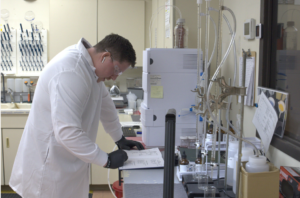
- Conduct bench-scale testing. Evaluate candidate polymers using laboratory screening methods to observe floc formation, drainage behavior, and water clarity. These tests help narrow the options before conducting equipment-specific trials.
- Compare polymer dosage and conditioning results. Test different polymer concentrations to identify a suitable dosage range. Evaluate floc strength, water release, and polymer consumption while avoiding excessive chemical addition that may reduce treatment effectiveness.
- Validate performance under operating conditions. Conduct field trials using the actual dewatering equipment to assess cake solids content, solids capture, and chemical usage. Adjust treatment conditions based on equipment performance and operational requirements.
A structured polymer selection sludge dewatering approach helps water treatment professionals identify formulations that balance chemical efficiency, solids separation, and operational reliability. Final selection should prioritize consistent performance under actual treatment conditions rather than laboratory results alone.
Factors That Affect Polymer Dosing and Dewatering Efficiency
Effective polymer dosing requires more than selecting an appropriate formulation. Sludge properties and operating conditions can change throughout the treatment process, influencing polymer demand, floc stability, and overall dewatering efficiency.
Several factors should be considered to optimize polymer dosing:
- Sludge composition and solids concentration: Variations in organic matter, particle size distribution, and solids content can affect polymer demand. Changes in sludge composition may require dosage adjustments to maintain consistent conditioning and separation performance.
- Polymer molecular weight and charge density: These properties influence how polymer chains interact with sludge particles. Higher molecular weight or charge density does not always guarantee better results, as effectiveness depends on sludge chemistry and treatment conditions.
- Chemical dosage and polymer preparation: Proper polymer preparation, dilution, and dosing are essential for effective conditioning. Insufficient dosage can limit floc formation, while excessive polymer addition may increase chemical consumption and negatively affect dewatering performance.
- Mixing intensity and distribution: Proper mixing ensures that polymers contact suspended particles throughout the sludge. Excessive agitation can damage formed flocs, while inadequate mixing may result in uneven conditioning and reduced separation efficiency.
- Operating conditions and upstream treatment: Changes in pH, temperature, sludge flow, and residual inorganic coagulants can influence polymer performance. Monitoring these conditions helps maintain stable dewatering operations.
Regular evaluation of these factors allows water treatment professionals to adjust chemical dosing, minimize unnecessary polymer consumption, and support consistent dewatering performance under changing operating conditions.
Matching Polymers With Dewatering Equipment
The effectiveness of polymer conditioning also depends on the mechanical dewatering equipment used in the treatment process. Different systems apply varying levels of pressure, shear, and filtration, which influence floc stability, water removal, and overall dewatering performance.
Water treatment professionals should consider how polymer properties interact with the operating requirements of each equipment type.
| Dewatering Equipment | Key Polymer Considerations |
|---|---|
| Belt filter press | Requires flocs that promote efficient drainage while maintaining stability under mechanical pressure and moderate shear. |
| Centrifuge | Requires polymers that form strong, shear-resistant flocs capable of withstanding high rotational forces during separation. |
| Filter press | Requires effective sludge conditioning to support filtration, cake formation, and separation of water from solids under pressure. |
Polymer performance may vary between equipment types, even when treating the same sludge stream. Factors such as feed solids concentration, mixing intensity, polymer dosage, and equipment operating parameters can influence the results.
Evaluating polymer compatibility through equipment-specific trials helps water treatment professionals improve cake solids content, maintain solids capture, and support efficient dewatering operations without unnecessary chemical consumption.
Evaluating Polymer Performance and Treatment Results
Effective polymer selection requires evaluating measurable dewatering results rather than relying solely on visible floc formation. Water treatment professionals should monitor key performance indicators to determine whether the selected polymer meets treatment objectives while maintaining operational efficiency.
The following indicators help assess dewatering performance:
- Cake solids content: Measures the percentage of dry solids in dewatered sludge. Higher cake solids content can reduce the volume of material requiring transportation and disposal.
- Filtrate clarity and solids capture: Evaluate the amount of suspended solids remaining in separated water and how effectively solids are retained during dewatering.
- Polymer consumption and treatment costs: Track polymer dosage relative to dry solids processed, alongside chemical consumption, equipment performance, and disposal costs.
Consistent performance across these indicators provides a more reliable measure of treatment effectiveness than any single result. Regular monitoring helps water treatment professionals identify opportunities to adjust polymer dosing, improve dewatering efficiency, and maintain stable operations as sludge characteristics change.
How ETI Supports Water Treatment Professionals
At Eastern Technologies, Inc. (ETI), we support independent water treatment companies, distributors, and OEMs with chemical solutions for challenging sludge dewatering applications. Our flocculant technologies include cationic and anionic polymers with varying molecular weights and charge densities. We also provide wastewater treatment chemicals, including coagulants that can support broader sludge conditioning programs.
Our support extends beyond chemical supply. Through technical services, jar testing assistance, laboratory evaluations, and field trials, we help partners assess sludge characteristics, evaluate polymer performance, and optimize treatment programs. Our custom formulation capabilities provide additional flexibility for application-specific requirements. As a partner-first manufacturer, we strengthen your capabilities without competing for your end-user customers.
Need dependable polymer solutions and technical support for your sludge dewatering applications? Contact ETI to discuss your treatment challenges and discover how we can support your business.
Frequently Asked Questions (FAQs)
What type of polymer is commonly used for sludge dewatering?
Cationic polymers are commonly used for biological sludge containing negatively charged particles. Anionic polymers may be suitable for certain mineral-rich or chemically conditioned sludges.
How do sludge characteristics influence polymer selection?
Sludge composition, solids concentration, and particle charge affect polymer demand. Testing representative sludge samples helps determine suitable polymer properties and dosage.
Can the same polymer treat different types of sludge?
A dewatering polymer may work across multiple sludge streams, but effectiveness can vary. Mixed sludge and changing treatment conditions may require additional testing.
What happens when too much polymer is added during sludge conditioning?
Excessive polymer addition increases chemical consumption and may reduce dewatering performance. Overdosing can also affect filtrate clarity and cake solids content.
How can polymer dosing be optimized to improve dewatering performance?
Regularly evaluate polymer consumption, cake dryness, and solids capture. Adjust dosage and mixing conditions based on testing and actual equipment performance.