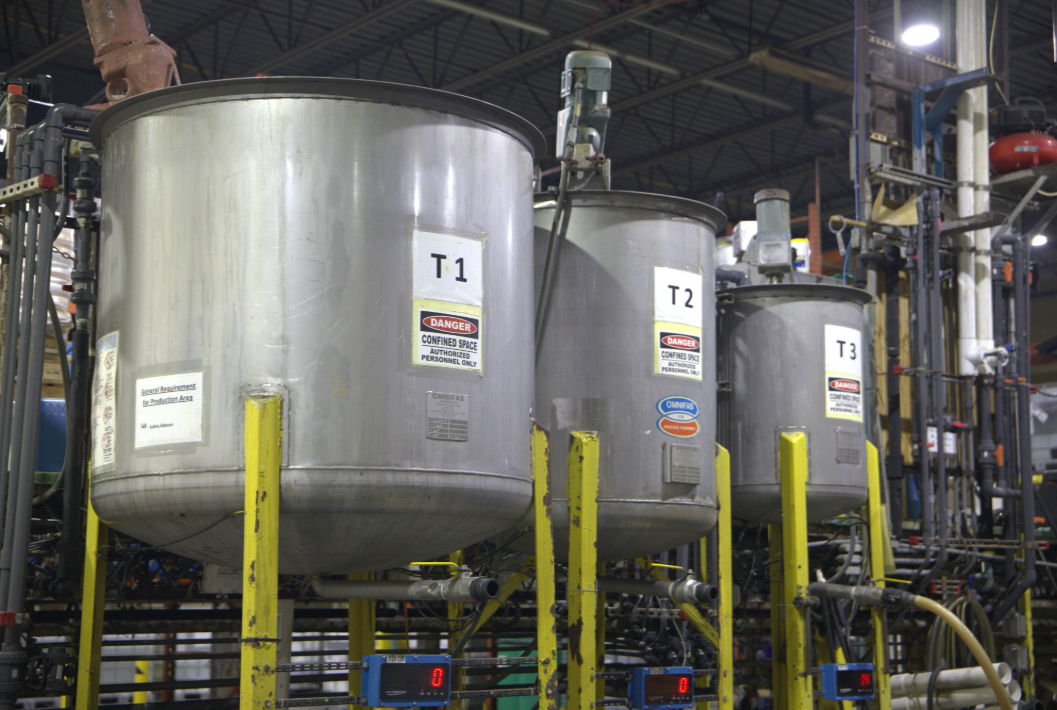
Water treatment programs depend on precise, reliable chemistry to protect equipment, maintain system performance, and ensure consistent water quality. Whether managing cooling towers, boiler systems, or wastewater applications, treatment professionals often require formulations tailored to specific operating conditions, regulatory needs, and customer requirements.
Chemical blending plays a critical role in delivering these customized solutions. Rather than relying only on off-the-shelf industrial chemicals, blending allows manufacturers to create specialized chemical products that combine multiple ingredients into a single, consistent finished product. This approach improves handling, simplifies dosing, and ensures treatment programs perform as intended.
In modern water treatment, chemical blending is not just a manufacturing step. It is a key process that supports flexibility, quality, and partner success across many industries.
What Is Chemical Blending in Water Treatment?
Chemical blending refers to the controlled process of blending chemicals by combining raw ingredients into a uniform mixture designed for a specific application. In water treatment, this often involves combining different chemicals such as corrosion inhibitors, dispersants, biocides, or polymers into carefully engineered formulations.
This chemical mixing process is considered a common chemical process in chemical manufacturing because it enables the production of many chemical blends that meet precise performance requirements. Blending may include:
- Liquid blending of concentrated treatment solutions
- Incorporating dry ingredients for powdered detergents or specialty products
- Adjusting formulations to meet exact specifications for customer programs
Because water treatment formulations must remain stable and effective, blending requires careful control of materials, sequencing, and quality checks. The goal is to produce consistent chemical products that deliver predictable results in real-world water systems.
By involving combining compatible substances into one treatment package, chemical blending helps treatment professionals apply solutions efficiently while maintaining high standards of quality and reliability.
Also Read: Inside the Lab: Understanding the Fundamentals of Chemical Blending Services
Why Chemical Compatibility and Precision Matter
In water treatment, performance depends not only on selecting the right ingredients, but also on ensuring they work together safely and effectively. Chemical compatibility is essential because certain substances can interact in unintended ways when mixed, especially in concentrated blends.
A chemical reaction may occur if incompatible materials are combined without proper formulation control. In some cases, a chemical reaction occurs immediately during mixing, which can affect stability, safety, and treatment effectiveness. That is why chemical blending must be handled with precision, using validated procedures and quality oversight.
Key factors that make precision critical include:
- Meeting exact specifications for active ingredient levels
- Achieving exact consistency from batch to batch
- Preventing unwanted reactions or separation in storage
- Ensuring predictable chemical results in the field
Safety measures are also central to the blending process. Industrial chemicals may be corrosive, reactive, or hazardous if mishandled. For example, sodium hydroxide is commonly used in industrial formulations, but it requires careful control due to its highly caustic nature.
Because water treatment programs often support sensitive equipment and regulated discharge requirements, blending must be treated as a critical manufacturing function, not a simple mixing step.
Liquid and Dry Blending Applications Across Industries
While chemical blending is essential in water treatment, it is also widely used across many industries that rely on consistent formulated products. Both liquid blending and dry blending play roles in producing commercial products for various sectors.
Examples of blending applications include:
- Acrylic polymers used in dispersants, coatings, and treatment additives
- Powdered detergents made from dry ingredients for industrial cleaning
- Paints and pigments formulated for durability and performance
- Inks and specialty fluids requiring controlled consistency
Outside of industrial water treatment, blending is also used in the food industry and cosmetic products manufacturing, where exact consistency and ingredient compatibility are equally important.
Some processes, such as solvent extraction or steam distillation, are used to create essential oils like lemon essential oil for consumer applications. Other chemical processes, including the saponification process using olive oil or the melt and pour method, demonstrate how blending supports finished product creation across different markets.
These examples highlight the main difference between simple mixing and true manufacturing-grade blending. Professional blending ensures consistency, safety, and quality regardless of the industry or end use.
Toll Blending and Specialized Equipment in Chemical Manufacturing
As water treatment programs become more specialized, many companies rely on toll blending services to produce custom formulations without building their own manufacturing infrastructure. Toll blending is a model in which a manufacturer blends chemical products on behalf of another business, using provided formulas or jointly developed specifications.
In chemical manufacturing, this approach is especially valuable because blending can be time consuming and requires strict controls, trained personnel, and specialized equipment. Depending on the formulation, blending operations may involve:
- High-shear chemical mixing systems
- Liquid blending tanks with precision measurement
- Handling of flammable or reactive substances
- Controlled packaging for safe storage and transportation
Blending also requires attention to local regulations, environmental impact, and workplace safety. Proper production processes ensure that finished product batches meet quality standards while minimizing risk during handling and shipment.
Because many chemical blends are used in industrial environments, consistency and documentation are essential. The goal is always to create reliable treatment solutions that perform the same way every time they are produced.
Chemical blending in this context is not simply combining materials. It is an essential manufacturing service that supports quality, scalability, and long-term program success.
How Eastern Technologies, Inc. Supports Custom Chemical Blending for Partners
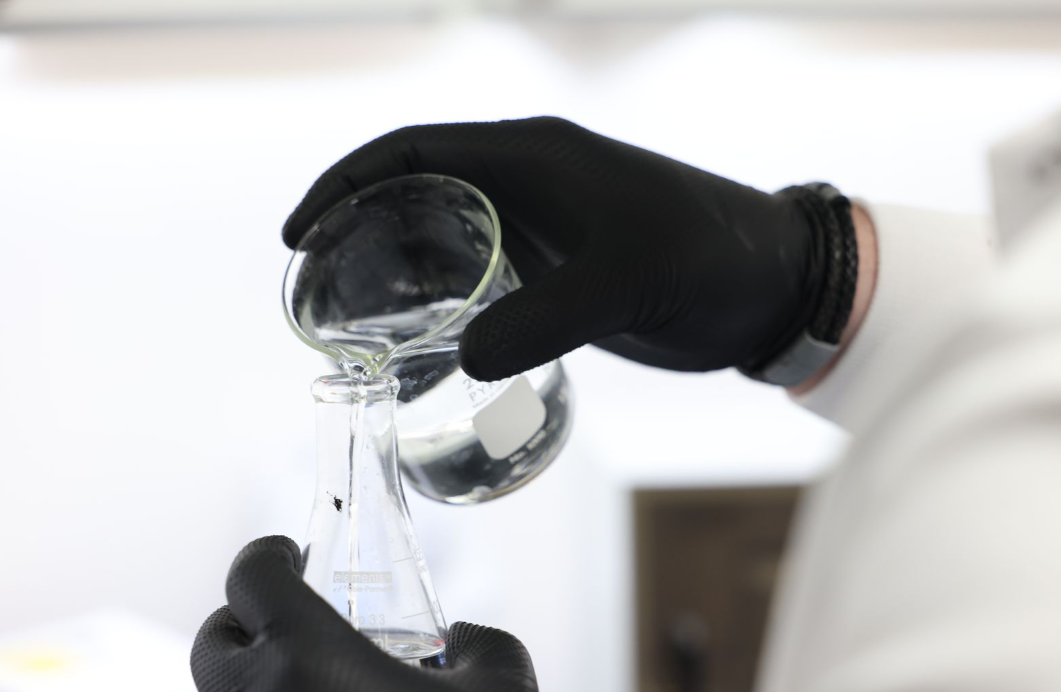
Eastern Technologies, Inc. (ETI) provides custom chemical blending services designed to support independent water treatment professionals and partner distributors. ETI’s approach emphasizes reliability, flexibility, and consistent quality, helping partners deliver tailored water treatment programs without competing in the end-user space.
Through advanced blending and manufacturing capabilities, ETI helps produce chemical products that meet exact specifications for performance, packaging, and field application. Partners benefit from:
- Consistent finished product quality and batch control
- Flexible packaging options for different customer needs
- Support for specialized industrial formulations and production requirements
- A trusted company focused on enabling partner business growth
Chemical blending is most valuable when it strengthens program delivery and simplifies operations for water treatment professionals.
To learn more about ETI’s custom blending and manufacturing support, contact ETI’s technical team.