Industrial facilities—from food processors to power plants—rely on effective disinfection strategies to control bacteria, viruses, and other microorganisms in their water systems. Whether protecting cooling towers, treating process water, or ensuring clean rinses in manufacturing, water quality is non-negotiable. Among the growing number of options, chlorine dioxide water treatment stands out as a highly effective, flexible, and safety-conscious solution.
Unlike traditional chlorine, chlorine dioxide is a selective oxidizing agent. It works at low concentrations, leaves behind fewer harmful byproducts, and remains effective across a wide pH range. Its versatility allows it to disinfect water in varied environments, including systems with high organic content, fluctuating temperatures, and complex piping networks.
As industries continue to balance performance with sustainability and regulatory compliance, chlorine dioxide’s role is expanding. In this article, we’ll explore how it works, where it’s used, and why it’s become a preferred choice in modern water treatment programs.
What Is Chlorine Dioxide?
Chlorine dioxide is a powerful chemical compound widely used for water disinfection in industrial and municipal applications. Although it contains a chlorine atom, chlorine dioxide behaves very differently from chlorine or chlorine gas. Its molecular structure consists of one chlorine atom bonded to two oxygen atoms, which gives it unique disinfecting properties.
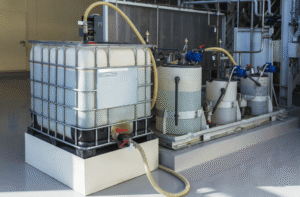
At room temperature, chlorine dioxide exists as a yellow-green gas, but it is commonly applied in water treatment as a dissolved gas or as a chlorine dioxide solution generated on-site. Because it is unstable at high concentrations, chlorine dioxide is not typically shipped or stored as a compressed gas. Instead, it is produced as needed using precursor chemicals such as sodium chlorite, allowing for controlled dosing and improved safety.
One of the defining characteristics of chlorine dioxide is its behavior as a selective oxidizing agent. Unlike chlorine, which reacts broadly with many compounds, chlorine dioxide targets electron-rich materials, including microbial cell components. This selectivity allows it to remain effective even in waters containing organic material, while producing fewer unwanted reaction byproducts.
Chlorine dioxide is also highly soluble in water and remains effective across a wide pH range. These traits make it well suited for use in drinking water treatment, industrial process systems, and applications where consistent disinfection performance is required.
Because chlorine dioxide functions independently of free chlorine chemistry, it is often used when traditional disinfectants fall short. Its distinct chemistry and reliability have made chlorine dioxide an important tool for modern water disinfection programs.
How Chlorine Dioxide Works for Disinfection
Chlorine dioxide acts as a highly effective disinfectant by targeting and neutralizing a wide spectrum of microorganisms, including various bacteria, viruses, and other microbes. Its primary strength lies in its ability to oxidize essential cell components without the limitations commonly associated with other disinfectants like chlorine or ozone.
Mechanism of Action
When chlorine dioxide interacts with microbial cells, it penetrates their cell walls and disrupts internal processes by oxidizing amino acids and lipids essential for survival. This causes irreversible damage that leads to cell death. Unlike chlorine, which reacts with a broad range of organic materials, chlorine dioxide is a selective oxidizing agent, meaning it targets key biological structures more efficiently while minimizing harmful byproducts.
This selective oxidation allows chlorine dioxide to be used in low concentrations while still being powerful enough to kill bacteria and eliminate viruses. These properties are especially useful in complex industrial systems where organic matter can interfere with traditional disinfectants.
Advantages Over Other Disinfectants
Compared to other disinfectants like chlorine, chlorine dioxide performs consistently across a wider pH range and in systems with high organic or inorganic load. It produces fewer trihalomethanes (THMs) and other regulated byproducts, making it a more environmentally conscious choice. In contrast to ozone, chlorine dioxide is more stable and easier to manage in many industrial settings.
Because of its chemical behavior, chlorine dioxide remains effective in both the gas phase and aqueous environments, allowing flexible application in open systems, pipelines, and storage tanks. This dual functionality contributes to its widespread adoption in water disinfection programs where reliability and coverage are critical.
Industrial Applications of Chlorine Dioxide Water Treatment
One of the greatest strengths of chlorine dioxide water treatment is its adaptability across industries. From infrastructure-scale systems to high-purity production environments, chlorine dioxide is used to disinfect water effectively, even under challenging conditions. Its effectiveness at low concentrations, combined with strong performance in the presence of organic matter, makes it suitable for a wide range of water treatment purposes.
1. Cooling Towers and Industrial Recirculating Systems
Cooling towers are prone to biological fouling, including algae, biofilms, and bacterial growth such as Legionella. Chlorine dioxide is a preferred choice for these systems because it penetrates biofilm and remains effective in high-temperature, high-organic environments where traditional chlorine or ozone may underperform. Its broad microbial efficacy, combined with a low corrosion profile, makes it ideal for maintaining water quality without damaging equipment.
2. Drinking Water and Potable Water Pre-Treatment
Many water treatment facilities use chlorine dioxide in drinking water treatment to reduce pathogens while minimizing harmful disinfection byproducts. It is used to disinfect drinking water by targeting a wide range of contaminants, including viruses, bacteria, and protozoa like Giardia and Cryptosporidium, which are less susceptible to chlorine. It also helps control chlorite ions and organic matter, improving taste and odor without generating trihalomethanes (THMs).
3. Food and Beverage Production
In the food industry, chlorine dioxide is commonly used for surface sanitation and disinfection of process water. It is compatible with low levels of residuals and has approvals in several jurisdictions for food contact applications. As part of a controlled sanitation protocol, it helps prevent contamination during washing, cooling, or transport processes.
4. Wastewater and Environmental Applications
In wastewater treatment, chlorine dioxide helps remove sulfides, control odors, and reduce various bacteria that resist other disinfectants. It is also used in treating natural waters for industrial reuse or discharge compliance. Facilities seeking to meet environmental protection agency standards value chlorine dioxide’s ability to achieve microbial control without producing persistent byproducts.
Safety, Storage, and Environmental Considerations
While chlorine dioxide is a highly effective tool for disinfection, it must be handled with care due to its reactivity and volatility. As a hazardous gas in its pure form, chlorine dioxide is never shipped or stored as a compressed gas. Instead, it is typically generated on-site from precursor chemicals like sodium chlorite, which significantly reduces handling risk and improves safety for operators.
Storage and Handling Practices
Most industrial applications use chlorine dioxide in the form of a chlorine dioxide solution, which is applied at low levels or low concentrations suitable for operational use. This solution can be stored safely for short periods under controlled conditions, but long-term storage is avoided due to the compound’s instability. Chlorine dioxide’s high reactivity with organic materials also means it should never be stored near combustible substances.
When preparing or applying chlorine dioxide, proper ventilation and containment are critical. If used in the gas phase, exposure to workplace air must be monitored closely.
Regulatory Oversight and Worker Protection
Organizations such as the Occupational Safety and Health Administration (OSHA) and the Environmental Protection Agency (EPA) provide strict guidelines on the use of chlorine dioxide in water treatment environments. OSHA defines permissible exposure limits to ensure worker safety, while the EPA regulates its application in potable water systems and industrial discharges.
For example:
- OSHA’s maximum concentration limit for chlorine dioxide in workplace air is 0.1 ppm over an 8-hour time-weighted average.
- The EPA sets thresholds for residual chlorite ions in treated water to protect public health.
Proper training, dosing controls, and real-time monitoring help facilities stay within regulatory guidelines while protecting human health and the environment.
By following best practices and regulatory standards, facilities can harness the benefits of chlorine dioxide while minimizing risk to personnel and surrounding communities.
Chlorine Dioxide vs Other Solutions in Water Treatment
Choosing the right disinfectant depends on a variety of factors—water chemistry, system complexity, microbial threats, safety requirements, and environmental regulations. In many cases, chlorine dioxide outperforms more traditional chemicals by offering targeted oxidation, effectiveness at low concentrations, and greater operational stability.
Below is a side-by-side comparison of chlorine dioxide with other widely used disinfectants in industrial and municipal water systems:
| Criteria | Chlorine Dioxide | Chlorine | Ozone |
|---|---|---|---|
| Chemical Type | Selective oxidizing agent | Broad-spectrum oxidizer | Strong oxidizer |
| Effective at Low pH? | Yes (pH 4–10) | No (reduced at low pH) | Yes |
| Byproduct Risk | Low (limited chlorite ions, no THMs) | High (THMs, HAAs) | Moderate (bromate formation possible) |
| Storage | Generated on-site from sodium chlorite | Easy to store as liquid or gas | Generated on-site (unstable gas) |
| Corrosive Effects | Minimal at proper dosage | Moderate to high | High |
| Effectiveness in Organic Load | High | Reduced | High |
| Ease of Control | Moderate to high | High | Low (requires real-time monitoring) |
| Residual Disinfection | Moderate residual protection | Strong residual | Weak (no long-lasting residual) |
| Application Examples | Cooling towers, drinking water, wastewater | Pools, potable water | Bottling, pharma, sensitive production lines |
Why Chlorine Dioxide Stands Out
Because of its stability in natural waters, consistent microbial control, and lower corrosive effects, chlorine dioxide is often the preferred choice for operators seeking a balance of safety, effectiveness, and ease of integration. In comparative reviews and systematic studies, it often ranks among the most effective solutions for industrial water treatment purposes—especially where traditional disinfectants underperform.
ETI’s Chlorine Dioxide Support for Industrial Clients

At Eastern Technologies, Inc. (ETI), chlorine dioxide is more than just a product—it’s part of a complete support system designed to help independent water treatment professionals succeed. With more than 35 biocide chemistries available, ETI offers chlorine dioxide water treatment options tailored for use in cooling towers, wastewater, drinking water, and industrial disinfection programs.
As a B2B2C partner, ETI does not compete with service providers. Instead, the company equips partners with technical depth, regulatory insight, and operational reliability. This includes:
- Private label chlorine dioxide solutions for rebranding and resale
- EPA supplemental registration support for chlorine dioxide and other oxidizers
- Custom formulation and flexible packaging to meet system-specific needs
- Access to a technical team with 95+ years of combined experience
- Field troubleshooting, jar testing, and polymer selection guidance
ETI’s partner-first model ensures that you’re not just sourcing a chemical—you’re backed by a team committed to helping you solve problems, retain accounts, and grow your business. Their chlorine dioxide offerings reflect that ethos: flexible, effective, and grounded in proven science.
Want to explore how chlorine dioxide can enhance your program?
Reach out to ETI’s team to learn more about chlorine dioxide options, product support, or private label programs. Contact ETI or visit the distributor portal to get started.